

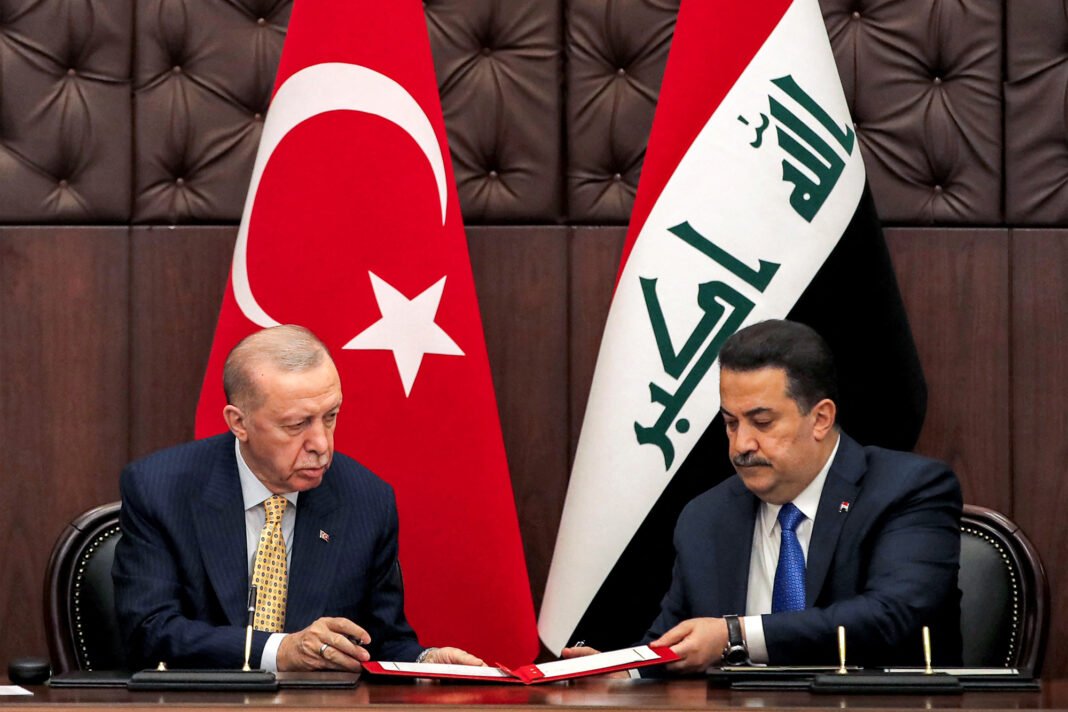
Iraq and Turkey plan to boost their trade exchange to $30 billion. Both governments met in Ankara to finalize this new goal. The two countries aim to strengthen customs cooperation and expand trade flows. The Iraq-Turkey trade exchange has become the central focus of these talks.
During the meeting, both sides agreed to create a joint customs committee. As well as, this committee will handle customs procedures and ease the movement of goods. In addition, they want to speed up border crossing operations and make trade smoother. Officials stressed the need for modern strategies that support faster goods flow.
The Iraqi and Turkish delegations discussed ways to improve efficiency at border points. They also highlighted the importance of stronger customs collaboration. By doing this, they believe they can reduce trade delays and improve services. Moreover, both sides expect the committee to solve problems at crossing points.
The meeting also looked at infrastructure projects that can strengthen trade. Both countries agreed that new projects will create smoother trade flows. They want to expand crossing capacity and build more trade facilities. With more investment, the Iraq-Turkey trade exchange will grow stronger.
Turkey’s Foreign Minister Hakan Fidan underlined the importance of Iraq to Turkey. He noted that stability in Iraq creates security for Turkey as well. He emphasized that Iraq plays a central role in Turkey’s regional trade strategy. This shows how valuable the Iraq-Turkey trade exchange is for both sides.
Turkey’s Trade Minister Omer Bolat also pointed to his country’s efforts. He explained that Turkey aims to push trade with Iraq to the $30 billion mark. He also confirmed that Turkish companies have finished projects in Iraq worth $35 billion. These projects highlight Turkey’s commitment to the Iraqi market.
The two governments now look forward to deeper cooperation. They believe that stronger customs and better border systems will support higher trade growth. The joint committee will take charge of solving issues and making progress. As a result, both countries expect faster trade development.