

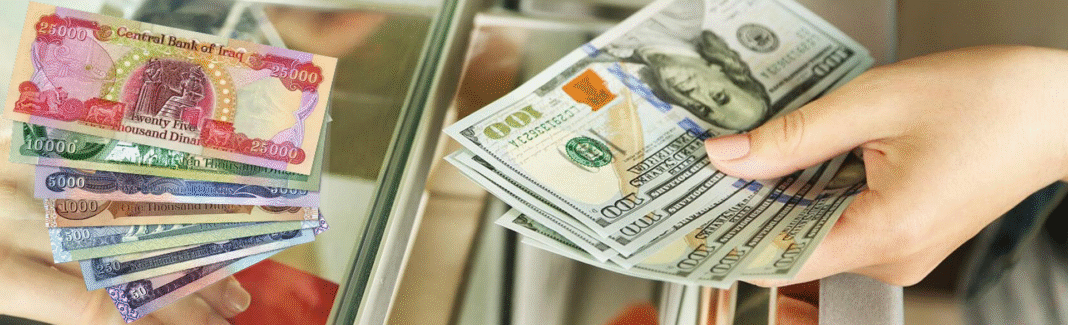
Iraq sees dollar price drop as currency markets in Baghdad and Erbil show downward movement. Traders noticed this shift early as exchange rates dipped below previous levels. Every currency dealer paid close attention as the market reacted quickly to demand and supply.
Additionally, in Baghdad, the Al-Kifah and Al-Harithiya stock exchanges opened with lower dollar values. Sellers there listed 100 US dollars at 141,250 dinars. Just the day before, the rate stood at 141,500 dinars. This quick change brought new energy to currency exchange shops throughout the capital.
Moreover, traders adjusted their buying and selling prices to match the new trend. Shops in Baghdad offered to sell dollars at 142,250 dinars. At the same time, they bought dollars for 140,250 dinars. Iraq sees dollar price drop as vendors updated their signs and mobile apps.
In Erbil, the situation followed a similar pattern. The selling rate reached 141,250 dinars for every 100 dollars. Meanwhile, the buying rate stood slightly lower at 141,100 dinars. Market participants welcomed the decline and hoped for further stability in future sessions.
Furthermore, exchange shops reported increased activity from customers seeking to benefit from lower prices. Many residents bought dollars as savings or for upcoming travel. Others simply watched the market, waiting for the right moment to trade. Iraq sees dollar price drop in both major cities at once.
Currency analysts believe that several factors influenced this decline. One key reason may include improved cash flow from oil revenues. Additionally, tighter controls on currency smuggling may have boosted confidence in the dinar. Officials continue to monitor these factors as they shape national financial strategies.
Traders expect more fluctuations in the coming days. However, many feel confident in the market’s direction. They believe that a stronger dinar can help ease inflation and bring more stability to local businesses.
Banks also played a role in shaping the rates. Their daily actions in selling dollars directly to licensed outlets helped reduce reliance on informal exchanges. Customers benefit from this approach, which narrows the gap between official and market rates.
As the week progresses, observers will keep a close eye on these numbers. Daily shifts in the market reflect broader economic conditions. For now, Iraq’s dinar shows signs of renewed strength.