

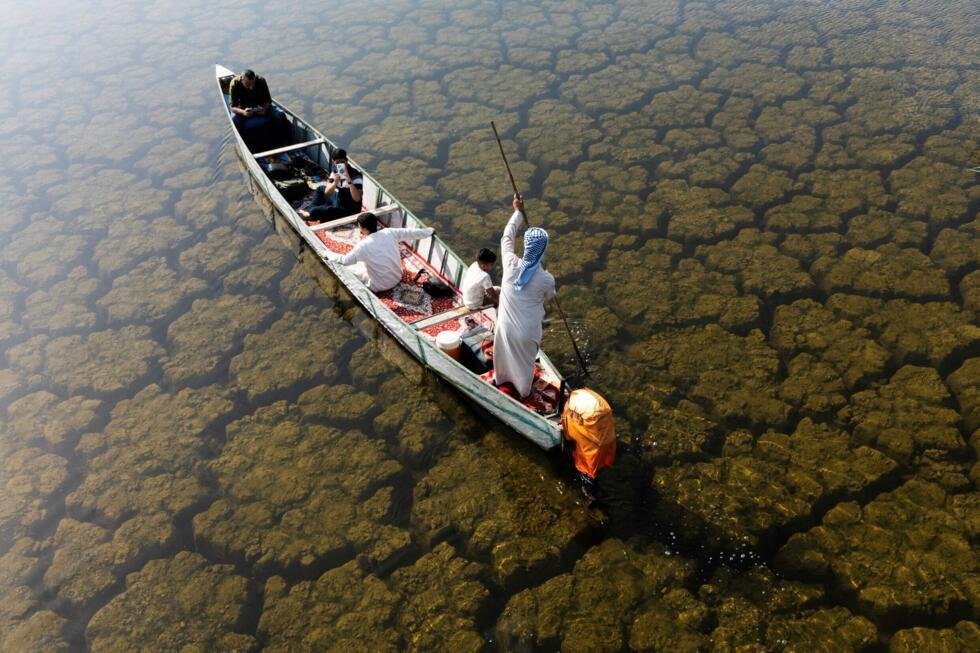
Heavy rain has sparked an Iraq rainfall revival across the Huwaizah Marshes in southern Iraq. As a result, water levels have risen quickly. Moreover, local life has started to return after years of drought.
A fishing boat now moves smoothly across the water. In addition, clear ripples reflect the sky and birds. Buffaloes stand in shallow water and graze on nearby grass. Therefore, the scene shows strong recovery signs. The Iraq rainfall revival has brought back movement, sound, and color.
For years, drought has damaged these historic wetlands. Climate change reduced rainfall. At the same time, upstream dams limited water flow. Consequently, large areas dried out and lost wildlife. However, recent rains changed conditions. The Iraq rainfall revival now restores hope among residents.
Fisherman Kadhim Kasid described the shift with optimism. He explained that the fish will return soon. He also expects animals to increase again. Furthermore, he believes people will regain their future. His daily work already looks better due to the rising water.
Meanwhile, officials report strong water storage levels. Aoun Diab confirmed that key dams are approaching capacity. These include Dukan Dam, Darbandikhan Dam, and Hamrin Dam. Together, they support millions of people, agriculture, and electricity production.
Additionally, strong inflows from the Tigris River improve water reserves. Officials expect these reserves to support the country during the summer months. Therefore, the Iraq rainfall revival plays a key role in national water security.
However, challenges remain. Iraq continues to face high temperatures. Also, upstream projects in Turkey and Iranaffect river flow. As a result, water levels may drop again without continued rainfall. Even so, the current Iraq rainfall revival offers a strong and positive step forward.
In conclusion, the wetlands show clear recovery. Nature has responded quickly to new water flows. People now see real change in their environment. The Iraq rainfall revival continues to shape a hopeful path.