

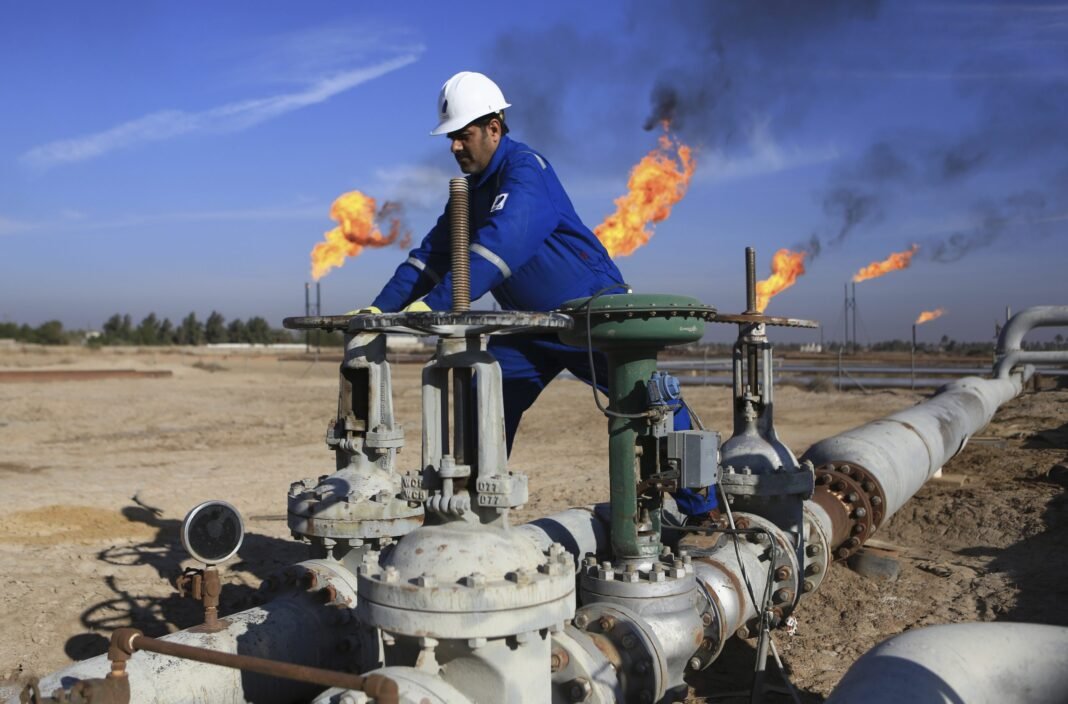
Iraq fell short of its OPEC+ oil production quota in June, missing the target by 56,000 barrels per day (bpd). Official figures reveal that Iraq pumped 4.03 million bpd during the month. This amount remained well below its assigned quota of 4.86 million bpd under the current OPEC+ agreement.
Several other producers also failed to meet their targets. The United Arab Emirates, Kuwait, and Algeria all reported production below quota. However, Saudi Arabia and Nigeria produced more than their assigned levels, underscoring a mixed pattern of compliance within the alliance.
OPEC+ recently approved an increase in the group’s total production limit by 548,000 bpd starting in August. The organization cited improved global economic conditions and stable market fundamentals as reasons for the upward revision. Even with this planned expansion, current oil prices continue to hover near $70 per barrel.
Iraq, one of the largest oil exporters in the world, still faces challenges in scaling up production. The country has yet to match its updated quota. This underperformance partly stems from voluntary cuts that remain in place. Despite easing restrictions, some producers have moved more slowly than others in ramping up output.
Experts warn of a potential surplus in oil supply toward the end of 2025. This forecast arises from the gradual phasing out of voluntary cuts totaling 2.2 million bpd. If global demand does not increase at the same pace, prices may face downward pressure.
The next OPEC+ meeting is scheduled for early August. At that time, the alliance will review production plans for September. Depending on the market’s strength, member countries could choose to maintain output, raise quotas, or reduce targets to stabilize prices.
Iraq’s current output signals the complexity of balancing domestic production challenges with international expectations. With ongoing global energy shifts, producers like Iraq must continually adjust their strategies to align with OPEC+ decisions and market realities.
While Iraq’s production fell short, broader compliance across OPEC+ remains inconsistent. Market observers will closely watch upcoming decisions, particularly as the group approaches the year’s final quarter.