

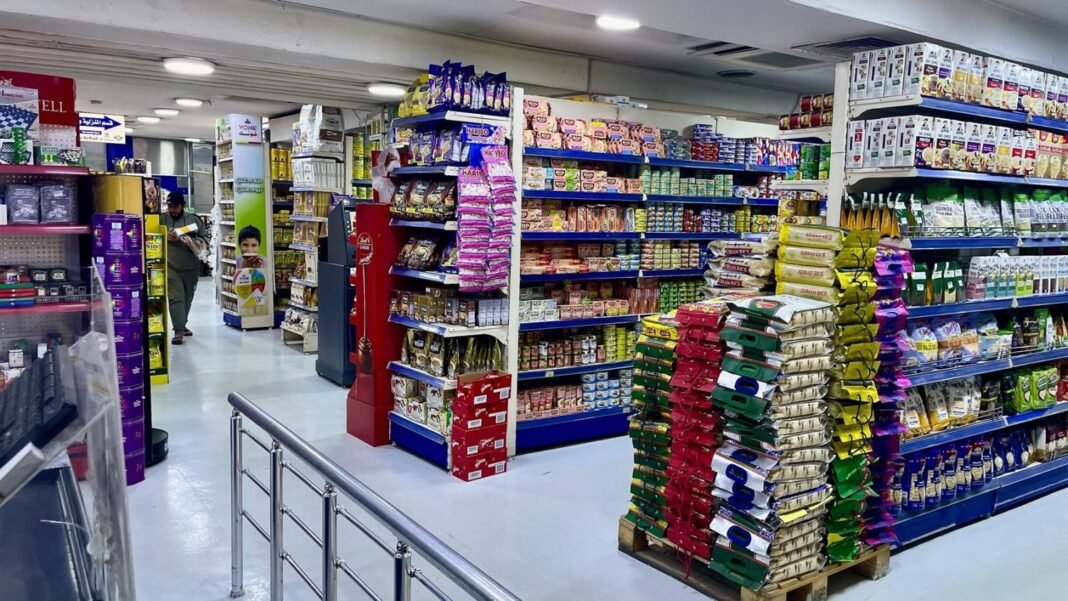
Baghdad markets now reflect the harsh reality of an Iraq market slowdown. Hypermarkets and cooperative stores no longer attract steady crowds. Aisles look quiet despite full shelves. This silence signals deep financial pressure across the capital.
In recent months, the Iraq market slowdown has accelerated sharply. Families who once shopped weekly now limit purchases. Many buyers only seek essential items. Prices push them away before they reach checkout counters.
Moreover, shoppers no longer trust cooperative markets. These stores once promised affordable prices. Now, residents see little difference compared to private shops. Consequently, confidence in price control continues to fade.
Many citizens blame rising costs on company pricing policies. Businesses raised prices across most goods. Middle-income families feel the pressure first. Lower-income households struggle even more.
Additionally, people express frustration with government responses. Many residents say officials offered no effective solutions. Financial relief measures failed to appear. As a result, public confidence keeps declining.
For families, daily life now feels overwhelming. Housing, food, and utilities consume most income. Markets no longer support household stability. Instead, they add stress to already strained budgets.
At the same time, delayed public salaries worsen the Iraq market slowdown. Government employees depend on fixed monthly income. When payments arrive late, spending stops immediately. This pause freezes the entire consumer cycle.
Furthermore, warnings about a financial crisis increase fear. People avoid spending to protect limited cash. Security tensions in the region also add uncertainty. Together, these factors weaken purchasing power.
Wholesale markets now show clear signs of decline. Jamila market activity dropped sharply. Shorja, once full of traders, now feels stagnant. Cash shortages slow every transaction.
Wholesalers report severe sales declines. Food item sales dropped dramatically. Shop owners cannot restock regularly. This weakness spreads across supply chains.
Retail shops also feel the damage. Sales improve briefly after salary payments. However, this improvement lasts only days. Soon after, demand falls again.
Small shop owners face shrinking profits. Limited income prevents proper restocking. Many traders reduce variety and volume. Consequently, market options narrow for consumers.
Economists point to structural weaknesses behind the Iraq market slowdown. Iraq relies heavily on imports. The economy lacks diversified income sources. This dependence increases vulnerability.
Most household consumption depends on salaries. When income stops, spending collapses quickly. Non-essential goods suffer first. Food and basic goods follow soon after.
This slowdown affects more than consumers. Small traders lose cash flow. Market circulation weakens. Tax revenues also decline.
Experts warn of wider consequences. Prolonged stagnation threatens economic stability. Poverty risks increase rapidly. Unemployment pressure also rises.
Moreover, social and psychological stress spreads. Fear replaces confidence in markets. People delay purchases even when money appears. This behavior deepens stagnation.
Economists stress the importance of salary stability. Regular payments sustain economic movement. Without them, markets cannot function properly. Delays damage both society and commerce.
Officials acknowledge financial bottlenecks. The finance system faces balance shortages. Payment procedures remain slow. Banks wait for official instructions.
These delays now show clear results. Empty aisles symbolize lost confidence. Baghdad markets reveal the cost of inaction. The Iraq market slowdown now touches every household.