

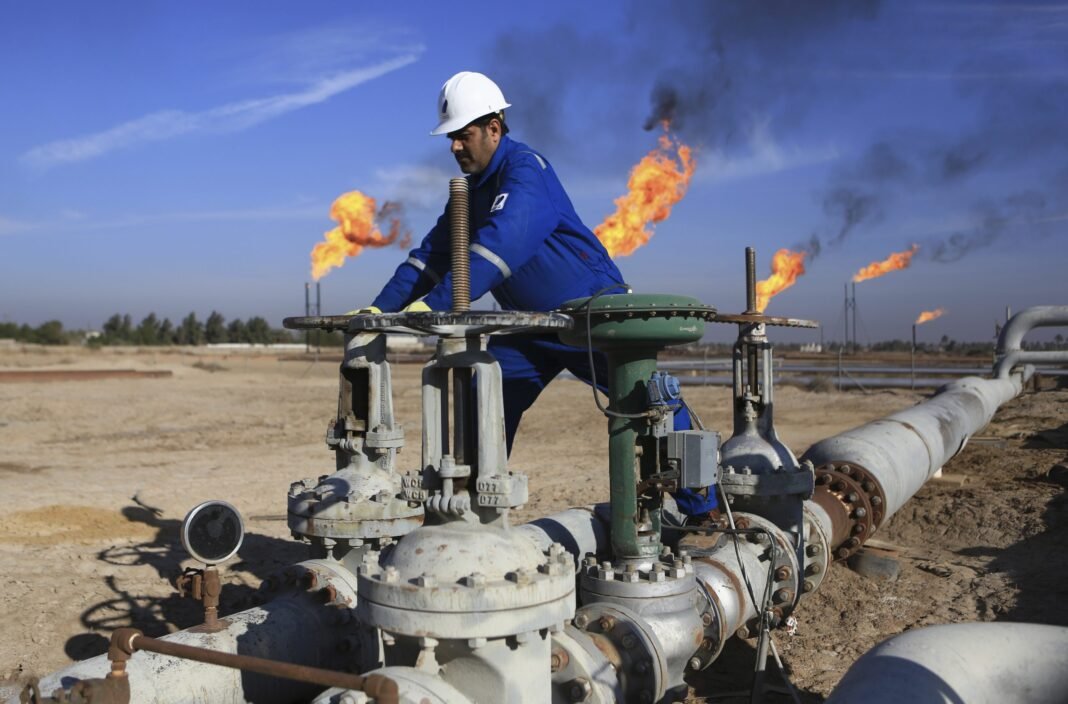
Iraq plans a major fuel oil export expansion to strengthen state revenues. The government targets more than 1 million barrels per day in fuel oil exports. Officials aim for about 1.1 million barrels per day this year. This step supports broader economic reform efforts. Moreover, leaders want to increase non-oil income and control public spending.
Prime Minister Mohammed Shia al-Sudani chaired a cabinet session to push the plan forward. During the meeting, ministers discussed ways to diversify exports. They also reviewed measures to stabilize local markets. As a result, the cabinet endorsed new recommendations from the Ministerial Council for the Economy.
Under the new plan, Iraq will export at least 75 percent of fuel oil output from refineries. Authorities will also export refined petroleum products when surplus volumes allow. Therefore, the strategy focuses on maximizing external sales while maintaining domestic supply. This fuel oil export expansion marks a strategic shift in export management.
Iraq ranks among the region’s largest producers of high-sulfur fuel oil. Refining methods and local consumption patterns shape this output profile. Consequently, Iraq often generates significant volumes of heavy fuel oil. Now, officials want to direct more of this production toward international markets.
Fuel oil remains a heavy petroleum product with high sulfur content. Power plants and heavy industries often use it as fuel. Because of its density and composition, markets price it differently than lighter products. Nevertheless, global demand for heavy fuel oil continues in several regions. Therefore, Iraq sees an opportunity to boost trade revenues.
The government views this fuel oil export expansion as a financial lever. Higher exports can increase dollar inflows. In turn, stronger inflows can support budget stability. Furthermore, diversified petroleum product exports can reduce reliance on crude oil sales alone.
At the same time, officials stress the need to protect domestic energy supply. They plan export volumes based on production capacity and local demand. Thus, authorities aim to balance exports with internal consumption needs. This approach helps prevent supply gaps in local power generation.
In addition, Iraq continues to modernize its refining sector. New projects and upgrades improve processing capacity. These improvements allow refineries to handle larger volumes efficiently. As capacity grows, export potential also increases. Therefore, infrastructure development supports the fuel oil export expansion strategy.
Economic planners also connect this move to broader fiscal discipline. They seek stronger revenue streams without excessive borrowing. By increasing petroleum product exports, Iraq can widen its income base. Consequently, the state can manage expenditures more effectively.
Overall, Iraq prepares for a significant jump in fuel oil exports. The 1.1 million barrels per day target signals strong ambition. Through this fuel oil export expansion, Iraq aims to strengthen revenues, diversify exports, and support economic stability.