

Iraq food security remains a national priority. Therefore, authorities support large domestic production projects. Moreover, reducing imports strengthens economic resilience. Consequently, strategic investments receive strong backing.
The Sama Karbala poultry project stands as a major national asset. Officials describe it as a pillar of Iraq food security. Additionally, it supports long-term self-sufficiency goals. Thus, policymakers highlight its importance.
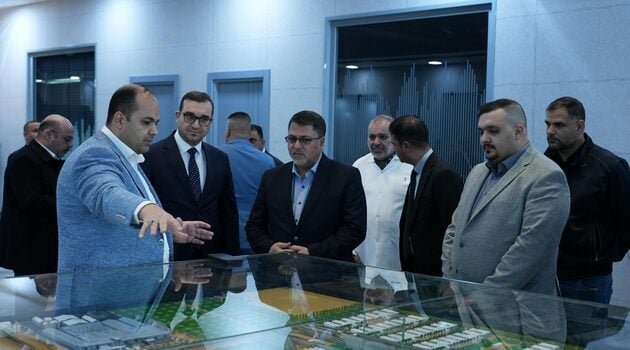
National Investment Commission leaders recently visited the project site. During the visit, officials reviewed production facilities closely. Moreover, they assessed operational efficiency. The visit confirmed strategic value.
The project operates in Karbala governorate. It ranks among the largest poultry investments in Iraq. Therefore, it plays a leading role in livestock development. Its scale supports national supply needs.
Government policy prioritizes domestic food production. Accordingly, the project aligns with official economic strategy. It aims to replace imported poultry products. Iraq food security benefits directly from this approach.
The project creates employment opportunities for local residents. As a result, household incomes increase. Moreover, economic activity grows within Karbala. Local markets gain stability.
Year-round production ensures steady poultry supply. Therefore, market shortages become less likely. Price stability also improves. Consumers benefit from predictable availability.
The project produces both chicken meat and eggs. It follows recognized international health standards. Consequently, product quality remains high. Consumer confidence strengthens.
Modern poultry halls support daily operations. Advanced ventilation systems regulate temperatures efficiently. Cooling systems protect livestock health. Thus, production losses decrease.
Veterinary and health services operate within the complex. These services monitor every production stage. Moreover, preventive care ensures safety. Quality control remains consistent.
The project features advanced automated slaughterhouses. These facilities process large volumes daily. As a result, efficiency improves significantly. Waste reduction also increases.
Production capacity remains among the highest nationally. Annual poultry meat output reaches about 325,000 tonnes. Additionally, chicken numbers exceed hundreds of millions. Supply capacity remains strong.
Daily slaughter capacity approaches three-quarters of a million birds. This scale supports nationwide distribution. Therefore, dependence on foreign suppliers declines further.
Egg production also plays a major role. Annual capacity reaches several billion eggs. This volume meets a large share of domestic demand. Households benefit directly.
The project operates through an integrated production system. Feed, breeding, processing, and distribution work together. Therefore, efficiency increases across operations. Costs remain controlled.
Integrated systems also reduce logistical risks. Delays become less frequent. Moreover, coordination improves reliability. Market supply stays steady.
Food safety standards guide every process. Inspection protocols ensure compliance. Therefore, trust in local products rises. Imports face stronger competition.
Officials emphasize long-term sustainability. Resource management supports continuous output. Additionally, infrastructure investments future-proof operations. Iraq food security gains durability.
Local suppliers also benefit from the project. Supporting industries grow alongside poultry production. Consequently, value chains expand regionally. Economic multipliers emerge.
The project strengthens national self-sufficiency goals. Reduced import reliance saves foreign currency. Moreover, trade balance improves. Economic independence increases.
Rural development also gains momentum. Agricultural expertise spreads across communities. Training opportunities improve workforce skills. Productivity rises steadily.
Government institutions view the project as a model. Similar investments may follow nationwide. Therefore, replication remains possible. Strategic planning continues.
The Sama Karbala project reflects modern agricultural vision. Technology, scale, and policy alignment combine effectively. Thus, outcomes remain measurable.
Market stability remains a key objective. Consistent supply avoids seasonal shocks. Consumers experience fewer price fluctuations. Confidence grows.
Officials highlight national pride in domestic production. Locally produced food gains recognition. Moreover, consumer loyalty increases. Imports lose dominance.
In conclusion, the project supports multiple national goals. It strengthens supply, jobs, and quality. Iraq food security advances through strategic investment. The model demonstrates success.