

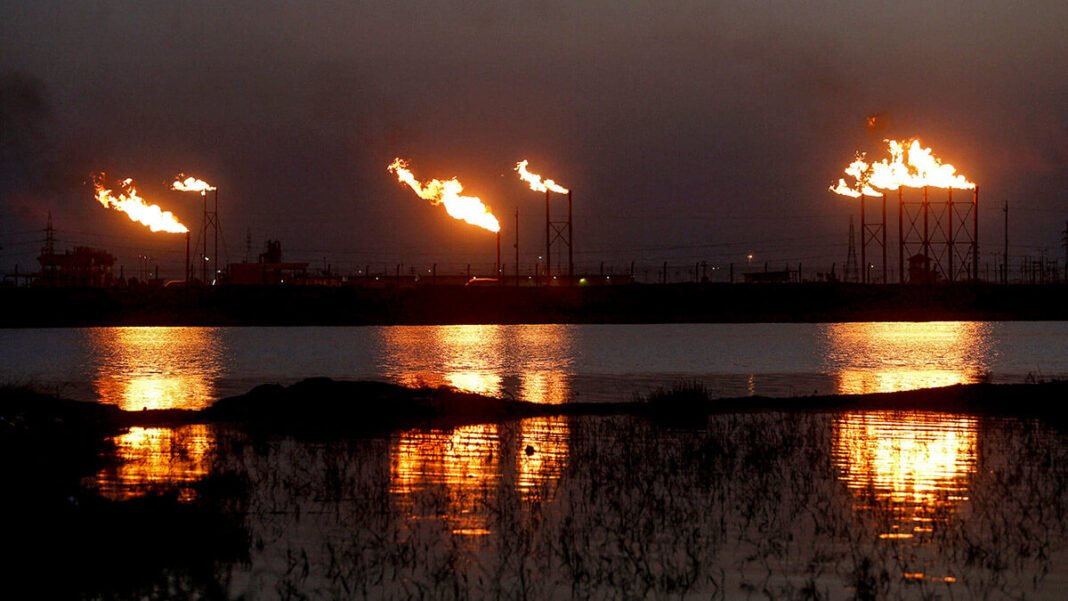
Iraq gas capture projects are accelerating as the country pushes to reduce flaring and boost energy independence. A senior Oil Ministry official confirmed that Iraq now captures 70% of its associated gas, aiming to raise that number even higher next year. The country currently invests in capturing 2,000 million standard cubic feet per day (mmscfd) out of a total 3,000 mmscfd of produced gas.
Of the gas captured, 1,000 mmscfd powers the Oil Ministry’s production and industry, while the rest goes to electricity generation. This effort helps reduce reliance on imported gas, which Iraq still needs during times of economic strain. That reliance, up to 1,000 mmscfd, poses serious risks to energy security when supplies are disrupted.
To close that gap, Iraq plans to increase gas capture to 2,700 mmscfd next year. This expansion will come through Iraq gas capture projects already underway in the southern provinces of Basra and Dhi Qar. These projects enhance the country’s gas processing and storage capacity.
Despite recent achievements, Iraq continues to face criticism for its environmental record. In 2023, Iraq captured 700.8 billion cubic feet of associated gas, equal to about 60% of total production. However, the same year, international sources revealed Iraq flared 636.8 billion cubic feet. This made the country one of the largest contributors to methane emissions from gas flaring.
Global pressure has been mounting on Iraq to stop routine flaring. Not only does it waste a valuable resource, but it also pollutes the atmosphere and drains potential revenue. By scaling up Iraq gas capture projects, the government hopes to meet environmental standards and achieve greater energy self-sufficiency.
Oil Ministry advisers believe that expanding domestic capture capacity is a key step forward. It will reduce the burden of costly imports and stabilize electricity generation across the country. With each new facility, Iraq moves closer to reducing gas waste and strengthening its energy infrastructure.