

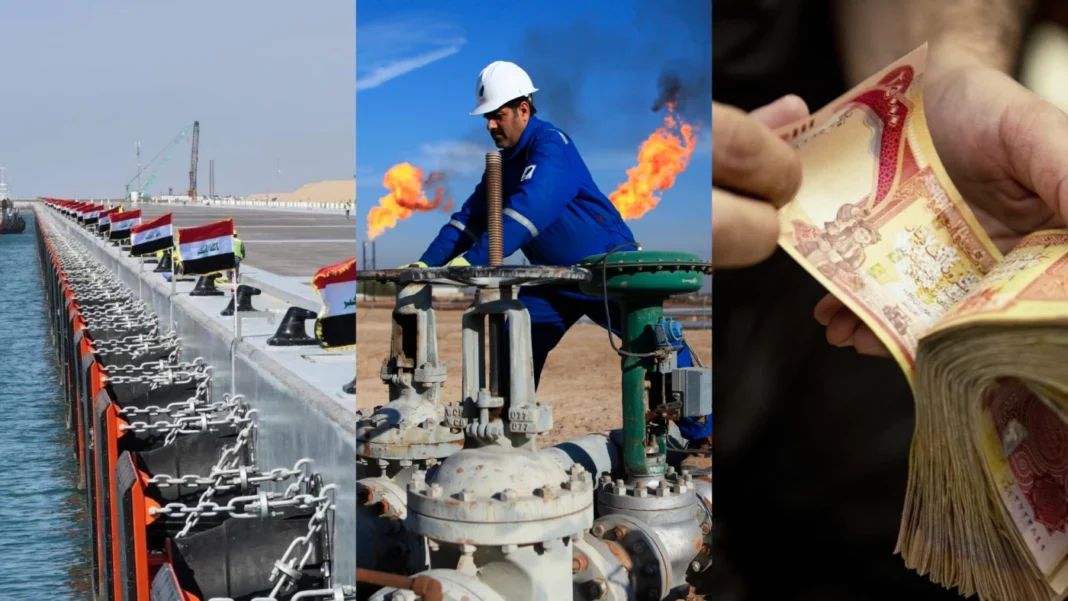
The Iraq economic diversification plan has become a central pillar of the government’s long-term strategy for growth and stability. Iraqi officials aim to reduce the country’s reliance on oil revenues while creating a broader and more resilient economy. The initiative forms part of a wider vision designed to strengthen public finances and encourage sustainable development over the coming decade.
Mazhar Saleh, the Prime Minister’s Advisor for Financial Affairs, recently outlined the government’s priorities for economic reform. He explained that policymakers want to build stronger links between non-oil revenues and the broader national economy. By improving both areas simultaneously, officials hope to create a more balanced economic structure that can withstand external shocks.
The strategy falls under the national “Iraq 2035” vision, which the cabinet approved earlier this year. The program combines fiscal reforms with policies that support a social market economy. Government leaders believe these changes can gradually transform Iraq’s economic foundations and reduce long-standing dependence on energy exports.
A key objective involves increasing the share of non-oil income within state finances. Under the plan, non-oil revenues would account for at least 46 percent of total government income by 2035. Officials view this target as essential for improving budget sustainability and reducing exposure to fluctuations in global oil markets.
At the same time, authorities want to expand the role of private businesses in economic activity. The government hopes the private sector will contribute 53 percent of gross domestic product by 2035. Currently, that figure stands at roughly 37 percent. A stronger private sector could create jobs, attract investment, and support innovation across multiple industries.
The Iraq economic diversification plan also seeks to encourage growth in sectors beyond oil production. Policymakers want to strengthen industries such as manufacturing, agriculture, logistics, technology, and tourism. These sectors could provide new sources of revenue while reducing pressure on public finances.
Economic reform has gained urgency because of growing regional challenges. Recent assessments from international financial institutions suggest that Iraq may face significant economic pressure in the coming years. Rising instability across the region could affect inflation, trade activity, and government spending.
Another concern involves Iraq’s continued dependence on oil exports. The country relies heavily on crude sales to finance its budget and public services. Any disruption to export routes can quickly reduce revenue and create fiscal difficulties. Recent challenges affecting regional shipping routes have highlighted these vulnerabilities.
Government officials believe diversification offers the best path forward. A broader economic base can provide greater stability during periods of market uncertainty. It can also help protect public finances from sudden changes in energy prices.
The Iraq economic diversification plan represents one of the country’s most ambitious reform efforts in years. Success will depend on effective implementation, private sector participation, and continued investment in productive industries. If the strategy achieves its goals, Iraq could build a more balanced economy and reduce its dependence on oil revenues for future generations.