

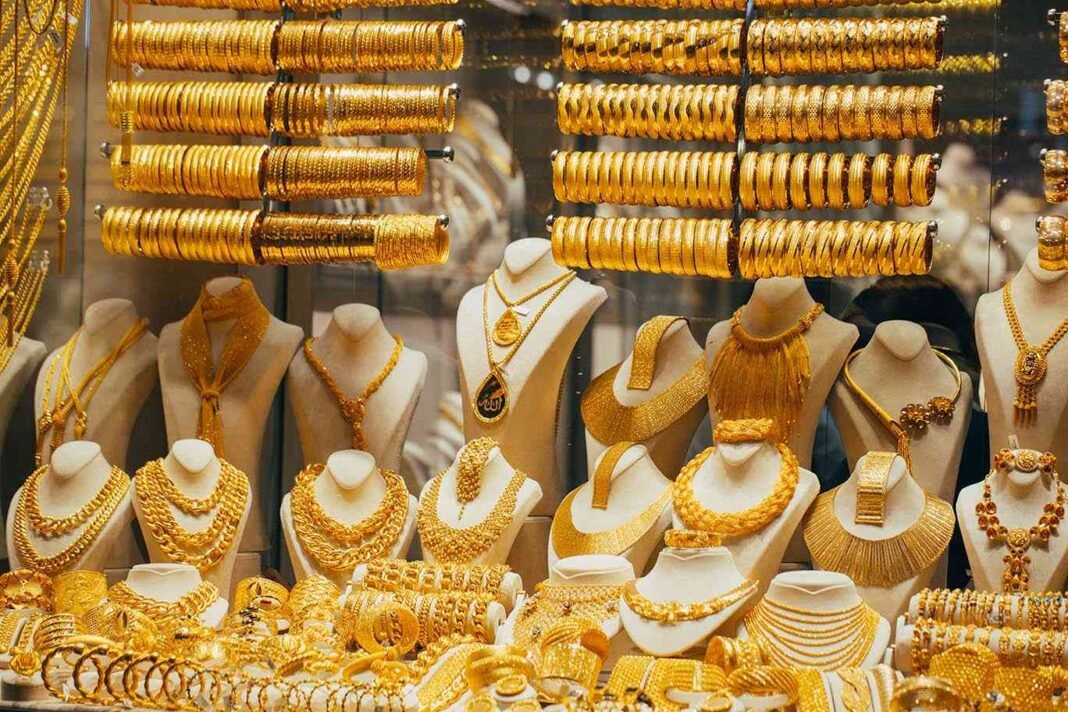
Gold prices in Iraq remained stable this week as both Baghdad and Erbil markets recorded consistent rates for 21-carat gold. Traders and customers closely monitored the movement, hoping for stability after recent price fluctuations.
On Baghdad’s Al-Nahr Street, shops recorded a selling price of 662,000 Iraqi dinars per mithqal of 21-carat gold. A mithqal equals five grams. This price covered Gulf, Turkish, and European varieties, while the buying price stood slightly lower at 658,000 dinars.
Meanwhile, the 21-carat Iraqi-made gold maintained a separate pricing range. Sellers offered it at 632,000 dinars per mithqal. Buyers in Baghdad paid around 628,000 dinars for the same quality of local gold.
Jewelry stores across the capital displayed a slight variation in prices depending on the gold’s origin. Gulf gold sold between 665,000 and 675,000 dinars per mithqal. Iraqi gold traded between 635,000 and 645,000 dinars in the same outlets.
Gold prices in Iraq showed minimal movement, reflecting a calm in market demand. Many traders anticipated changes due to global gold market trends but welcomed the consistency in local values.
In Erbil, the capital of the Kurdistan Region, gold prices followed similar patterns. Retailers listed 21-carat gold at 665,000 dinars per mithqal. The 18-carat version sold for around 570,000 dinars, slightly below previous weeks but within the expected range.
Erbil’s markets often mirror Baghdad’s movements, especially for imported types like Gulf or Turkish gold. Local demand in both cities remains strong, particularly during wedding seasons and holidays when gold gifts are common.
Economists continue to monitor Iraq’s gold markets due to their influence on small investors. Gold prices in Iraq often serve as a financial safety net for families, especially during economic uncertainty.
With Iraq’s currency remaining stable against the dollar in recent weeks, many buyers shifted their focus from foreign exchange to precious metals. Experts believe this pattern will continue as long as inflation stays low and market supply meets demand.
Goldsmiths in both cities confirmed they noticed increased customer interest in Iraqi-made jewelry. This shift supports local craftsmanship and strengthens domestic production against imported competition.
As the summer progresses, gold prices in Iraq will likely fluctuate based on global trends. However, the current outlook points to continued price stability.