

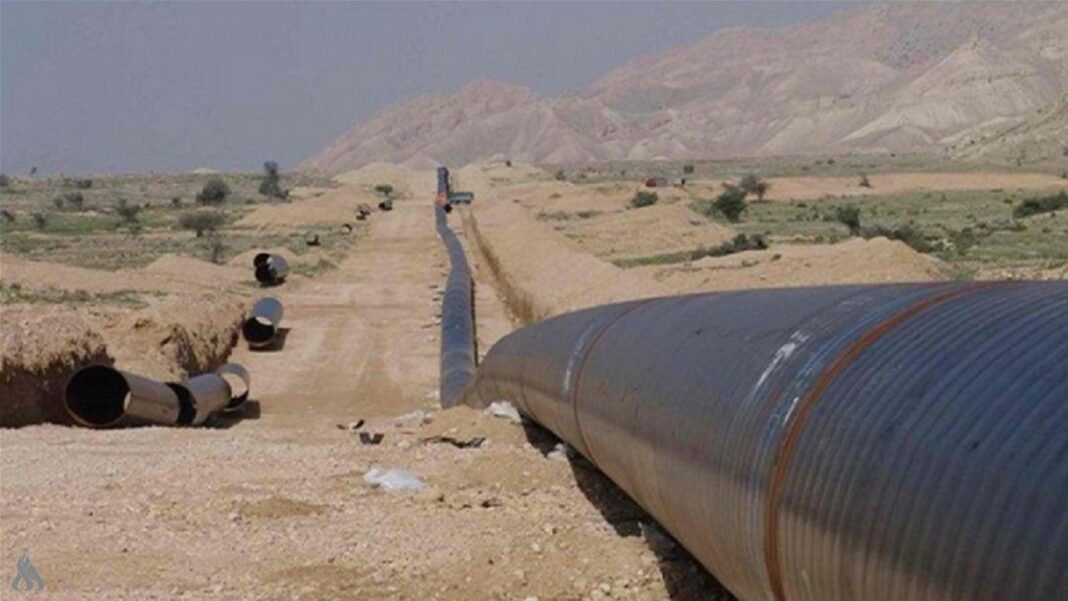
Iraq and Jordan are strengthening energy cooperation as discussions over the Basra Aqaba oil pipeline gain momentum. Senior officials from both countries recently reviewed the strategic project, which aims to diversify Iraq’s oil export routes and reduce reliance on the Strait of Hormuz. The proposed pipeline is expected to improve regional energy connectivity while expanding access to international markets.
Prime Minister Ali Al Zaidi emphasized the importance of expanding economic cooperation during a meeting with a high-level Jordanian delegation led by Minister of Industry, Trade, and Supply Yarub Al Qudah. He reaffirmed Iraq’s commitment to strengthening trade, investment, and bilateral partnerships across multiple sectors.
The meeting focused on enhancing the long-standing relationship between Baghdad and Amman. Officials explored new opportunities to increase commercial cooperation while supporting major infrastructure projects that benefit both countries. Energy remained one of the central topics of the discussions.
A key issue was the proposed Basra-Aqaba oil pipeline, which Iraq considers a strategic national project. The pipeline would provide an alternative export route for Iraqi crude, reducing dependence on southern ports and limiting exposure to regional shipping disruptions. Officials view export diversification as increasingly important amid continued geopolitical uncertainty.
Recent developments in the Strait of Hormuz have reinforced the need for additional export corridors. Iraq currently exports most of its crude through southern terminals, making the country vulnerable to interruptions in Gulf shipping. The new pipeline would offer a direct connection to Jordan’s Red Sea port of Aqaba, creating greater flexibility for future exports.
Earlier this year, Iraq’s Council of Ministers approved plans allowing the Ministry of Oil to invite specialized companies to submit proposals for the Basra-Haditha pipeline. The project would later extend from Haditha in western Iraq to the Jordanian port of Aqaba. Officials believe the route could improve access to European and international energy markets.
According to government estimates, the project carries a value of approximately $4.6 billion. The pipeline would transport crude oil from Basra through Anbar Province before reaching Jordan. Authorities expect the investment to strengthen Iraq’s energy infrastructure while supporting long-term economic development.
Engineers have designed the pipeline with an estimated capacity of 2.25 million barrels of oil per day. The proposed system would use 56-inch diameter pipes capable of handling large export volumes. In addition to supporting exports, the infrastructure could improve domestic oil transportation across Iraq.
Government officials describe the pipeline as a strategic component of Iraq’s broader infrastructure modernization program. Expanding transportation networks would help increase export efficiency while reducing pressure on existing southern facilities. The project could also create new opportunities for regional investment and economic cooperation.
Both Iraq and Jordan continue evaluating technical, financial, and commercial aspects of the proposal. Officials believe closer cooperation will accelerate planning and improve the project’s long-term viability. Discussions are expected to continue as both governments work toward practical implementation.
The Basra Aqaba oil pipeline represents one of Iraq’s most significant energy infrastructure proposals in recent years. By creating a new export corridor, the project could strengthen energy security, expand market access, and support future production growth. If completed, the Basra Aqaba oil pipeline would become a major pillar of Iraq’s strategy to diversify exports and reinforce regional economic partnerships.