

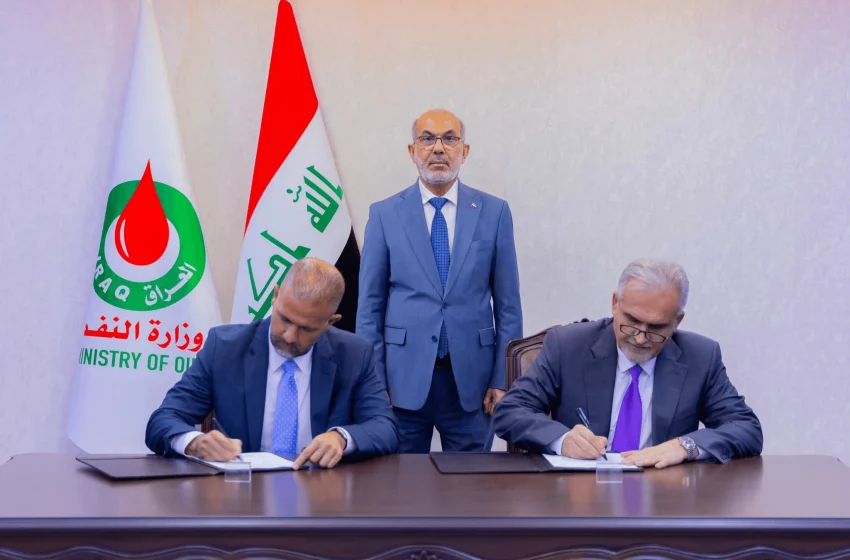
The Iraq Halliburton oil deal signals a major step in the government’s efforts to expand energy production and attract foreign investment. Iraq signed a new agreement with the US energy services company Halliburton to jointly manage two key oil fields in Basra province. Officials expect the partnership to increase crude oil output, boost associated gas production, and strengthen the country’s long-term energy sector.
The agreement was signed between the state-owned Basra Oil Company and Halliburton on Sunday. Under the contract, the two sides will jointly oversee operations at the Bin Omar and Sinbad oil fields in southern Iraq. Government officials described the project as an important part of Iraq’s strategy to modernize its oil industry and improve production efficiency.
Oil Minister Bassem Khodeir said the agreement supports the government’s broader plan to expand national oil and gas production. He explained that increasing production capacity remains essential for meeting future domestic and international energy demand. The ministry believes international partnerships will accelerate development across Iraq’s energy sector.
One of the agreement’s main objectives is to increase production at the Bin Omar oil field. Officials aim to raise output by 150,000 barrels per day over the next five years. The project also targets the production of 300 million cubic feet of associated natural gas, helping Iraq improve energy supplies while reducing gas flaring.
Development plans also include the nearby Sinbad oil field. Authorities expect production there to increase by between 80,000 and 100,000 barrels per day after development work is completed. Combined output from both fields could significantly strengthen Iraq’s overall production capacity.
The agreement comes as Iraq continues seeking a larger production quota within the Organization of the Petroleum Exporting Countries (OPEC). Prime Minister Ali Al Zaidi has argued that Iraq deserves higher production limits because years of conflict and recent regional instability have affected the country’s energy sector. The government believes expanded production will support economic recovery and long-term growth.
Oil exports remain the foundation of Iraq’s economy, generating nearly 90 percent of government revenue. Stable production levels are therefore essential for financing public services, infrastructure projects, and economic development. Officials continue encouraging international companies to invest in Iraq’s energy sector to support these goals.
Recent regional tensions also highlighted Iraq’s dependence on oil exports. Disruptions to energy markets during the conflict involving the United States and Iran affected government revenues and export activity. As a result, Baghdad has accelerated efforts to attract foreign expertise and investment to strengthen production capacity.
The signing of the contract comes shortly before Prime Minister Al Zaidi’s planned visit to Washington later this month. Iraqi officials hope the visit will strengthen economic cooperation with the United States and encourage additional investment in strategic sectors. Energy projects remain a key priority as the government seeks to diversify partnerships and modernize critical infrastructure.
The Iraq Halliburton oil deal reflects Baghdad’s commitment to expanding its energy industry through international cooperation. Increased production from the Bin Omar and Sinbad fields could improve export capacity while supporting domestic energy needs. If development proceeds as planned, the Iraq Halliburton oil deal may become an important milestone in Iraq’s efforts to strengthen its economy and reinforce its position in the global energy market.