

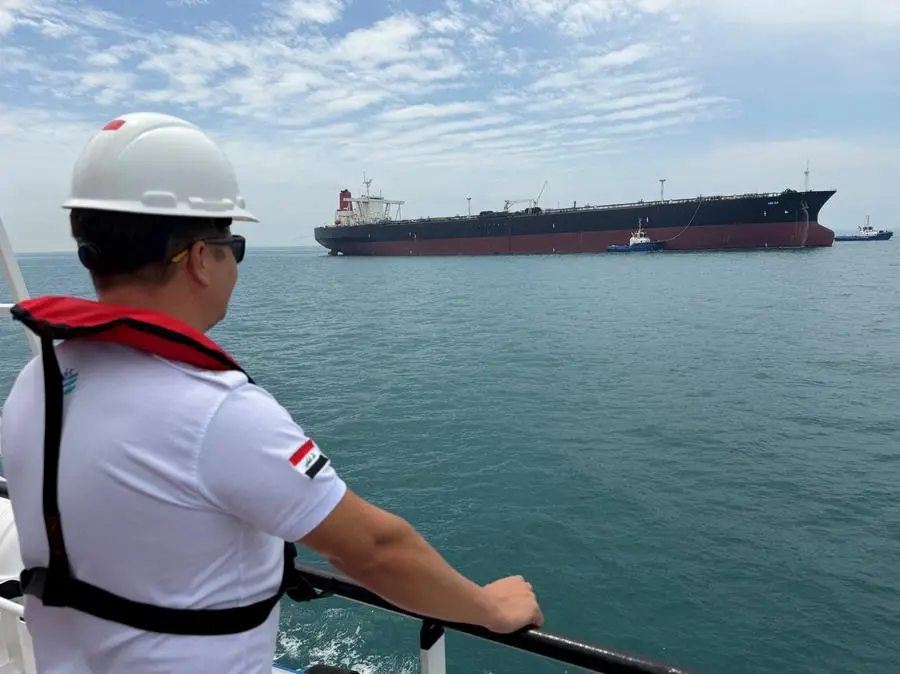
Iraq’s Basra oil export terminals are witnessing a sharp rise in tanker traffic as more crude carriers arrive to load oil for international markets. The latest arrivals reflect improving shipping activity following recent developments in Gulf navigation. Officials say loading operations continue as planned despite ongoing concerns over regional maritime security.
A source from Iraq’s State Company for Ports confirmed that the tanker Kuwait Prosperity recently docked at one of Basra’s export facilities. The vessel is part of a growing number of tankers reaching southern Iraq after passing through the Strait of Hormuz. Port authorities expect additional crude carriers to arrive over the next several hours.
One of the largest vessels expected to handle Iraqi crude is the Barbados Prosperity. The giant oil tanker will load approximately two million barrels before departing for international destinations. Officials continue to coordinate vessel movements to maintain smooth operations across the port network.
The source explained that shipping schedules remain on track without delays. Loading crews continue their work according to previously approved plans. Authorities also maintain regular communication with shipping companies to ensure efficient handling of each arriving vessel.
The increase in tanker arrivals follows reports that millions of barrels of Iraqi crude remained waiting for shipment earlier this week. According to S&P Global Commodity Insights, around 8.3 million barrels were temporarily stranded near the strategic maritime route due to shipping challenges. The backlog highlighted the importance of restoring steady maritime traffic for Iraq’s energy exports.
Iraq depends heavily on its southern ports to sell crude oil abroad. The country exports roughly 95 percent of its oil production through facilities located in Basra. This heavy reliance makes the nation particularly vulnerable whenever shipping routes in the Gulf face disruptions.
The Strait of Hormuz remains one of the world’s most important energy corridors. Nearly one-fifth of global oil supplies pass through the narrow waterway every day. Any interruption quickly affects exporters, shipping companies, and energy markets across the globe.
Economic analysts have already measured the financial impact of previous restrictions. Eco Iraq estimated that shipping disruptions caused the country to lose exports totaling nearly 350 million barrels by June 20. The organization valued those lost exports at approximately $37.7 billion in potential revenue.
Regional tensions played a major role in disrupting maritime traffic. Iran restricted movement through the Strait of Hormuz on February 28 following the conflict involving the United States and Israel. The restrictions created uncertainty for oil producers and delayed shipments across the Gulf.
Diplomatic efforts later helped ease those concerns. Washington and Tehran reached an understanding that allowed commercial shipping to resume under a memorandum signed in Switzerland on June 17. Since then, tanker movements have gradually increased as confidence returned to regional shipping lanes.
The renewed flow of crude carriers offers positive signs for Iraq’s energy sector. Higher tanker activity could help reduce shipment backlogs and improve export volumes in the coming weeks. As a result, Basra oil export terminals remain central to Iraq’s strategy for maintaining steady oil supplies to global markets. Continued stability along regional shipping routes will remain essential for protecting the country’s exports and supporting future economic growth through the Basra oil export terminals.