
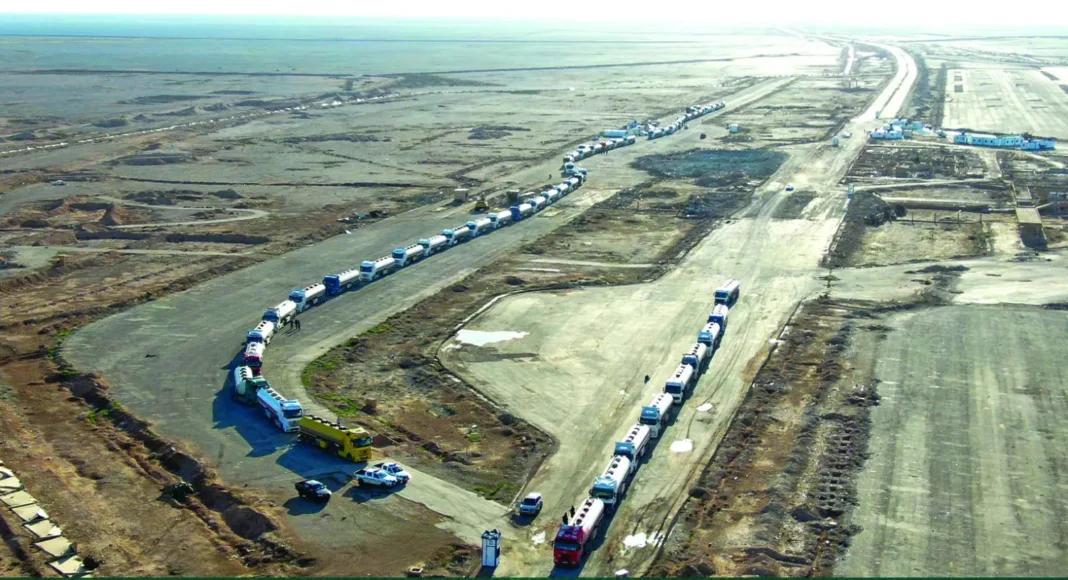
The Iraq Syria fuel route expanded on Monday as more than 150 Iraqi fuel tankers entered Syria through the Rabia–Al-Yarubiyah crossing. The convoy carried fuel oil prepared for export to international markets. Officials described it as the largest shipment using this corridor so far.
The convoy traveled from northern Iraq into Syria’s northeast region after crossing the border. It paused briefly along the M4 highway for logistics coordination and safety checks. Transport teams then directed the trucks toward coastal supply networks. This movement strengthens regional energy transport planning.
The route between Iraq and Syria continues to gain importance for energy transport. Authorities reopened the Rabia–Al-Yarubiyah crossing in April after 13 years of closure. Conflict and security instability previously halted movement across this border. Its reopening restored commercial flow between the two countries.
Officials confirmed that the convoy will continue toward the port city of Baniyas. There, fuel will be prepared for maritime export to global buyers. This connection between road and sea logistics improves shipment efficiency. The system supports wider energy distribution goals.
Earlier in May, Iraq sent 70 tanker trucks through the same corridor for crude oil export. That shipment marked the first structured energy movement along this path. The latest convoy more than doubles that effort. It signals growing confidence in cross-border logistics.
The Iraq Syria fuel route now supports increasing trade frequency and coordination. Transport teams continue improving scheduling and security oversight. Each shipment helps stabilize operational flow across the border network.
The M4 highway remains a key artery linking inland areas to coastal terminals. It allows staged movement and regulated convoy operations. Authorities rely on it to manage large-scale energy transport safely.