

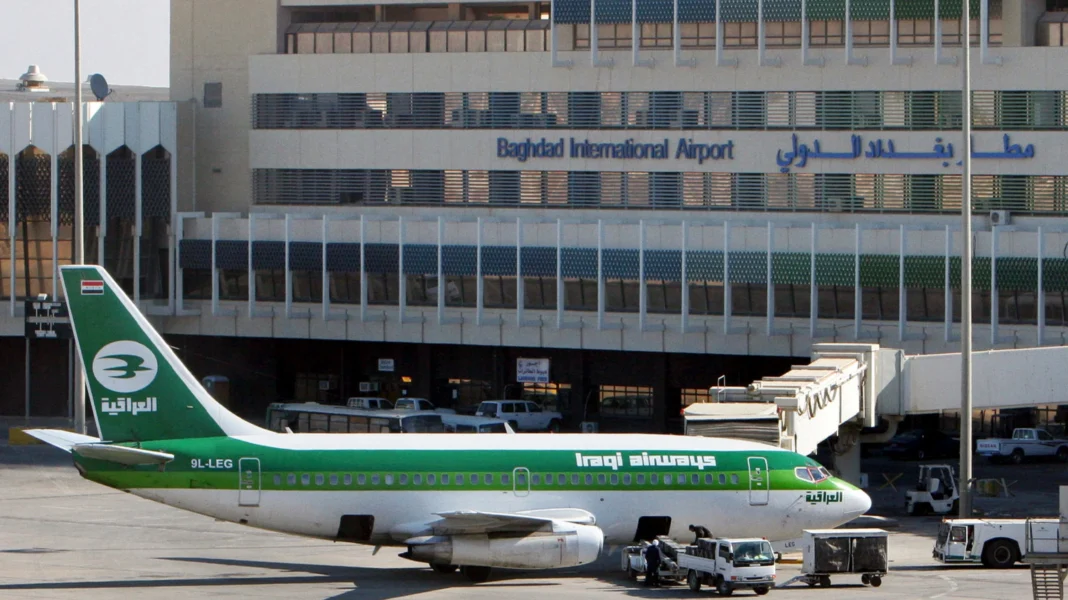
Baghdad – Iraq is facing growing financial losses after authorities suspended civilian overflights through the country’s airspace amid escalating regional tensions.
The Iraq airspace closure losses have reached an estimated $360,000 per day, according to figures released by the Eco Iraq Observatory. As a result, the suspension has created a new challenge for efforts to diversify state revenues beyond the oil sector.
Before the closure, Iraq served as an important transit route for international aviation. According to the observatory, around 800 aircraft crossed Iraqi airspace each day under normal conditions. Meanwhile, flight traffic during recent months averaged between 700 and 750 daily flights.
Each aircraft typically pays transit fees to use Iraqi airspace. Consequently, the government generated a steady source of income from international overflights. With airlines now avoiding Iraqi skies, those revenues have temporarily disappeared.
The observatory estimates that the shutdown costs Iraq approximately $15,000 every hour. Therefore, the financial impact continues to grow as long as restrictions remain in place. Analysts note that prolonged disruptions could increase pressure on government finances already affected by broader regional instability.
The Iraq airspace closure losses extend beyond direct transit fees. Aviation activity supports several sectors linked to transportation, logistics, and airport services. As a result, continued restrictions may affect broader economic activity connected to air travel.
Experts emphasize Iraq’s strategic geographic position between Asia, Europe, and the Middle East. Consequently, international airlines frequently use Iraqi airspace as an efficient transit corridor. This location has helped Iraq develop an important source of non-oil revenue in recent years.
The closure followed renewed military escalation between Iran and Israel. In response, Iraqi authorities suspended civilian air traffic and closed the country’s airspace as a precautionary measure. Meanwhile, officials continue monitoring security developments across the region.
The restrictions have affected several major airports. Baghdad International Airport halted operations following the decision. In addition, authorities suspended activity at Kirkuk International Airport and airports throughout the Kurdistan Region, including Erbil International Airport.
The Iraq airspace closure losses highlight the economic consequences of regional conflicts on countries beyond the immediate areas of confrontation. Therefore, business groups and economic observers continue to stress the importance of restoring normal aviation operations once security conditions improve.
For now, Iraq remains unable to collect transit fees from hundreds of daily flights. Consequently, the country continues to lose a valuable stream of revenue while awaiting a stabilization of regional security conditions.