

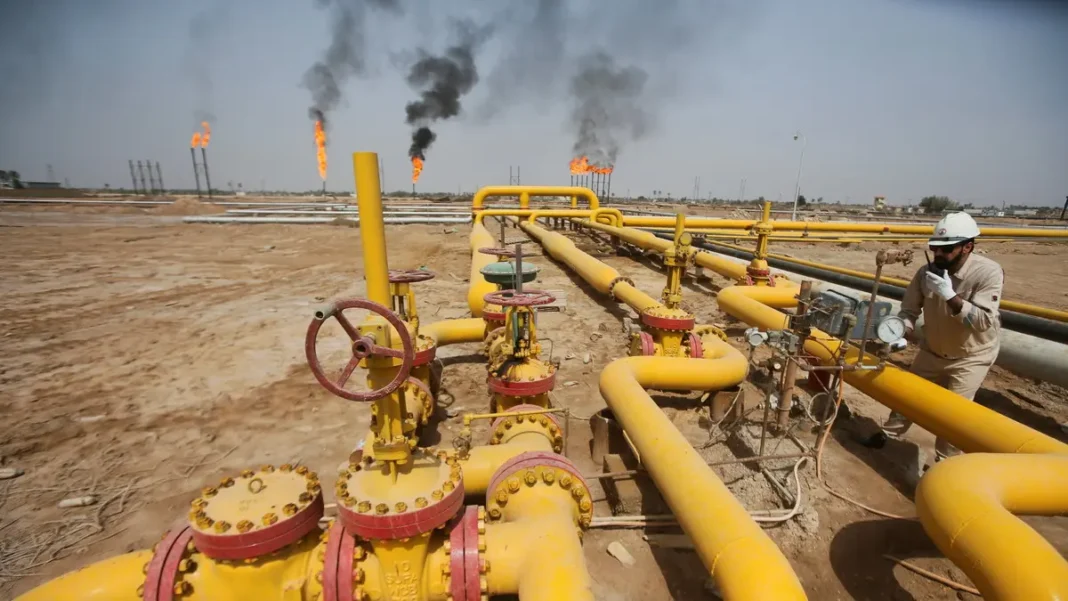
The Iraq oil export pressure has intensified as Iraq faces blocked shipping routes and rising regional instability. At the same time, OPEC+ prepares to increase output targets for major producers. This creates a difficult contrast for Baghdad. It can produce oil, yet it struggles to move it abroad. Consequently, revenue losses continue to mount.
The planned OPEC+ adjustment includes seven major producers. These include Iraq, Saudi Arabia, Russia, Kuwait, Algeria, Kazakhstan, and Oman. Together, they may add around 188,000 barrels per day in July. However, market conditions suggest actual export gains may remain limited.
The Iraq oil export pressure stems largely from disruptions in the Strait of Hormuz. Since late February, regional tensions have disrupted key shipping lanes. As a result, crude flows across the Gulf have dropped sharply. Iraq has felt this impact more than many other producers.
In addition, Iraq depends heavily on oil revenue for public spending. More than 95% of state income comes from crude sales. Therefore, any delay in exports immediately affects national budgets. Moreover, government borrowing needs have increased as revenues fall.Even though OPEC+ members plan higher output targets, real production remains below earlier levels. The Iraq oil export pressure highlights this gap between production capacity and export reality. Iraq can pump more oil, yet shipping constraints block delivery.
Similarly, Saudi Arabia has expanded output in several fields. However, it still faces logistical limits on exports. Kuwait and other Gulf producers report similar challenges. Consequently, the entire region struggles to convert production into revenue.To respond, Baghdad has accelerated plans to diversify export channels. For example, Iraq has increased focus on the pipeline to Turkey’s Ceyhan port. In addition, officials explore long-term routes through Jordan and Syria. These projects aim to reduce reliance on southern shipping lanes.
However, infrastructure limits slow progress. Therefore, immediate relief remains uncertain. The Iraq oil export pressure continues to weigh on fiscal planning and investment decisions. Meanwhile, policymakers search for faster solutions to stabilize income.
OPEC+ discussions also add complexity to Iraq’s situation. Although quotas may rise, actual exports depend on shipping access. Moreover, the alliance still operates below pre-conflict production levels. This limits the impact of any output increases.
Furthermore, shifts within OPEC+ have changed group dynamics. Some members have adjusted strategies in response to market disruptions. As a result, coordination has become more difficult. This adds pressure on Iraq’s already constrained export system.
Looking ahead, Iraq’s main challenge lies in export reliability, not production capacity. The Iraq oil export pressure shows that infrastructure matters as much as output. Without stable routes, higher quotas offer limited benefit.
Ultimately, recovery depends on regional stability and secure shipping lanes. If tensions ease, exports may recover quickly. However, continued disruption will keep revenues under strain. For now, Iraq faces a narrow path between production strength and export limitations.