

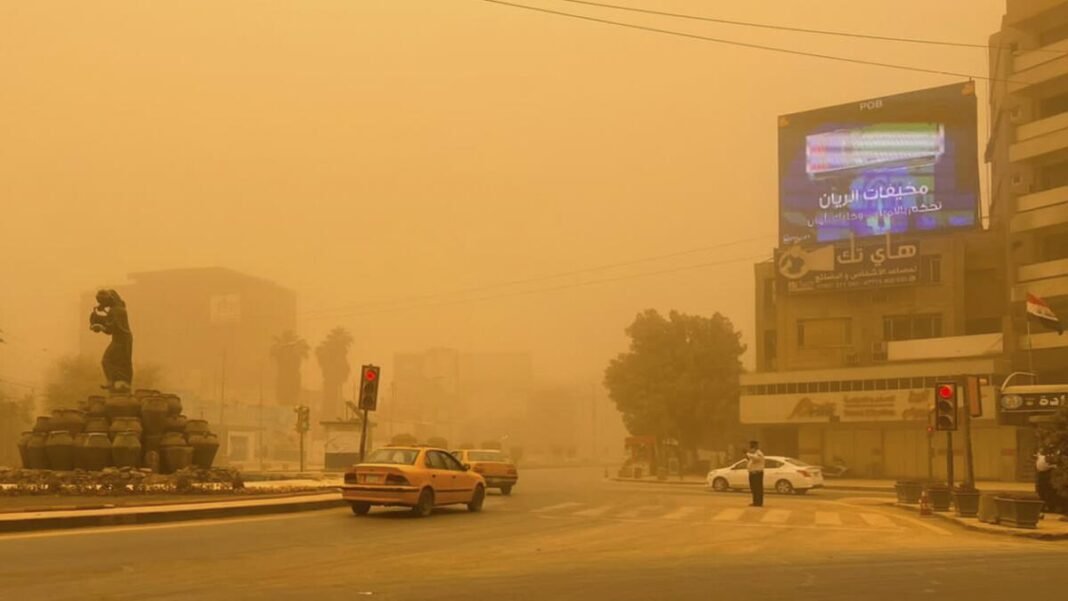
The Iraq sandstorm crisis intensified this week after heavy dust clouds covered Baghdad and several southern and central provinces. Hospitals across the country received hundreds of patients suffering from breathing difficulties as visibility dropped and air quality sharply declined. Health officials remained on high alert while emergency teams responded to rising respiratory cases.
Iraq’s Health Ministry reported that at least 837 people experienced breathing problems during the two-day storm. Most patients suffered from suffocation symptoms and respiratory distress caused by the dense dust in the air. Medical centers in Baghdad and other affected provinces prepared emergency units to handle the growing number of cases.
The sandstorm disrupted daily life in several cities. Thick clouds reduced visibility on roads and created difficult conditions for drivers and pedestrians. Many residents stayed indoors while authorities advised vulnerable groups to avoid unnecessary outdoor activity.
The current Iraq sandstorm crisis reflects a wider environmental challenge facing the country. Dust storms frequently strike Iraq during warmer months when strong northwesterly winds move across desert areas and the plains surrounding the Tigris and Euphrates rivers. However, environmental experts warn that these storms now occur more often and with greater intensity.
Specialists link the worsening conditions to climate change and severe drought. Reduced rainfall, rising temperatures, and shrinking vegetation have increased the spread of loose soil and dust across large areas. These factors continue to weaken environmental stability in many Iraqi provinces.
Water shortages have also added pressure to the situation. Iraqi authorities previously warned about declining water supplies caused by poor management practices and climate-related challenges. Lower river levels and dry farmland contribute to the expansion of dust-prone areas throughout the country.
Doctors say airborne dust creates serious risks for people with asthma, allergies, and chronic lung conditions. Fine dust particles can quickly enter the respiratory system and trigger severe health complications. Children, elderly residents, and outdoor workers remain among the most vulnerable groups during major storms.
Residents in Baghdad described the sky turning orange as thick dust covered streets and buildings. In some provinces, the storm affected transportation and slowed commercial activity. Officials continue monitoring weather conditions as forecasts suggest additional dust waves could reach parts of Iraq in the coming weeks.
The ongoing Iraq sandstorm crisis has renewed calls for stronger environmental policies and better water management strategies. Experts believe long-term solutions will require regional cooperation, climate adaptation projects, and efforts to combat desertification across vulnerable areas.