

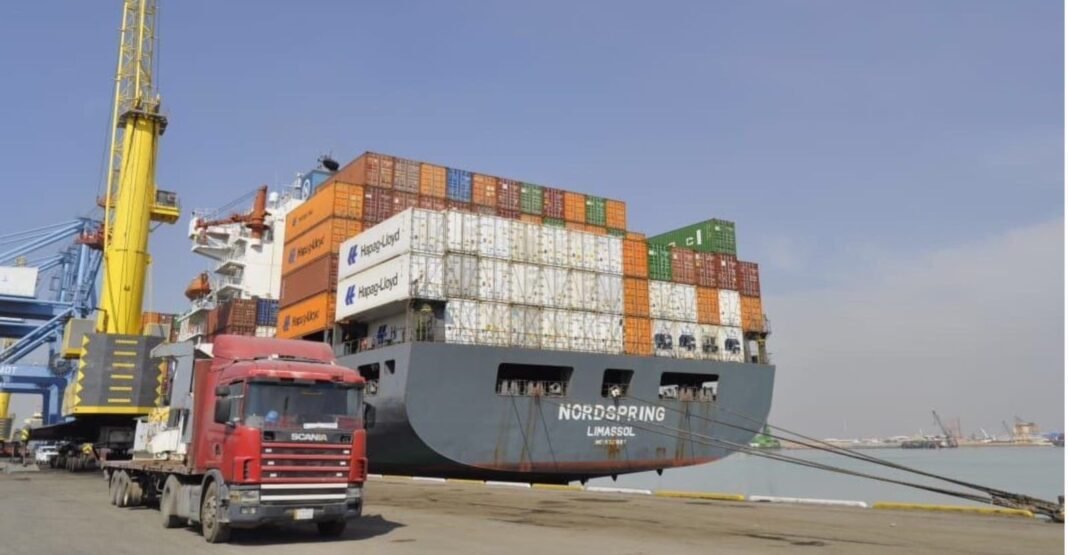
Baghdad – Iraq trade surplus reached nearly $24.7 billion in 2025 after exports continued to outperform imports throughout the year. New figures released by the Central Bank of Iraq highlighted the country’s strong external trade performance despite regional instability and volatility in global energy markets.
According to official data, Iraqi exports exceeded $90.43 billion during 2025. Imports, meanwhile, totaled nearly $65.74 billion. The difference between the two figures produced a trade surplus of approximately $24.686 billion by the end of the year.
The latest report showed that Iraq maintained a positive trade balance across all four quarters of 2025. Economists said strong export revenues, mainly from oil sales, played a central role in supporting the country’s financial position.
During the first quarter, Iraqi exports reached around $24.11 billion. Export revenues then declined to $23.29 billion in the second quarter. The downward trend continued in the third quarter, when exports dropped to nearly $21.41 billion. However, exports slightly recovered during the final quarter, reaching about $21.62 billion.
Import activity also shifted throughout the year. Iraq imported goods worth nearly $18.16 billion during the first quarter. Imports then declined to $15.99 billion in the second quarter. The third quarter recorded a slight increase to $16.10 billion before imports fell again to nearly $15.49 billion during the final quarter.
Analysts noted that Iraq trade surplus remained closely tied to oil market performance. Iraq depends heavily on crude oil exports as its primary source of government revenue and foreign currency inflows. Changes in global oil prices directly influence the country’s economic stability and trade balance.
The global oil market faced major challenges during 2025 because of escalating tensions involving Iran, Israel, and the United States. Regional instability disrupted shipping activity around the Strait of Hormuz, creating uncertainty across international energy markets and affecting export operations.
Despite those pressures, Iraq managed to maintain strong export levels throughout the year. The country remains the second-largest oil producer in the Organization of the Petroleum Exporting Countries (OPEC). Most Iraqi crude exports continue to move through southern ports in the Arabian Gulf.
Economists believe the positive trade balance could help Iraq strengthen foreign reserves and support public spending in the short term. However, they also warned that dependence on oil revenues leaves the economy vulnerable to geopolitical crises and fluctuations in global energy demand.
Some experts called for broader economic reforms to reduce Iraq’s reliance on oil exports. They stressed the importance of developing industrial production, agriculture, and non-oil sectors to achieve long-term economic stability.
Meanwhile, Iraq trade surplus figures reflect the country’s ability to sustain export activity despite regional tensions and challenging market conditions throughout 2025.