

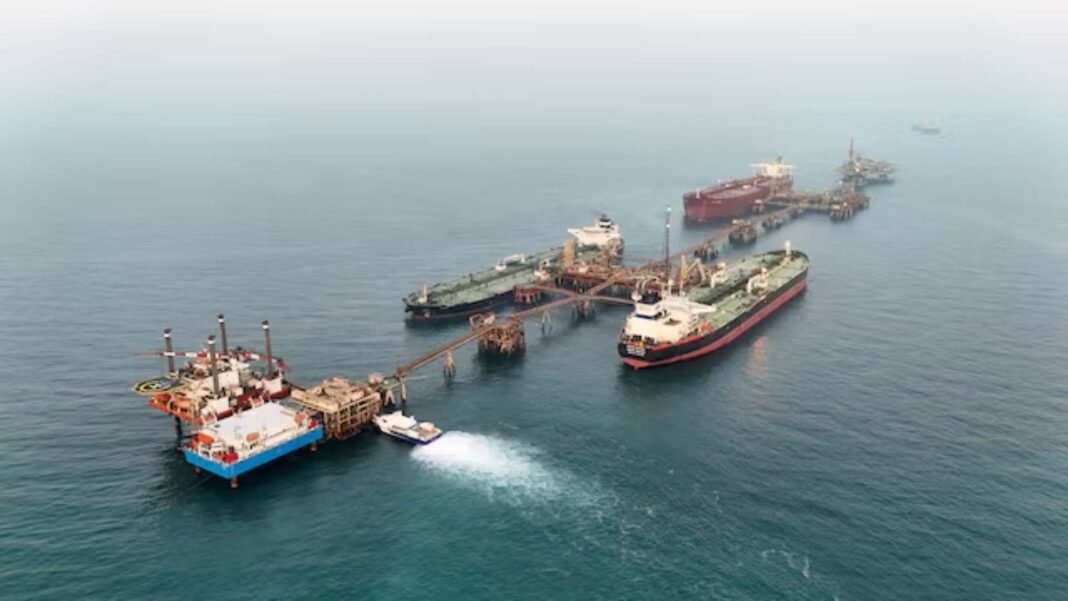
Baghdad – Iraq oil revenues suffered a dramatic decline in April after regional tensions and maritime disruptions severely affected the country’s crude exports. Official figures released by the Iraqi Ministry of Finance confirmed that the ongoing Strait of Hormuz crisis sharply reduced export activity and weakened state income.
According to data published through the State Organization for Marketing of Oil (SOMO), Iraq exported only 9.88 million barrels of crude oil during April 2026. The reduced export levels generated around $1.08 billion in total monthly revenues, marking one of the country’s weakest oil income periods in recent years.
The latest figures highlighted the growing economic impact of military escalation and naval disruptions across the Gulf region. Shipping companies reportedly avoided southern export routes because of rising security concerns in the Arabian Gulf and the Strait of Hormuz.
Officials said Iraq oil revenues declined mainly because southern exports from Basra dropped sharply during the month. Oil shipments from Basra fields reached only 4.58 million barrels in April. Analysts linked the decrease to fears of attacks on vessels and energy infrastructure near critical maritime routes.
At the same time, northern export routes gained greater importance for Iraq’s energy sector. Exports from Kirkuk oil fields, transported through the Iraqi-Turkish pipeline to the Turkish port of Ceyhan, reached nearly 4.96 million barrels. The northern corridor became Iraq’s most reliable export route during the maritime crisis.
The Kurdistan Region also contributed to northern exports through the same Turkish pipeline system. Official figures showed that exports from the Kurdistan Region totaled 339,064 barrels during April.
Energy experts warned that prolonged instability around the Strait of Hormuz could create serious economic pressure on Iraq. The country relies heavily on oil sales to finance government spending, infrastructure projects, and public sector salaries. Any major disruption in exports directly affects state revenues and economic planning.
The Strait of Hormuz remains one of the world’s most important energy corridors. A large percentage of global oil shipments passes through the narrow waterway each day. As regional tensions increased, many international shipping firms reduced operations or rerouted vessels away from high-risk zones.
Economists believe Iraq oil revenues may remain under pressure if security conditions fail to improve. They also warned that lower export levels could affect foreign reserves and delay major development projects across the country.
Meanwhile, Iraqi authorities continue monitoring export operations and global oil markets closely. Officials hope alternative export routes and improved regional stability can help restore crude shipments in the coming months.