

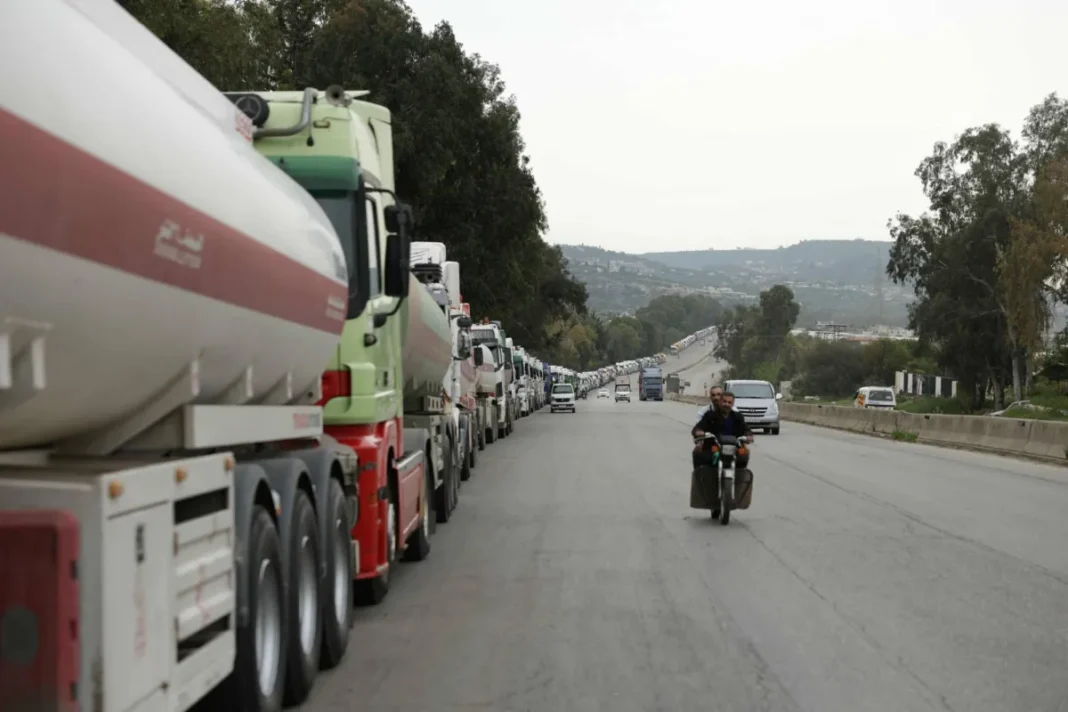
A new convoy carrying Iraqi petroleum products has entered Syria as Baghdad continues developing alternative export routes during regional shipping disruptions. More than 70 fuel tankers crossed the border through the Rabia–al-Yarubiyah crossing, marking the third major shipment within days.
The latest operation highlights the growing importance of Iraq’s fuel exports through the Syria route. Iraqi and Syrian authorities have recently increased coordination to facilitate the movement of petroleum products across Syrian territory toward Mediterranean ports.
According to border officials, the convoy traveled from Iraq into northeastern Syria before heading toward the coastal city of Baniyas. From there, the shipment continued along Mediterranean transport lines toward European destinations.
Baghdad has accelerated efforts to diversify export pathways following disruptions in regional maritime traffic. Concerns over instability around the Strait of Hormuz pushed several countries to seek alternative energy transport options. The strategic waterway handles a significant share of global oil shipments each day.
Earlier this month, Iraq launched its first crude oil export convoy using the same overland route. That shipment also included around 70 tanker trucks transporting oil products through Syrian territory.
The reopening of the Rabia–al-Yarubiyah crossing played a major role in enabling these operations. Iraqi and Syrian authorities officially resumed trade and passenger movement at the border point in April after more than a decade of closure caused by regional security challenges and the war against ISIS.
Officials from both countries continue restoring border infrastructure and transportation networks to revive economic activity. Authorities have also reopened additional crossings, including al-Waleed and al-Yarubiyah, to strengthen trade flows and improve regional connectivity.
The growing Iraq fuel exports through the Syria corridor could provide Baghdad with greater flexibility in energy logistics. Analysts believe overland export routes may reduce pressure on maritime shipping channels during periods of geopolitical tension.
Economic experts also expect the renewed border activity to benefit communities on both sides of the frontier. Increased trade movement may create business opportunities in transportation, logistics, fuel services, and border commerce.
Iraq remains heavily dependent on oil revenues, making export stability a national priority. Officials continue exploring multiple routes to maintain energy supplies to international markets while protecting trade from regional disruptions.
The latest convoy demonstrates how the Iraq fuel exports through Syria strategy is becoming an increasingly important part of Baghdad’s broader energy and trade planning.