

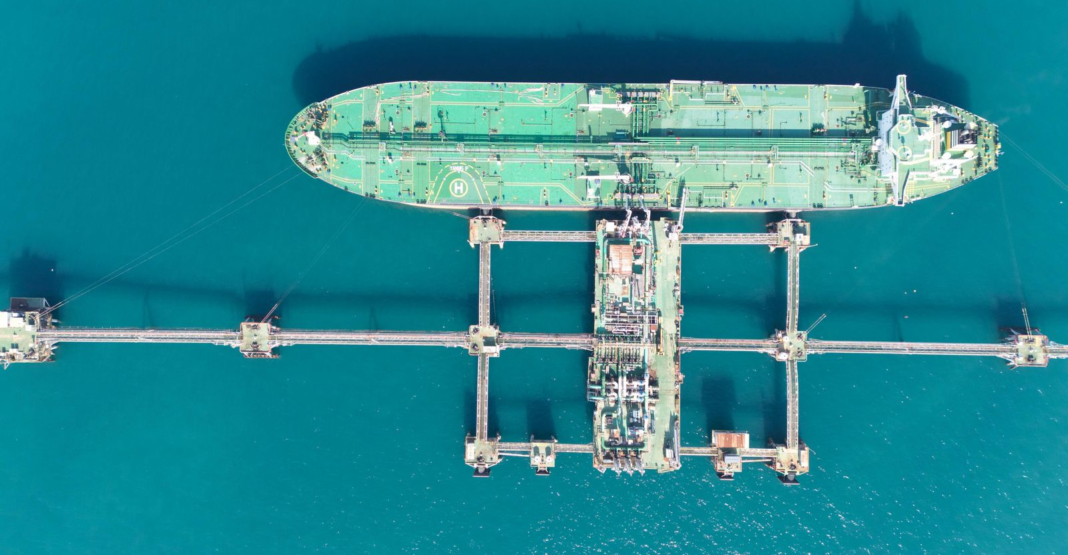
Oil flows from Iraq have slowed after disruptions affected southern export routes. Officials confirmed limits on shipments from major ports. As a result, the Iraq oil exports face pressure from regional instability and supply bottlenecks.
The State Organization for Marketing of Oil (SOMO) reported reduced export activity during recent months. Southern ports, which usually handle large volumes, stopped operations in early March. Therefore, Iraq’s oil exports dropped significantly compared to previous months.
Data shows exports fell to about 18.6 million barrels in one month. In contrast, earlier months recorded around 99.8 million and 107.6 million barrels. Consequently, Iraq oil exports experienced a sharp decline due to regional conflict.
Meanwhile, northern routes continued partial operations. Oil flows through pipelines in the Kurdistan region range between 160,000 and 200,000 barrels per day. In addition, traders sold crude at higher global prices. Therefore, Iraq oil exports remain active but uneven across regions.
Officials linked the disruption to wider instability affecting the Strait of Hormuz. This route plays a key role in global energy shipping. As a result, supply constraints increased international oil prices and trading pressure.
At the same time, Iraq is preparing new export options. The Kirkuk–Ceyhan pipeline may soon resume full operations. This route connects northern oil fields to the Turkish port of Ceyhan. Therefore, Iraq’s oil exports could recover part of their lost capacity.
Officials expect this pipeline to handle up to 600,000 barrels per day in the near term. In addition, its full capacity could reach 1.6 million barrels per day. Consequently, Iraq’s oil exports may increase once upgrades finish.
Saheb Bazoun explained that improving pipeline capacity remains essential. He emphasized that higher capacity will support stronger export levels. Therefore, Iraq oil exports depend on infrastructure expansion and stability.
Moreover, the situation highlights Iraq’s reliance on multiple export routes. Southern ports remain the main channel under normal conditions. However, northern pipelines now play a growing role. As a result, Iraq oil exports face both challenges and opportunities.
In conclusion, regional turmoil has reduced oil shipments from southern Iraq. Export levels dropped sharply, but alternative routes continue partial flows. The future of Iraq’s oil exports depends on stability and infrastructure development.