

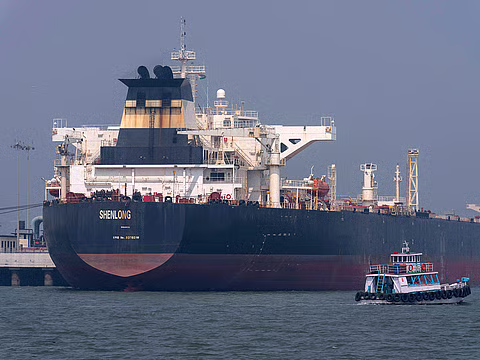
Iraq and Saudi oil shipments surged as crude flows resumed through the Strait of Hormuz. Iraq and Saudi oil shipments increased sharply after maritime conditions stabilized under a ceasefire.
First, shipping data confirmed a major recovery in oil movement. Around 6 million barrels of crude oil passed through the strait. This marked the highest flow since the start of recent disruptions.
Moreover, Iraq contributed significantly to the total volume. The country exported 2 million barrels of Basra crude through the waterway. As a result, Iraq strengthened its export performance during the reopening period.
In addition, Saudi Arabia played a larger role in total shipments. It moved 4 million barrels of crude oil to global markets. This contribution pushed overall Gulf exports higher and supported market stability.
Furthermore, tanker tracking reports confirmed strong vessel activity. Three Very Large Crude Carriers (VLCCs) left Gulf ports on the same morning. This increase showed a clear rise in shipping confidence.
At the same time, earlier crossings remained limited. Only a small number of vessels attempted transit during the first phase of the ceasefire. However, recent data shows a great improvement in maritime flow.
Meanwhile, energy markets responded quickly to the development. Traders watched the Strait of Hormuz closely due to its global importance. Therefore, increased shipments helped ease supply concerns.
Additionally, Iraq benefits strongly from this recovery. Higher exports support national revenue and improve fiscal stability. Oil prices also remain high, which increases export value.
On the other hand, shipping insurers now show greater confidence. They reduce risk premiums as conditions improve. This change encourages more vessels to return to normal routes.
In conclusion, Iraq and Saudi oil shipments through Hormuz reached 6 million barrels after the ceasefire. This development signals stronger trade flows and improved energy stability. Iraq and Saudi oil shipments now reflect a gradual return to normal market conditions.