

Baghdad—Iraq has signed major agreements to boost shipments through a new route. Officials confirmed plans to move large volumes via Syria. This shift highlights a growing Iraq fuel oil exports strategy.
First, the State Organization for Marketing of Oil secured deals for a steady supply. The contracts cover about 650,000 metric tons each month. These shipments will run across three months. Therefore, the Iraq fuel oil exports plan aims to stabilize flows.
Moreover, this land route had remained inactive for decades. However, recent regional changes have pushed leaders to revive it. The end of the conflict in Syria opened new opportunities. At the same time, maritime disruptions forced alternative solutions.
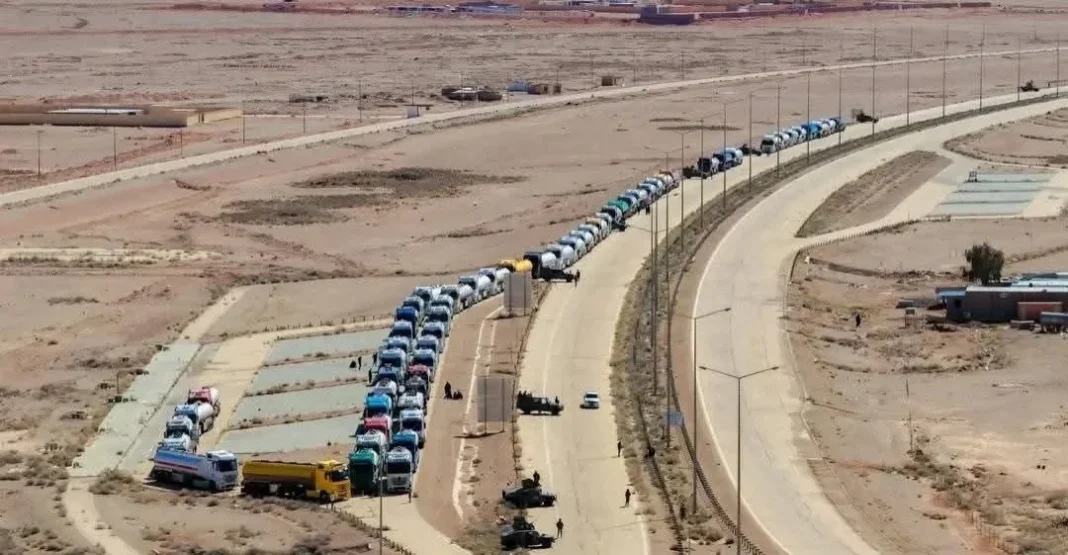
In addition, convoys have already started moving across borders. More than 60 tanker trucks now pass through the al-Waleed crossing. This key checkpoint links western Iraq to eastern Syria. As a result, trade activity has resumed after many years.
Furthermore, officials expect rapid expansion in transport capacity. Projections show an increase to between 600 and 700 trucks soon. This rise will significantly boost cross-border shipments. Still, trucks alone cannot match pipeline or sea exports.
Meanwhile, the broader regional situation continues to shape decisions. Tensions involving the United States, Israel, and Iran disrupted key shipping lanes. Consequently, the Strait of Hormuz closure created urgent export challenges.
Because of this, Iraq turned toward land-based alternatives. Officials awarded contracts to four domestic suppliers. These agreements ensure consistent fuel oil movement under difficult conditions. Thus, the Iraq fuel oil exports effort gained momentum.
Two suppliers will handle about 720,000 metric tons over three months. They will offer discounts between $160 and $170 per ton. Meanwhile, a third trader will export 401,000 tons at a similar discount. In contrast, a fourth supplier secured a smaller 90,000-ton contract. This deal carries a slightly lower discount of around $155 per ton.
At the same time, production levels have dropped sharply. Output from major southern oilfields declined by nearly 80 percent. Current levels stand near 800,000 barrels per day. Storage limits and shipping issues continue to restrict capacity.
Previously, Iraq relied heavily on southern ports. The Khor al-Zubair Port served as a key gateway. It’s connected Iraqi oil to global markets through the Gulf waters. However, recent disruptions reduced its role.
Therefore, leaders now prioritize flexibility in export routes. The Iraq fuel oil exports strategy reflects this shift clearly. Diversification has become essential for economic stability.
Looking ahead, Iraq may continue expanding land exports. Officials aim to secure revenue despite ongoing uncertainty. In conclusion, the Iraq fuel oil exports plan marks a significant change in energy policy.