

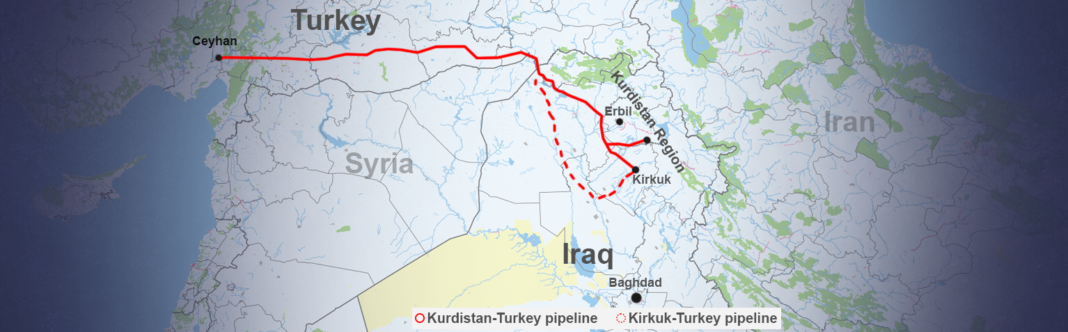
The Iraq oil export disruption pushes Baghdad to search for new routes to maintain crude shipments. Officials now discuss restarting the Kirkuk-Ceyhan pipeline with authorities in the Kurdistan Region.
Regional conflict has disrupted Gulf shipping lanes and energy infrastructure. Consequently, Iraqi leaders now seek alternatives to protect national oil revenues.
First, Baghdad requested cooperation from the Kurdistan Regional Government. Officials want to restart oil exports from Kirkuk through Kurdish territory. The route connects northern Iraq to Turkey’s Mediterranean port of Ceyhan.
Previously, this pipeline carried crude oil to global markets. However, operations stopped after rising regional tensions disrupted Iraq’s energy exports.
The Iraq oil export disruption also followed the suspension of international shipments earlier this month. Since then, Iraq has struggled to maintain stable export routes.
Therefore, Baghdad now considers the Kirkuk-Ceyhan route a critical option. The government wants to send large volumes of crude through Kurdish pipelines.
According to officials, Baghdad aims to export up to 200,000 barrels per day through the route. Such a move could ease pressure on Iraq’s oil sector.
However, negotiations remain complicated. Kurdish authorities insist that several long-standing disputes must reach solutions first.
These disputes involve financial transfers and regional autonomy in trade. Kurdish leaders argue that financial restrictions have slowed currency transfers to the region.
Furthermore, officials in Erbil request faster salary payments for public workers. They also want more authority over international commercial activities.
Meanwhile, Baghdad shows some willingness to resolve financial disputes. Authorities in the capital may accelerate payments to the Kurdistan Region.
However, the federal government still opposes expanded regional control over foreign trade. Leaders in Baghdad view this issue as a major national boundary.
In addition, international pressure increases during the crisis. Global markets now watch Iraq closely as oil prices continue to rise.
The Iraq oil export disruption has already affected regional supply routes. Attacks from Iran-aligned militias and broader conflict continue to threaten energy infrastructure.
At the same time, instability in the Strait of Hormuz creates additional challenges. This strategic waterway normally carries large volumes of global oil shipments.
As a result, Iraq must quickly secure alternative export paths. The Kirkuk-Ceyhan pipeline now appears as one of the fastest solutions.
Nevertheless, legal issues still shape negotiations. An international arbitration ruling previously addressed disputes over Kurdish oil shipments through Turkey.
That ruling determined that Ankara allowed Kurdish exports without Baghdad’s approval. Consequently, the pipeline stopped operations after the decision.
Now, Iraq seeks a new framework to restart the route legally. Officials hope cooperation between Baghdad and Erbil will stabilize exports.
Moreover, international partners also encourage a compromise. Energy markets depend heavily on reliable Iraqi oil supplies.
Therefore, both sides continue discussions despite political tensions. Each party understands the economic importance of restoring exports.
In the coming weeks, negotiations could determine the future of the pipeline. If talks succeed, Iraq may restore a key export route to global markets.