

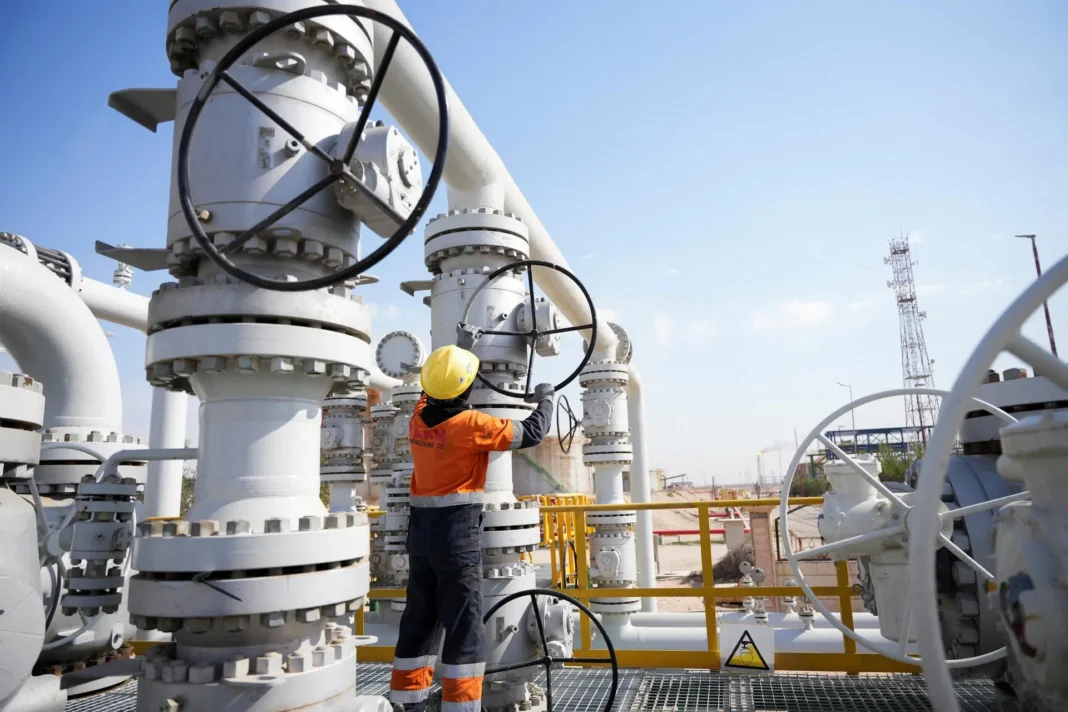
Iraq now faces a sharp decline in oil output. The Iraq oil production plunge now raises serious concerns across global energy markets. Regional conflict continues to disrupt tanker traffic and oil exports.
First, Iraq’s oil production dropped nearly 60 percent. The decline followed rising tensions involving the United States, Israel, and Iran. As a result, tanker movements slowed across the Persian Gulf.
Currently, Iraq produces between 1.7 and 1.8 million barrels per day. Previously, the country produced about 4.3 million barrels daily. Therefore, the Iraq oil production plunge reflects a major supply disruption.
Moreover, logistical problems continue to grow in the region. Fewer oil tankers now reach Gulf export terminals. Consequently, producers struggle to move crude to global markets.
In addition, storage facilities across Iraq are now filling rapidly. Oil companies store unsold crude because export routes remain unstable. As storage space shrinks, producers must cut output further.
The Iraq oil production plunge also shows how regional conflict affects energy supply. Oil producers rely heavily on safe shipping lanes. However, security concerns now restrict tanker access.
Meanwhile, the Strait of Hormuz remains a critical chokepoint for global oil trade. This narrow waterway connects Gulf oil producers to international markets. Therefore, disruptions in this strait quickly impact energy supplies worldwide.
Normally, about 20 percent of global oil exports pass through the Strait of Hormuz. This equals millions of barrels moving daily across global shipping routes. However, current disruptions now limit tanker access.
As a result, Gulf oil producers face growing pressure. Limited shipping capacity forces companies to store oil instead of exporting it. Consequently, supply chains are slow across the region.
Iraq became the first major Gulf producer to reduce oil supply because of the crisis. Soon after, other producers also reacted to the growing disruption. The United Arab Emirates and Kuwait began adjusting production levels.
These actions highlight the broader regional impact. Energy markets now watch developments carefully. Any prolonged disruption could reshape global supply patterns.
Furthermore, the Iraq oil production plunge increases pressure on global oil prices. Reduced supply often pushes prices higher in energy markets. Therefore, traders monitor every development near the Strait of Hormuz.
At the same time, governments and energy companies search for alternative strategies. Some producers increase storage capacity temporarily. Others explore different export routes to protect supply chains.
However, the situation remains uncertain. Regional tensions continue to threaten shipping routes and infrastructure. Consequently, energy markets remain highly sensitive to new developments.
Ultimately, the Iraq oil production plunge illustrates how geopolitical conflict can quickly disrupt global energy flows. If instability continues, global oil markets could face deeper supply shocks.