

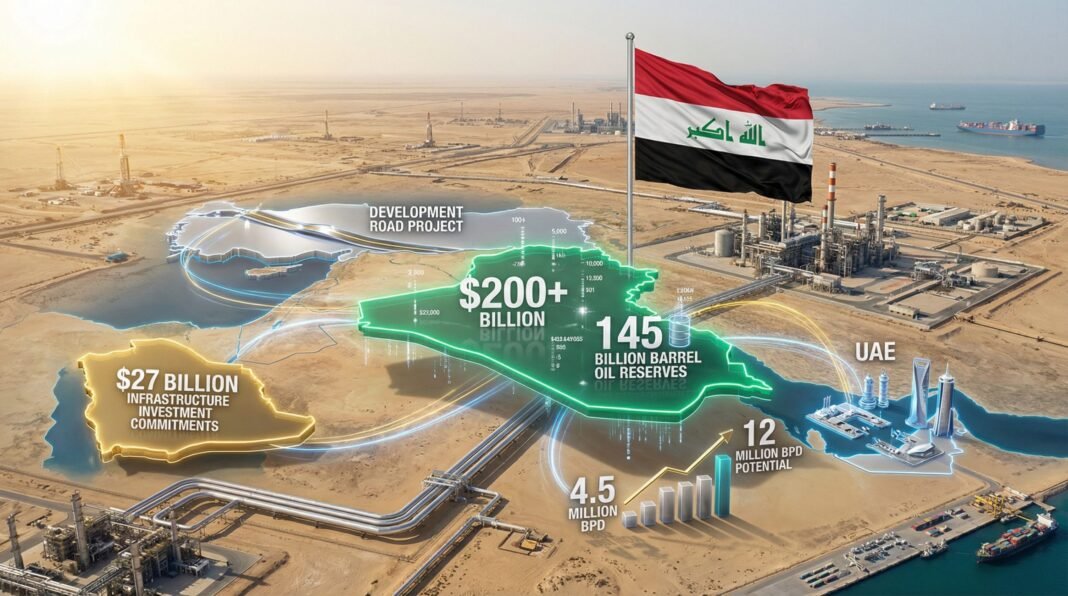
Iraq may be preparing its biggest geopolitical pivot in years. The country is moving closer to Western powers through its energy sector. Observers see this as a major shift away from Russia, China, and Iran. Iraq signals pivot toward the West as Chevron and other firms re-enter key oil fields.
Chevron has emerged as the leading candidate to develop Iraq’s West Qurna 2 oilfield. This follows Lukoil’s exit after U.S. sanctions targeted Russia’s top oil producers. Baghdad temporarily nationalized the field to keep production flowing. The move allows Western companies to take control. The Iraq signals pivot toward the West shows the government’s willingness to diversify partners.
Additionally, Chevron plans to develop the Nasiriyah Project in Dhi Qar province. However, This project includes four oil exploration blocks. The company also intends to expand the Balad oil field in Salah al-Din province. These projects represent a multi-billion-dollar investment in Iraq’s energy infrastructure.
The shift comes after Washington, London, and Brussels tightened sanctions on Russian oil firms.As well as, Lukoil and Rosneft faced restrictions on all entities where they hold more than 50% stakes. Lukoil exited Iraq quickly, while Rosneft reduced its stake in the Kurdistan Pipeline Company. These moves cleared the path for Western firms to enter Iraq.
China previously held stakes in around 24 billion barrels of Iraq’s oil. Chinese companies manage roughly 3 million barrels per day. Russia consolidated its influence in northern and southern Iraq through Lukoil and Rosneft. The U.S. and its allies want to reduce these influences while reinforcing Baghdad’s ties with Western nations. The Iraq signals pivot toward the West could weaken Moscow, Beijing, and Tehran in Iraq.
France’s TotalEnergies leads a $27 billion deal to expand the Common Seawater Supply Project. BP agreed to a $25 billion five-field deal in northern Iraq. These deals allow Western firms to anchor Baghdad’s interests while boosting oil production. West Qurna 2, with 13 billion barrels of recoverable oil, currently produces 480,000 barrels per day. Full development could reach up to 1.2 million barrels daily.
In short, Iraq is actively inviting Western energy investments. Chevron and others re-enter critical projects to support Iraq’s oil output. Analysts say this marks a turning point in Iraq’s geopolitical alignment. The Iraq signals pivot toward the West as energy development becomes the main driver of foreign policy.