

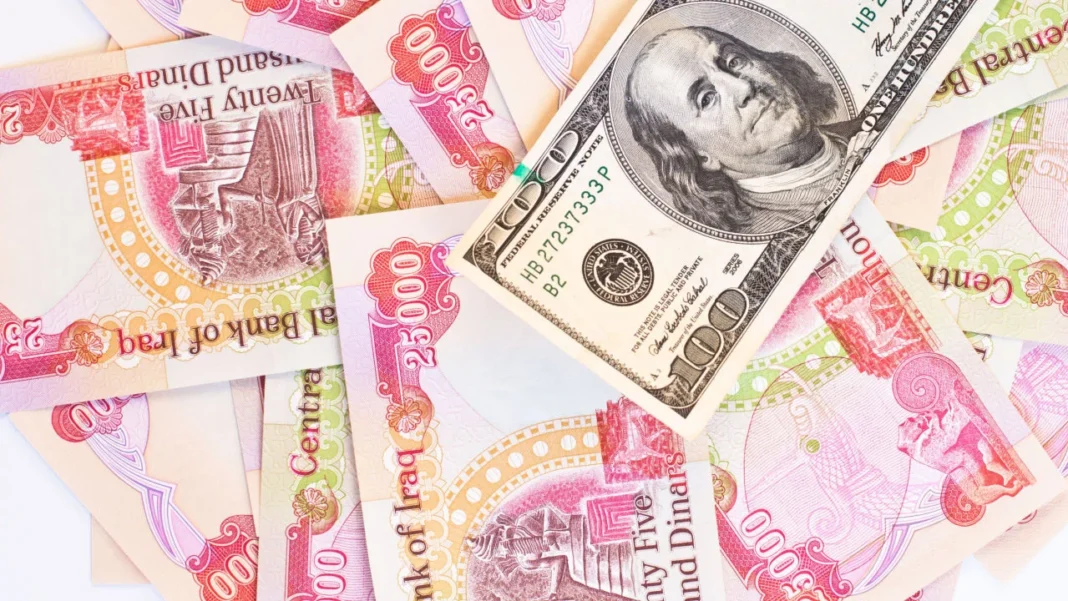
Iraq recorded a slight rise in dollar exchange rates across major cities. Markets in Baghdad and Erbil both showed higher opening levels. Moreover, traders followed price changes closely during early trading. Therefore, the Iraq USD/IQD market movement reflected calm but firm demand.
In Baghdad, the dollar strengthened against the Iraqi dinar. Central exchanges in Al-Kifah and Al-Harithiya quoted 146,800 dinars per 100 dollars. This rate increased from 146,000 dinars per 100 dollars previously. Consequently, the dinar weakened slightly in the capital.
Exchange shops in Baghdad followed the same upward trend. Sellers offered the dollar at 147,250 dinars per 100 dollars. Meanwhile, buyers paid 146,250 dinars per 100 dollars. This spread reflected normal trading margins.
Traders in Baghdad linked the rise to higher dollar demand. Import-related payments increased activity. Additionally, cash movement between markets affected prices. As a result, the Iraq USD/IQD market movement leaned upward.
Market participants described trading as orderly and balanced. No sharp volatility appeared during the session. Sellers avoided aggressive pricing. Buyers also acted cautiously. Therefore, the market stayed stable.
In Erbil, the dollar also gained modestly. Exchange shops sold the dollar at 146,100 dinars per 100 dollars. Buying prices reached 145,950 dinars per 100 dollars. These figures showed a small increase.
Currency dealers in Erbil cited steady commercial demand. Cross-border trade influenced dollar needs. Moreover, remittance flows added pressure. Consequently, prices edged higher.
Despite the increase, traders reported calm sentiment. Volumes remained moderate. No panic buying appeared. Thus, confidence stayed intact.
The difference between Baghdad and Erbil prices remained narrow. Regional factors often cause such gaps. Transportation costs and cash availability influence rates. Therefore, small variation remains common.
Analysts consider these movements routine. Exchange rates often adjust daily. Supply and demand drive short-term changes. Hence, the Iraq USD/IQD market movement followed familiar patterns.
Central bank policies continue to shape expectations. Oversight supports liquidity management. Moreover, regulations limit excessive speculation. These measures help maintain stability.
Traders also watch regional markets closely. External currency flows affect local pricing. Import cycles influence dollar demand. As a result, rates adjust accordingly.
The dollar rise did not signal long-term pressure. Market observers stressed short-term adjustment. Single-session moves rarely define trends. Therefore, caution remains necessary.
Businesses monitor exchange rates carefully. Currency changes affect import costs directly. Stable movements help planning. Thus, limited rises reduce uncertainty.
Households also follow currency prices. Exchange rates influence consumer goods prices. However, small changes usually have limited impact. Therefore, daily life remains unaffected.
The banking sector plays a role in stability. Cash availability affects exchange shops. Smooth distribution reduces sudden jumps. Consequently, coordinated oversight matters.
Currency traders expect continued monitoring. Upcoming trade settlements may influence demand. Market liquidity will guide pricing. Hence, flexibility remains key.
Regional variation will likely continue. Baghdad and Erbil respond differently to demand. However, convergence often appears later. Thus, gaps may narrow again.
Overall sentiment stayed cautious but calm. Market participants focused on routine operations. No unusual activity emerged. Therefore, stability prevailed.
In summary, the dollar strengthened slightly in both Baghdad and Erbil. Baghdad reached 146,800 dinars per 100 dollars, while Erbil sold at 146,100 dinars per 100 dollars. The Iraq USD/IQD market movement remained controlled and orderly.