

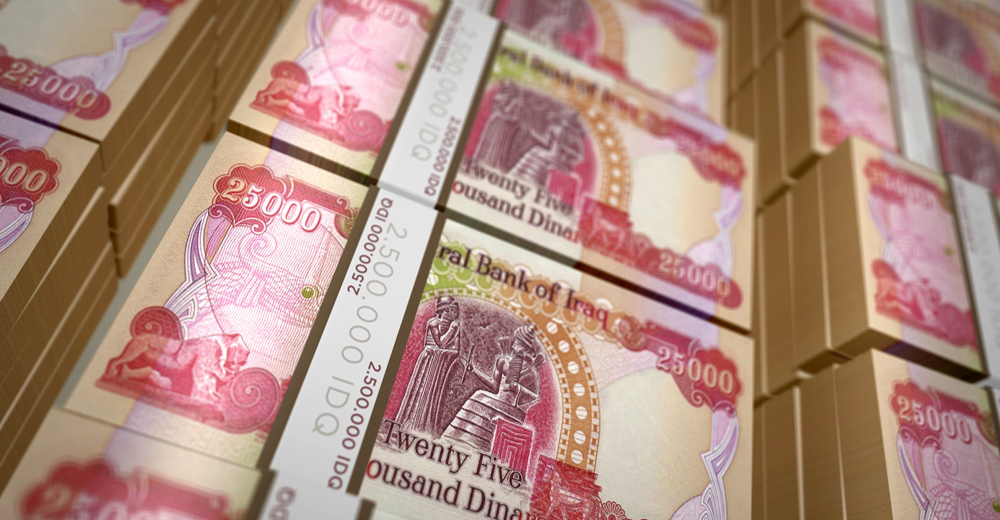
Non-Dollar Trade Rules, Iraq introduced new banking measures to regulate foreign currency trading beyond the dollar. The Central Bank led this move to strengthen financial discipline nationwide. Moreover, officials aimed to improve transparency and stability across the banking sector. Therefore, the policy targets banks that handle alternative currencies
The new framework focuses on trades using the euro, yuan, and dirham. Banks must now meet stronger capital standards before joining these markets. Consequently, regulators want to limit risk and speculation. This approach reflects Iraq’s push for controlled reform.
Under the rules, banks must hold very high capital levels. Specifically, institutions need hundreds of billions of dinars in paid capital. Additionally, banks must commit to future capital increases. This requirement ensures long-term financial strength.
The Central Bank also emphasized liquidity standards. Banks must maintain steady liquidity buffers at all times. Moreover, they must follow global liquidity benchmarks. These benchmarks support resilience during market stress.
Ownership transparency forms another key requirement. Banks must clearly disclose ownership structures. Furthermore, they must reveal related-party relationships. This step helps regulators track influence and control.
The reform also addresses governance quality. Strong disclosure improves trust within the financial system. Therefore, authorities expect better compliance and accountability. Iraq non-dollar trade rules aim to raise professional standards.
Officials designed these measures as part of a wider reform plan. The plan seeks to modernize Iraq’s banking sector. Moreover, it supports financial integration with global markets. Thus, the policy serves both local and international goals.
Banks that fail to meet requirements cannot trade non-dollar currencies. This restriction encourages consolidation and stronger institutions. As a result, weaker banks may seek mergers or capital injections.
The Central Bank wants to reduce currency volatility. By tightening access, regulators can monitor flows better. Consequently, speculative activity may decline. This outcome supports exchange rate stability.
Iraq also aims to diversify currency usage carefully. Non-dollar trades can support trade with key partners. However, authorities prefer gradual expansion. Therefore, strict rules guide participation.
Economic analysts see the move as cautious but necessary. They note past challenges with liquidity and compliance. Moreover, reforms can rebuild confidence among investors. Iraq non-dollar trade rules reflect this cautious strategy.
The banking sector plays a vital role in economic reform. Strong banks support trade, investment, and growth. Thus, regulators prioritize sound foundations first.
These changes may limit short-term access for some banks. However, officials expect long-term benefits. Stability and transparency outweigh short-term constraints.
Over time, compliant banks may gain stronger international links. Improved standards can attract partnerships and funding. Consequently, the sector may grow healthier.
The Central Bank continues to monitor implementation closely. Supervisors plan regular reviews and assessments. Moreover, they expect banks to adapt quickly.
In summary, Iraq reinforced banking rules for non-dollar currency trading. Capital strength, liquidity, and transparency now guide access. Iraq non-dollar trade rules mark a major reform step.