

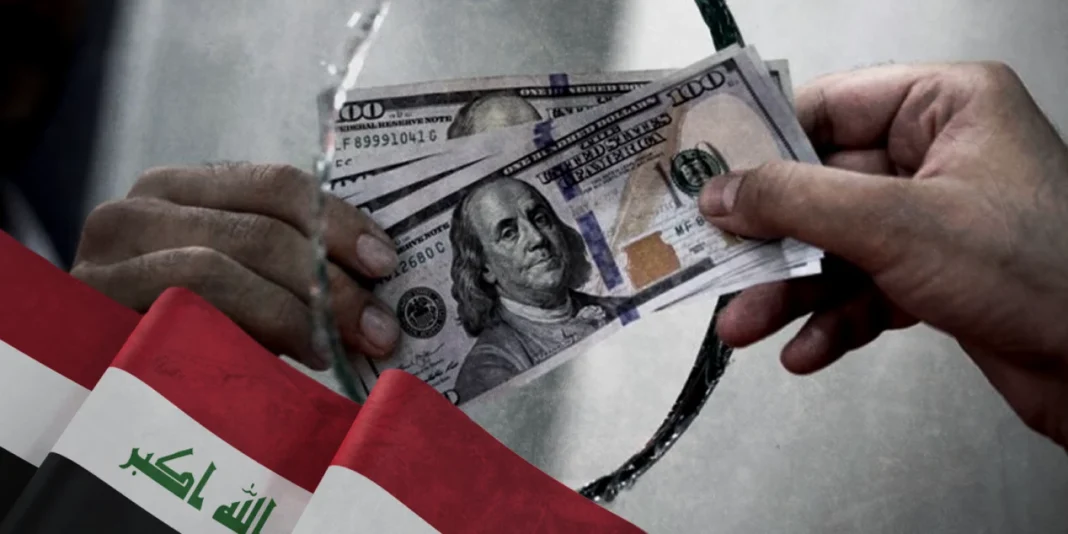
In Iraq, foreign currency sales drop sharply. This trend worries many business experts across the country. The Central Bank of Iraq, known for controlling the nation’s money flow, reports these numbers. Many economists study these results to understand the economy better.
At the same time, foreign currency sales drop sharply because traders show less interest in cash transactions. Instead, they use official bank channels more. These official channels help businesses pay for imports. Meanwhile, traders believe they avoid risk by dealing through the banks.
Moreover, Iraq’s financial market changes quickly. In June, foreign currency sales drop sharply and fall to about $5.7 billion. This amount stands much lower than the $6.5 billion recorded the previous month. Economists link this drop to several reasons. They talk about tighter controls and changes in market demand.
Furthermore, cash sales saw the biggest decrease. The banks only sold $99 million in cash during June. This number marks the lowest monthly total since Iraq started its cash sale system. Over six months, cash sales reached $1.4 billion. This figure fell from $1.76 billion in the same period last year.
However, not all news sounds gloomy. Sales through the account reinforcement method keep growing. Businesses use this channel to pay for goods from other countries. In June, these transactions rose to $5.6 billion. This number stands 35% higher than last year’s amount for the same month.
Throughout the first half of this year, such sales reached $35.8 billion. This number reflects a strong 37% growth over last year. Businesses find the account reinforcement method safer and more reliable. Many traders shift their focus to these channels to avoid market risks.
Meanwhile, the Central Bank of Iraq changes its approach. It halts international transfers and only sells dollars through account reinforcement or direct cash sales to travelers. These decisions reshape Iraq’s currency market. Many people wonder if this signals deeper economic shifts.
Despite many changes, Iraq’s parallel market exchange rate stays steady. Economists feel surprised by this stability. They expected the rate to fluctuate due to lower cash sales and stricter rules.
By the end of this year, the Central Bank plans to sell around $70 billion in foreign currency. Last year, the bank sold over $80 billion. Analysts keep watching these numbers closely. They believe foreign currency sales drop sharply for several reasons. One reason includes lower consumer spending. Another involves traders moving toward official banking platforms.
As a result, many experts think Iraq’s economy may slow down. They urge close monitoring of cash flows, market reactions, and consumer habits. All eyes stay on how Iraq handles its financial future.