

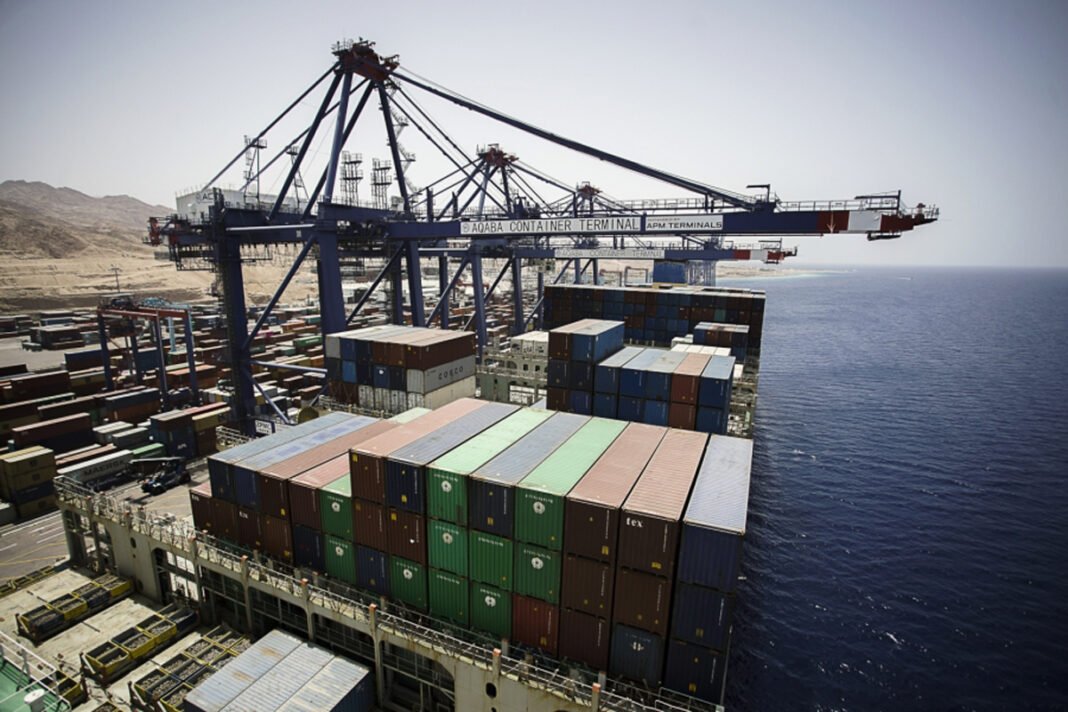
Jordan’s exports to Iraq increased sharply in 2024, marking a major shift in the trade relationship between the two nations. The rise in Jordanian exports reached 44% compared to the previous year, according to a recent economic study. The key phrase, Jordan-Iraq trade imbalance, reflects a growing concern for Iraqi policymakers and economists.
Jordan’s export value to Iraq surged to $1.4 billion, rising from $956 million in the previous year. Fertilizers topped the export list, soaring by 236% to $187 million. Cleaning products followed, growing 18% to $186 million. Pharmaceutical exports rose as well, increasing 54% to $177 million.
Additionally, Jordan expanded its food exports to Iraq. Fruit and vegetable shipments jumped by 130% to $48 million. Meat exports more than doubled, reaching $41 million from just $20 million the year before.
In contrast, Iraq’s exports to Jordan declined by 5%, totaling $265 million in 2024, compared to $279 million in 2023. The drop came mainly from an 8% fall in oil and petroleum product exports. These oil-based goods, which form 90% of Iraq’s exports to Jordan, fell from $260 million to $239 million.
Non-oil exports from Iraq showed mixed results. Carbonated beverages and juice exports increased strongly, rising from $943,000 to $12 million. However, date exports declined 11% to $4.5 million. This underlines the ongoing challenge for Iraq’s non-oil sector.
The Jordan-Iraq trade imbalance widened further due to these trade shifts. The trade gap reached $1.1 billion in 2024, rising from $676 million a year earlier. Economic expert Manar Al-Obaidi explained that Iraq is increasingly dependent on Jordanian products. He also pointed out that Iraq’s financial transactions with Jordan are smoother than with countries facing political or logistical issues.
Al-Obaidi expressed concern about Iraq’s lack of strong trade policy or export strategy. He warned that the deficit could grow unless Iraq boosts its domestic industries. Al-Obaidi emphasized the need to support local manufacturing in key sectors like petrochemicals, pharmaceuticals, and fertilizers.
He urged Iraq’s Ministry of Trade to create a clear national plan. Such a plan would help rebalance Iraq’s trade with Jordan and other countries. Without these efforts, the Jordan-Iraq trade imbalance may continue growing, weakening Iraq’s economic position in the region.