

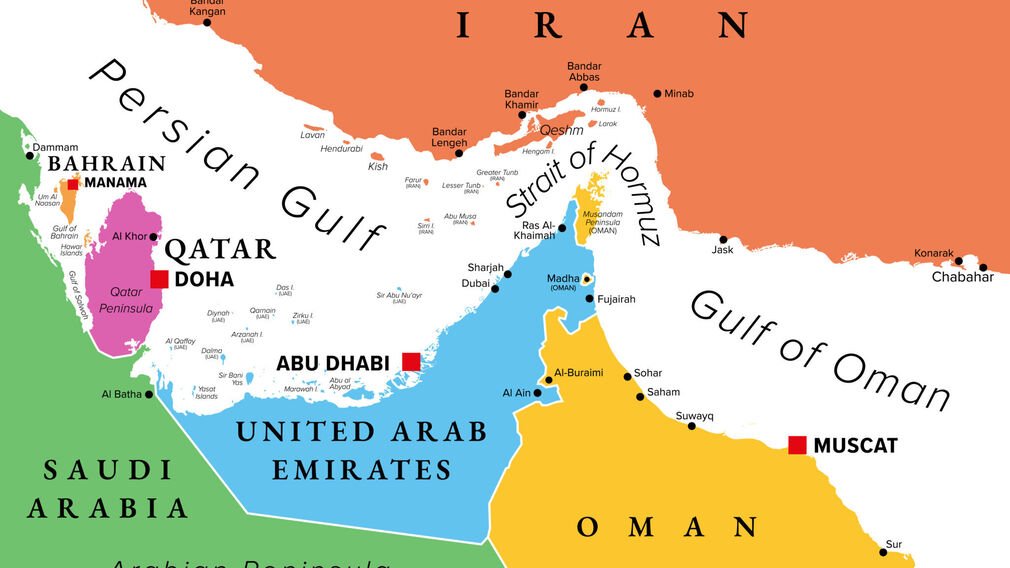
The Strait of Hormuz and Asia’s oil supply from Iraq, KSA, UAE, Qatar, and Iran is under growing pressure. Over 84% of the oil that moves through the strait heads to Asia. That leaves countries like China, India, South Korea, and Japan highly exposed. so If Iran blocks the waterway in response to U.S. strikes on its nuclear sites, these nations could face serious energy shortages.
Each day, around 14.2 million barrels of crude oil and 5.9 million barrels of other petroleum products pass through the strait. This flow made up about 20% of global production in the first quarter. Nearly all this oil comes from Saudi Arabia, the UAE, Iraq, Kuwait, Qatar, and Iran.
China is the largest buyer. It imported 5.4 million barrels of crude daily through the strait in early 2025. Saudi Arabia provides 1.6 million barrels per day, making it China’s second-largest supplier. as well as China also buys more than 90% of Iran’s oil exports. In April, it imported 1.3 million barrels of Iranian oil each day.
India is also heavily dependent on this route. It imported 2.1 million barrels a day through Hormuz in early 2025. Over half of India’s oil comes from the Middle East, mainly Iraq and Saudi Arabia. But to reduce risk, India has been buying more oil from Russia. Officials in New Delhi say most oil now comes through safer routes.
South Korea imported 1.7 million barrels of crude a day through Hormuz. Nearly 70% of its oil passes through the strait. Saudi Arabia is its top supplier, covering about one-third of its imports. The government said there have been no supply issues yet. But they are preparing for possible disruptions. The country has oil reserves that can last 200 days.
Japan relies on the strait for 1.6 million barrels a day. Almost 95% of its crude comes from the Middle East. as well as Japanese shipping companies are already acting. They are reducing time spent in the Gulf. Mitsui OSK said it is working to cut risk for its vessels.
Other Asian countries like Thailand and the Philippines also depend on Hormuz. In addition, 0.5 million barrels go to Europe and 0.4 million barrels to the United States each day.
Asian countries have few alternatives. Replacing Middle Eastern oil is not easy. Experts at MUFG Bank say extra global oil stocks, OPEC+ spare output, and U.S. shale may help.So Still, if Hormuz shuts down, most of that spare output remains trapped in the Gulf.
Saudi Arabia and the UAE can use pipelines to bypass the strait. But together, they can only ship 2.6 million barrels per day that way. Iran has the Goreh-Jask pipeline, but it has been inactive since last year. At full capacity, it can move only 300,000 barrels daily.
The Strait of Hormuz and Asia’s oil supply from Iraq, KSA, UAE, Qatar, and Iran remain exposed to rising threats. Asian governments must now prepare for major disruptions and consider long-term energy strategies.