

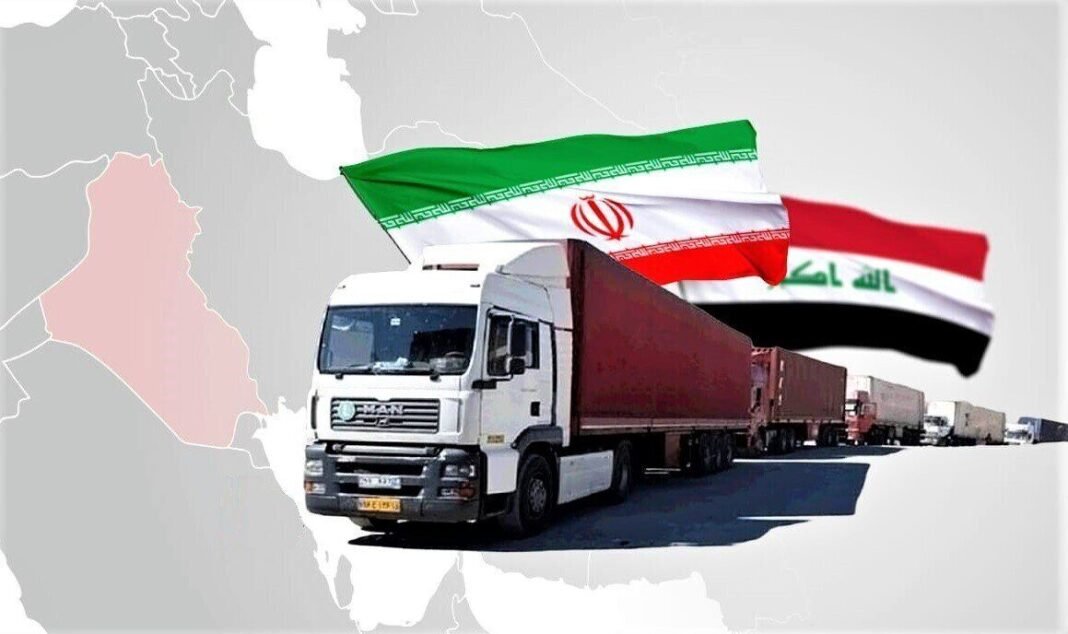
Iraq-Iran trade in focus after Iraqi officials announced plans to more than double the annual trade volume with Iran. During an official visit to Tehran, Hazem Al-Khalidi, advisor to the Iraqi Prime Minister, revealed that trade between the two nations could grow to $25 billion each year.
Currently, trade between Iraq and Iran stands at around $11 billion. This accounts for a significant part of Iraq’s total foreign trade, which amounts to nearly $70 billion. Al-Khalidi stated that with stronger cooperation, the trade figure could increase once several agreements are finalized.
Iraq and Iran plan to launch joint industrial cities, shared economic zones, and border markets to boost cross-border trade. These projects aim to improve infrastructure, reduce trade barriers, and increase investment between the two nations. Iraq-Iran trade in focus now points to a deepening partnership driven by mutual economic benefit.
Iran’s Minister of Economic Affairs and Finance, Abdolnaser Hemmati, echoed the same urgency. He called for immediate follow-up on existing agreements. Hemmati stressed the importance of finishing major projects, especially the long-delayed Shalamcheh–Basra railway. This railway is expected to enhance transport between Iran’s Khuzestan Province and Iraq’s Basra, reducing shipment costs and boosting commercial flows.
In the past eleven months, Iran exported $11.2 billion worth of non-oil goods to Iraq. These exports included food products, building materials, manufactured goods, petrochemicals, and essential natural gas. Iraq-Iran trade in focus reflects how vital these flows have become for both economies, especially amid regional economic shifts.
The two countries enjoy one of the strongest trade relationships in the Middle East. While political ties have played a role, the economic side continues to grow due to practical cooperation. Both sides now aim to turn plans into action and transform agreements into functioning economic zones and infrastructure links.
Al-Khalidi emphasized that these economic ties are not just about commerce. They are also about creating jobs, stabilizing the region, and attracting further investment. Iraq sees joint ventures with Iran as part of its strategy to expand industrial capacity and reduce dependence on single markets.
In conclusion, with better planning and real implementation, Iraq-Iran trade in focus could soon mean a jump from $11 billion to $25 billion per year. The path forward requires strong coordination and timely action from both sides.