

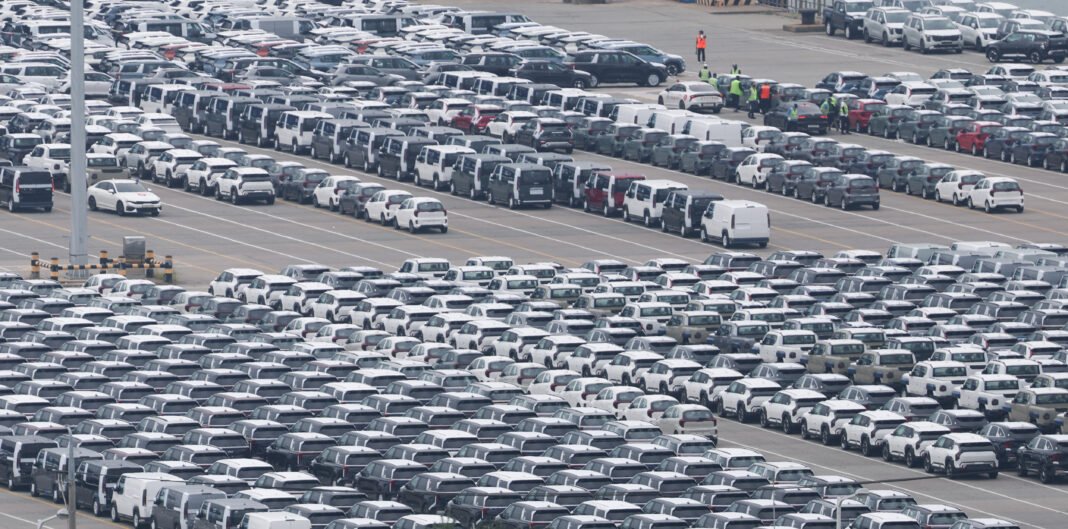
South Korea prepares for a challenging year in the automotive sector, and industry experts now highlight clear signs of a slowdown. New projections point to a drop in South Korea car exports, and many companies already adjust their global strategies. Although the country maintains a strong manufacturing base, several external factors now shape the outlook for next year. Moreover, global competition grows stronger as more producers shift their focus toward local production.
Industry associations expect exports in 2025 to fall to around 2.71 to 2.72 million units. This number represents a decline of more than two percent compared to the previous year. Analysts explain that this downturn breaks a five-year growth streak. They also note that South Korea last saw a yearly drop during the global pandemic period, which disrupted production and slowed international trade. However, the reasons for the upcoming decline differ greatly from those earlier disruptions.
Exports to the United States, the largest market for Korean vehicles, show the sharpest decrease. Shipments to the US dropped nearly eight percent during the first ten months of the year. This decline carries significant weight because the American market plays a major role in the success of South Korea car exports. The shift also reflects changing trade policies, growing competition, and new production strategies among Korean companies.
Hyundai Group recently opened a large electric vehicle plant inside the United States. The company plans to expand its annual capacity to meet growing domestic demand. This move reduces the need for imported vehicles from South Korea, especially electric models. As more production shifts overseas, shipments from South Korea naturally decrease. Additionally, other manufacturers explore similar strategies that focus on localizing production in major markets.
Another challenge comes from US tariffs on imported Korean cars. Although the tariff rate dropped from 25 percent to 15 percent, companies still feel significant pressure. Higher costs affect final retail prices, and rising prices may weaken demand. When companies raise prices to maintain strong profits, customers in the US often look for more affordable alternatives. This situation affects South Korea car exports directly and forces companies to consider new marketing and production strategies.
Despite these difficulties, the South Korean automotive industry continues to invest in electric vehicles, research, and new technologies. Companies aim to improve their competitiveness while also strengthening international partnerships. Many analysts believe that South Korea can overcome short-term challenges through innovation and smart long-term planning.