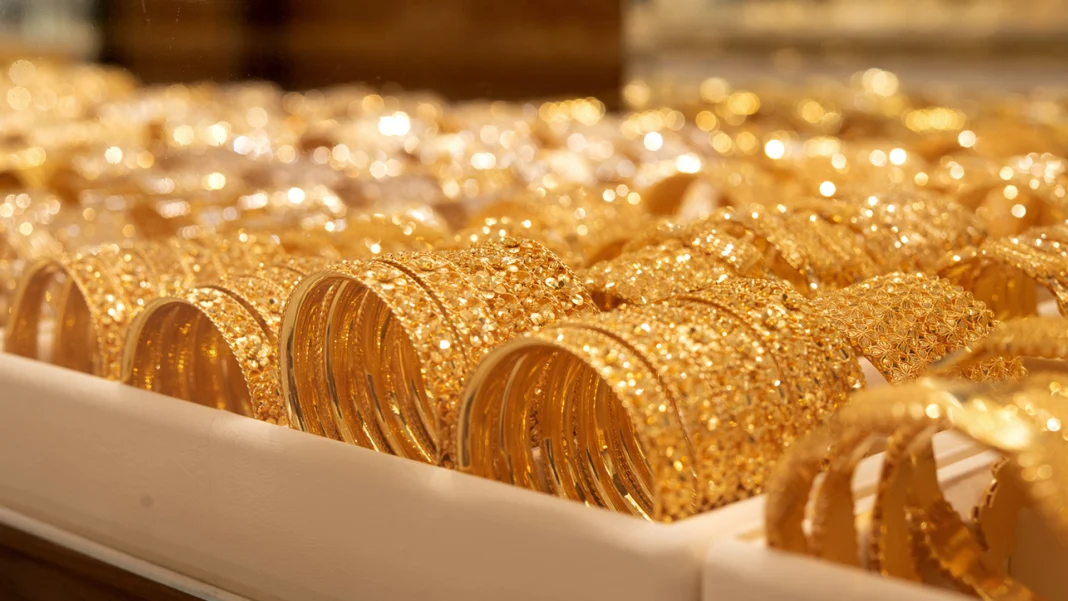
Gold prices edged lower in Baghdad while remaining stable in Erbil markets, reflecting local demand patterns and broader regional trends.
As gold prices in Baghdad’s Al-Nahr Street edged lower and recorded a selling price of 790,000 IQD per mithqal (equivalent to five grams) for 21-carat gold, including Gulf, Turkish, and European varieties. The buying price stood at 786,000 IQD. For 21-carat Iraqi gold, sellers set the price at 760,000 IQD per mithqal, while buyers offered 756,000 IQD.
In local jewelry stores, 21-carat Gulf gold sold for between 790,000 and 800,000 IQD per mithqal. Meanwhile, Iraqi gold traded between 760,000 and 770,000 IQD. These movements indicate that traders are closely monitoring demand fluctuations and regional supply.
In Erbil, gold prices remained steady. The selling price for 22-carat gold reached 838,000 IQD per mithqal, while 21-carat gold sold for 800,000 IQD and 18-carat gold for 685,000 IQD. Analysts explained that Erbil’s stable prices reflect controlled supply, consistent local demand, and balanced market conditions.
Experts noted that the slight drop in Baghdad was influenced by local buying patterns, import-related considerations, and short-term fluctuations in global markets. They added that seasonal demand, investment strategies, and shifts in currency exchange rates also play a role in daily price movements.
Analysts advise investors to monitor market trends closely, especially as geopolitical tensions and currency fluctuations drive changes in global gold prices. Officials highlighted that salary transfers, deposit insurance, and regulated e-payments have helped channel liquidity into formal accounts, boosting investor confidence and supporting overall market stability.
As Iraq continues to develop its financial and trade infrastructure, analysts expect that gold markets will remain closely tied to both domestic economic policies and international market trends. Observers anticipate that active monitoring and timely investment decisions will be key for traders and consumers navigating Baghdad and Erbil’s gold markets.