

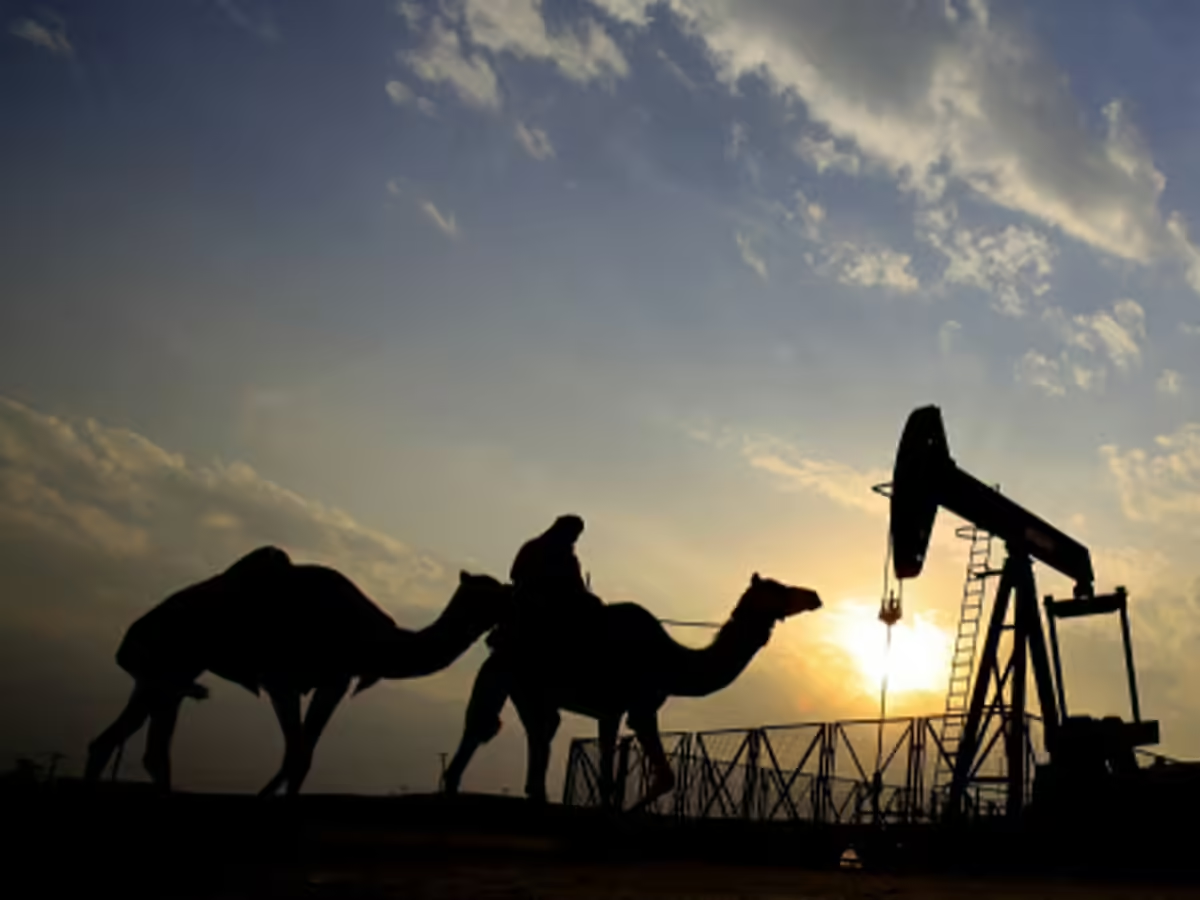
Global markets react sharply as the Middle East oil price surges drives prices higher across major benchmarks. Tensions escalate quickly after Iran launches strikes on energy sites across the region. These developments follow a major attack on the South Pars gas field, which marks a serious turning point in the conflict.
As a result, Brent crude jumps by more than $5 per barrel. Prices reach a high of $112.86 before settling near $112.04, showing a 4.3% increase. At the same time, West Texas Intermediate crude rises by 96 cents to $97.28 per barrel. Earlier in trading, it gained more than $3, reflecting strong market volatility.
Meanwhile, traders continue to monitor supply risks closely. On the previous session, Brent increased by 3.8%, while WTI showed almost no change. However, WTI trades at its widest discount to Brent in 11 years. This gap appears due to releases from U.S. reserves and higher shipping costs. Consequently, Brent receives stronger support from regional instability.
Furthermore, analysts warn that the situation could worsen. Market experts highlight that targeted strikes on oil infrastructure increase long-term supply risks. They also point to leadership losses and military escalation as key drivers of uncertainty. Therefore, markets expect prolonged disruptions in global oil supply chains.
In addition, the Federal Reserve keeps interest rates unchanged. However, officials signal concerns about rising inflation linked to the conflict. This cautious stance adds further pressure on global markets. As a result, investors weigh both geopolitical risks and economic outlooks.
At the same time, energy infrastructure across the region faces growing threats. QatarEnergy reports extensive damage at Ras Laffan, a key LNG processing hub. This facility plays a major role in global gas supply. Therefore, disruptions there could affect international energy markets.
Meanwhile, Saudi Arabia confirms it intercepted four ballistic missiles targeting Riyadh. Authorities also stopped a drone attack aimed at a gas facility. These defensive actions highlight the widening scope of the conflict. In response, Iran issues evacuation warnings before launching strikes on facilities in the United Arab Emirates, Saudi Arabia, and Qatar.
Moreover, the South Pars gas field remains central to the crisis. This site represents the largest natural gas reserve in the world. Iran shares this field with Qatar. Therefore, any disruption there carries global consequences for energy supply.
On the political front, Donald Trump states that Israel carried out the South Pars strike. However, he notes that the United States and Qatar did not participate. He also warns that Washington will respond if Iran targets Doha. This statement increases concerns about further escalation.
Additionally, discussions continue in Washington about deploying more troops to the region. Plans include protecting oil tankers passing through the Strait of Hormuz. This route remains critical for global oil shipments. However, continued fighting keeps the passage unstable.
Ultimately, markets expect continued volatility. The Middle East oil price surge reflects both supply fears and geopolitical risks. As tensions rise, traders prepare for further price swings. For now, the Middle East oil price surge signals a fragile energy market with no immediate resolution in sight.