

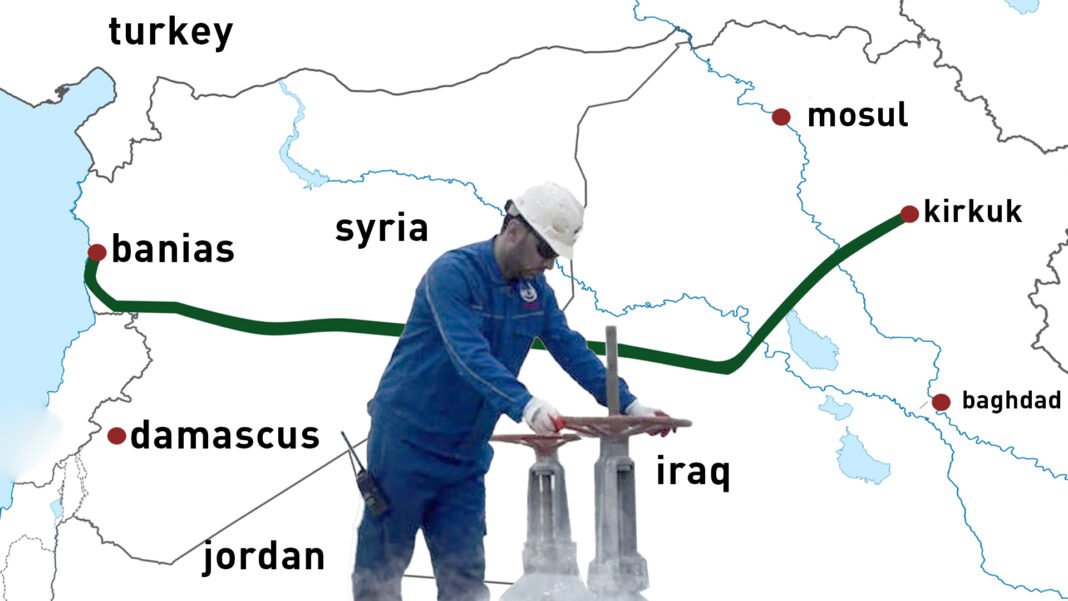
Iraq and Syria advanced serious discussions on cross border energy cooperation. Therefore, leaders focused on restoring a historic export route. Moreover, both sides emphasized shared economic benefits. As a result, the Kirkuk Baniyas pipeline returned to policy discussions with strong momentum.
Delegations from Baghdad traveled to Damascus for technical and strategic talks. Consequently, officials reviewed pathways to restart oil flows. Moreover, energy leaders discussed export access through Mediterranean ports. In addition, teams explored frameworks to manage operations jointly. These talks strengthened confidence.
Iraqi officials highlighted export diversification goals. Therefore, planners sought additional routes beyond existing channels. Moreover, access to Mediterranean ports offers faster market reach. In addition, logistics costs could decline. This logic supports the Kirkuk Baniyas pipeline revival.
Syrian counterparts expressed readiness to cooperate. Consequently, discussions covered port usage and coordination. Moreover, teams reviewed integration with existing infrastructure. In addition, officials stressed mutual gains. Cooperation anchored every session.
Technical assessments guided negotiations carefully. Therefore, experts examined pipeline condition and capacity. Moreover, teams evaluated repair needs across segments. In addition, feasibility studies shaped planning. Evidence guided decisions.
Consultants continue preparing detailed evaluations. Consequently, leaders await cost estimates and timelines. Moreover, studies will outline expected returns. In addition, reports will recommend implementation steps. Planning remains data driven.
Both sides formed a joint committee to steer progress. Therefore, coordination improved across institutions. Moreover, the committee manages technical and financial matters. In addition, it tracks milestones. Governance ensures clarity.
A regional engineering firm expects to handle execution. Consequently, specialized expertise supports rehabilitation. Moreover, the firm will estimate precise costs. In addition, it will assess expansion options. Professional delivery matters.
Cost sharing arrangements remain central to talks. Therefore, Iraq and Syria plan shared financing. Moreover, benefits accrue to both economies. In addition, transparent formulas support fairness. This balance builds trust.
The pipeline links northern Iraqi fields to the Mediterranean coast. Consequently, exporters gain direct access to European buyers. Moreover, route length supports high throughput. In addition, capacity supports meaningful volumes. The route offers strategic value.
The line once served as a major export artery. Therefore, revival promises economic upside. Moreover, planners expect revenue growth. In addition, diversification reduces risk. Strategy favors resilience.
Security and maintenance feature prominently in plans. Therefore, teams design safeguards along the route. Moreover, monitoring systems will track integrity. In addition, coordination with local authorities matters. Reliability remains essential.
Energy cooperation supports broader regional ties. Consequently, dialogue extends beyond oil. Moreover, trade and transport benefit. In addition, connectivity improves. Integration supports stability.
Market conditions favor additional export options. Therefore, flexibility matters for producers. Moreover, buyers value reliable supply. In addition, timing influences pricing. Strategy aligns with demand.
Iraq seeks to strengthen energy diplomacy. Consequently, partnerships matter. Moreover, infrastructure projects signal commitment. In addition, execution credibility attracts investors. Confidence grows.
The Kirkuk Baniyas pipeline symbolizes practical cooperation. Therefore, leaders push forward cautiously. Moreover, studies will guide final decisions. In addition, committees will oversee delivery. Progress depends on coordination.
Next steps include final reports and approvals. Consequently, timelines will clarify soon. Moreover, financing decisions will follow. In addition, contractors will mobilize. Momentum continues.
The Kirkuk Baniyas pipeline could reshape export geography. Therefore, planners keep focus. Moreover, collaboration sustains progress. In addition, shared benefits drive action. The path forward looks constructive.