

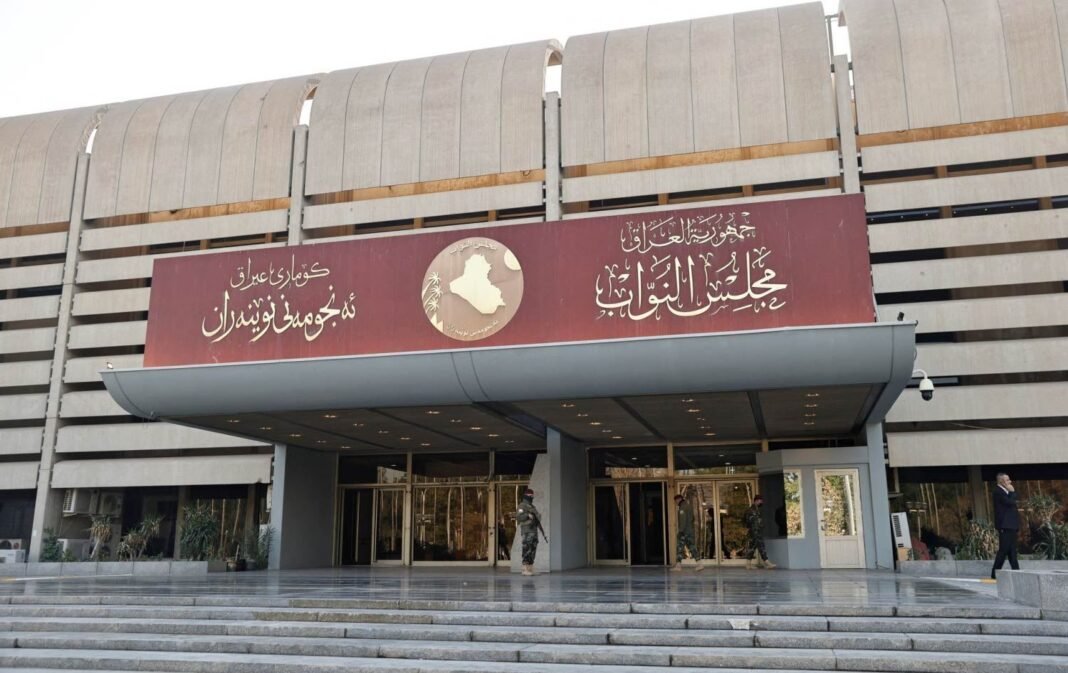
Iraq’s costly parliament spending continues to spark national debate as new data reveals its massive financial burden. Over the last decade, Iraq’s government poured more than 5.5 trillion dinars into its parliament operations. Economists argue that Iraq’s costly parliament spending shows deep inefficiency within the country’s legislative process.
Economist Manar Al-Obaidi analyzed official records and presented a detailed breakdown of these expenses. His report indicates that lawmakers in Iraq spent huge sums between 2015 and 2025 while producing limited legislative results. During this time, the parliament passed only 321 laws. This output means each law cost an average of 17.1 billion dinars.
However, the latest parliamentary term shows even higher costs. From 2021 to 2025, Iraq’s parliament spent nearly 2.4 trillion dinars. Lawmakers approved only 69 laws during this period. Therefore, each law required about 35 billion dinars. This figure doubles the cost of the previous term, raising concerns about accountability and waste.
By comparison, the earlier term between 2018 and 2021 recorded 1.8 trillion dinars in total expenses. Parliament passed 91 laws in those years. Each law then cost around 20 billion dinars. The numbers clearly show that Iraq’s costly parliament spending continues to grow without stronger productivity.
Moreover, Al-Obaidi pointed out a steady rise in yearly expenses. Spending climbed from nearly 450 billion dinars in 2015 to more than 650 billion dinars by 2025. Despite this steady increase, Iraq’s lawmakers passed fewer laws each year. In 2025 alone, the parliament approved only 11 laws. Each one came with an estimated price tag of 60 billion dinars.
Many Iraqis question how such enormous amounts contribute to better governance. Critics argue that these funds could strengthen education, healthcare, and job creation instead. Meanwhile, officials defend the spending, saying parliamentary work requires large administrative and operational costs. Still, the growing gap between spending and performance frustrates citizens and analysts alike.
Furthermore, economists call for urgent reform in Iraq’s budget management. They recommend better transparency and stronger evaluation systems for government institutions. These changes could reduce waste and ensure more effective lawmaking. As Iraq moves forward, experts insist the government must link expenses with measurable outcomes. Without that connection, Iraq’s costly parliament spending may keep rising without improving citizens’ lives.
In conclusion, Iraq’s legislative expenses highlight a serious challenge for the country’s future. The government needs clear plans to balance costs and results. Better financial discipline can help Iraq build trust and achieve real reform.