

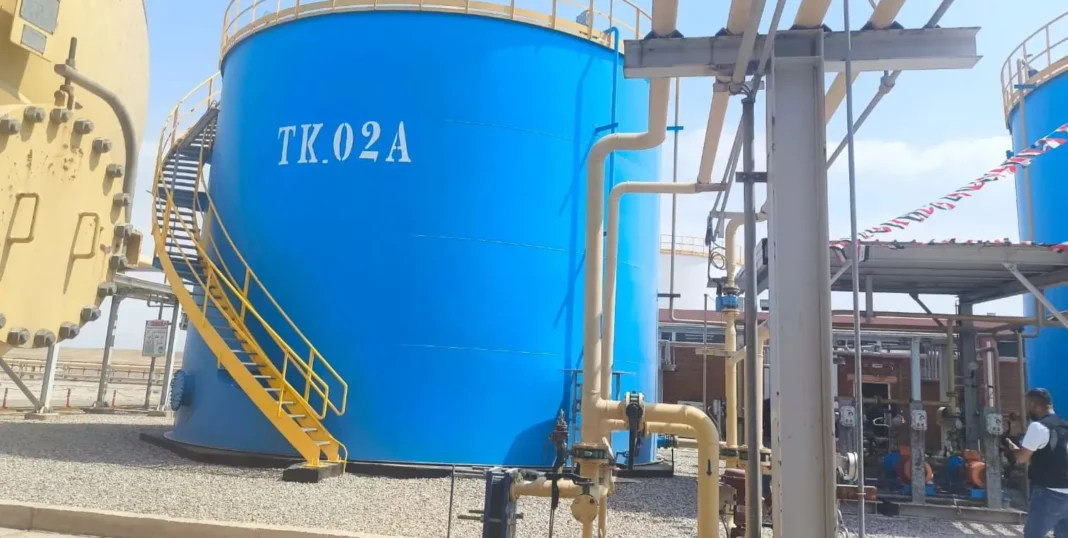
Iraq’s Basrah crude prices fell despite steady gains in global oil markets. Basrah Heavy lost 85 cents, or 1.38%, closing at $60.84 per barrel. Basrah Medium dropped $1.25, or 1.98%, to $61.99 per barrel.
Meanwhile, international benchmarks moved upward. Brent crude gained 0.9%, reaching $62.48 per barrel, while US West Texas Intermediate (WTI) increased by 0.9% to $58.81 per barrel.
The decline in Basrah crude contrasts sharply with the global rise. Analysts said local factors, including supply adjustments and regional demand, weighed on prices. Traders noted that Basrah’s market often reacts differently than international benchmarks.
Global investors also responded to political developments. US President Donald Trump announced that Indian Prime Minister Narendra Modi agreed to halt oil imports from Russia. This move targets one of India’s main crude suppliers and triggered global price gains.
Local traders emphasized that Basrah heavy oil reflects more than global rates. Regional contracts, shipping logistics, and domestic refinery demand influence its daily pricing. These local dynamics sometimes create temporary gaps between Basrah crude and international benchmarks.
Economic observers said Iraq may continue experiencing such fluctuations in the near term. Basrah crude often dips briefly even when Brent and WTI rise. Policymakers and market participants monitor these variations closely to protect contracts and maintain stability.
The difference between Basrah and global prices highlights Iraq’s distinct oil market conditions. Experts predicted that local prices may eventually align with global trends as supply, refinery demand, and shipping stabilize. Meanwhile, traders continue to adjust strategies based on both regional and international factors.
Basrah crude remains a key driver of Iraq’s energy sector and revenue. Even small shifts in its pricing can influence contracts, exports, and the broader economy. Market participants stress careful monitoring to avoid disruptions and ensure smooth operations.