

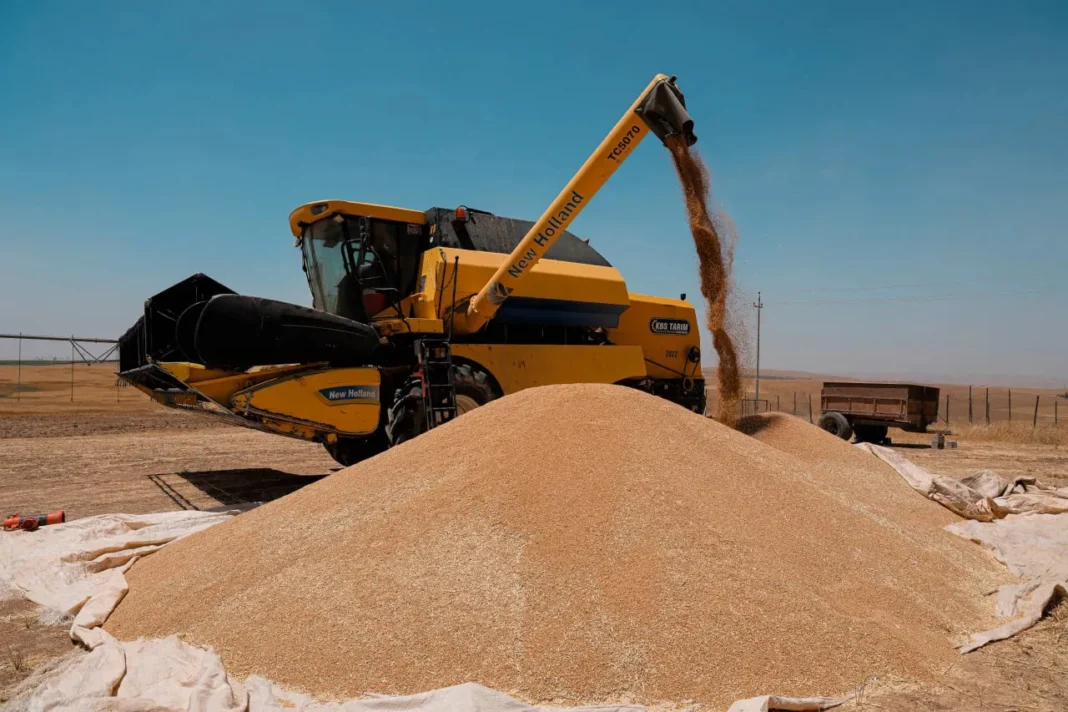
Iraq’s wheat production hit by drought continues to raise serious concerns for both farmers and government officials. As temperatures soared and rainfall declined, this year’s harvest suffered a sharp drop. The Iraqi Ministry of Agriculture confirmed the decrease, attributing the fall to prolonged drought and worsening water scarcity.
This year, Iraq managed to harvest around 5.12 million tons of wheat. Last year’s output reached 5.4 million tons. Though the difference may seem small, it signals a growing challenge for Iraq’s agricultural future. The country has faced repeated struggles with irrigation, especially during hot summers.
One major factor behind the crisis is the reduced flow of water from upstream countries. Iraq’s rivers, the Tigris and Euphrates, rely heavily on sources in Turkey and Iran. However, the construction of large dams in those countries has limited the amount of water reaching Iraqi farmland. Iraq has no solid agreements with either neighbor to manage river flow fairly. This lack of cooperation continues to deepen the crisis.
Despite these problems, Iraq’s wheat production hit by drought has not affected every part of agriculture. According to Mahdi al-Jubouri, the deputy agriculture minister, fruit and vegetable crops remain stable. These types of crops require less water and can survive even in drier conditions.
Government efforts to maintain agricultural output have seen mixed results. Iraq’s Ministry of Agriculture recently announced that the country still achieved self-sufficiency in wheat. Officials said they had harvested nearly four million tons of wheat from across Iraq’s provinces, excluding the Kurdistan region. While this shows some success, experts argue it doesn’t fully reflect the national food needs.
During a government celebration, Minister of Agriculture Abbas Al-Maliki emphasized that support measures had helped boost farming efforts. The ministry provided essential agricultural supplies, advanced irrigation systems, and better-quality seeds. These efforts aimed to counteract the effects of water shortages. Yet, even with this support, Iraq’s wheat production hit by drought reveals the bigger environmental risks facing the country.
Before the war in Ukraine, Iraq had stronger wheat harvests. In 2020, for example, the country produced over six million tons. But since then, rising temperatures, shrinking rivers, and creeping desertification have reduced output year after year. As a result, Iraq now depends more on imported wheat to meet domestic demand.
Without urgent action to secure water resources and tackle climate challenges, the future of Iraq’s wheat farming remains uncertain.