

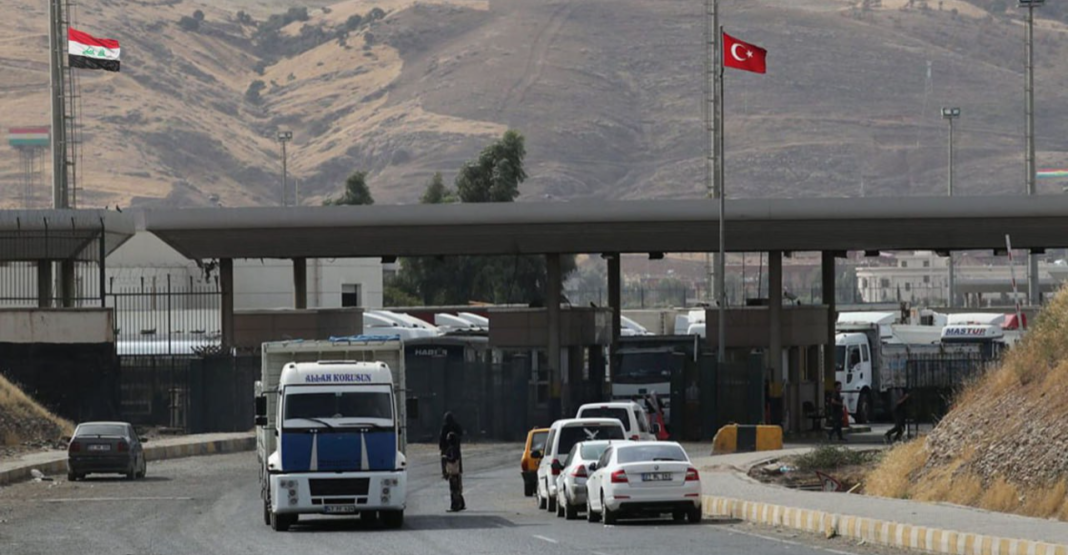
Iraq-Turkey trade shift at 17% drop marks a clear change in regional commerce. New figures highlight declining exports from Turkey to Iraq. At the same time, Iraq shows modest export growth. Iraq-Turkey trade shift at 17% drop signals both risk and opportunity.
First, Turkish exports to Iraq fell sharply during early 2026. Trade value dropped from $1.74 billion to $1.4 billion. This decline equals a 17% contraction. As a result, Iraq-Turkey trade shifted at 17% drop reflects weakening import flows.
Moreover, February recorded the steepest fall. Trade value decreased from $900 million to $661 million. This sharp drop shows slower market activity. In addition, supply challenges likely influenced this decline.
However, sector data shows mixed performance across industries. Some sectors expanded strongly, while others contracted. Therefore, the overall trend shows divergence rather than uniform decline.
On the positive side, consumer goods recorded strong growth. Fruits and nuts increased from $118 million to $200 million. Precious metals nearly doubled from $53 million to $100 million. Clothing and apparel also rose from $48 million to $98 million. These gains reflect strong consumer demand in Iraqi markets.
In contrast, industrial sectors declined sharply. Iron and steel dropped from $94 million to $45 million. Electrical machinery fell from $105 million to $53 million. Plastics also decreased from $82 million to $57 million. These declines suggest weaker industrial activity and reduced project demand.
Meanwhile, Iraq improved its exports to Turkey. Iraqi exports increased by 41%, rising from $67 million to $95 million. This growth indicates gradual progress in the trade balance. Furthermore, it shows expanding Iraqi supply in select sectors.
Fuel and energy exports led this growth. These exports increased from $15 million to $37 million. Mineral ores also surged from $1.3 million to $5.7 million. These sectors drove most of the export gains.
Despite this improvement, the trade balance still favors Turkey. Iraq continues to import far more than it exports. The trade deficit still exceeds $1.3 billion. Therefore, Iraq remains dependent on Turkish goods.
In addition, logistical and security challenges affect northern trade routes. These factors likely contributed to reduced trade flows. However, consumer demand continues to support imports.
Looking ahead, Iraq may benefit from expanding exports further. Diversifying beyond energy and minerals could strengthen the trade balance. At the same time, boosting local production may reduce import dependence.
In conclusion, Iraq-Turkey trade shift at 17% drop highlights a changing trade pattern. While Turkish exports decline, Iraqi exports show growth. However, the imbalance remains large and persistent.