

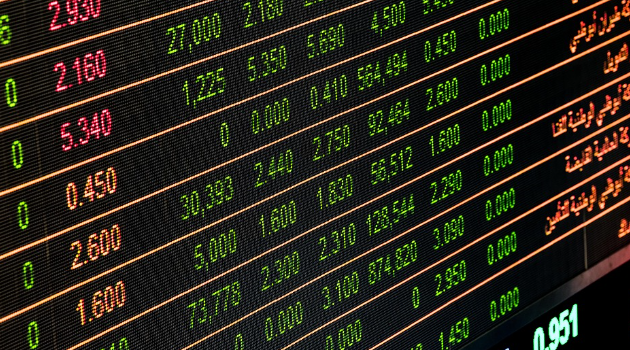
Iraq’s stock market, considered a crucial pillar for channeling savings into investments, remains underdeveloped compared to its regional counterparts. Authorities are working to rejuvenate the market, attract investors, and encourage economic diversification, yet obstacles such as political instability, limited industrial and agricultural sectors, and bureaucratic barriers continue to impede progress.
Market Overview
Established in 1992 as the Baghdad Stock Exchange under Law No. 24 of 1991, the market was later renamed in 2003, initially listing 113 private and mixed companies. Despite its long history, the Iraq Stock Exchange (ISX) struggles with low trading volume and limited activity compared to neighboring markets.
Foreign investors remain cautious due to Iraq’s ongoing political and economic challenges, along with complex administrative and legal processes for opening accounts and transferring profits. These hurdles contribute to the market’s small size and limited attractiveness to international investors.
Economic Challenges and Market Dynamics
Muzher Mohammed Saleh, financial advisor to Iraq’s Prime Minister, discussed the structural challenges facing Iraq’s economy. “The country inherited a mono-reliant economy heavily dependent on oil revenues, exacerbated by decades of war, sanctions, and economic isolation,” Saleh told Shafaq News. “Unfortunately, the industrial and agricultural sectors, essential for stock market diversification, remain weak.”
These sectors make up just 6–7% of Iraq’s GDP, with most activities driven by individuals rather than corporations. Saleh highlighted that the underdevelopment of the stock market mirrors Iraq’s broader economy, where banking institutions dominate due to the oil-dependent model. Currently, over 50% of ISX activity is concentrated in the banking sector.
“The government’s new economic strategy aims to foster a production-oriented partnership between the public and private sectors to boost economic diversification,” Saleh added. He emphasized that the success of the stock market is linked to achieving broader economic diversity and strengthening key sectors like industry and agriculture.
Market Constraints
While regional markets such as those in the Gulf and North Africa have modernized rapidly, Iraq’s stock market has struggled to catch up. Broker Mohammed Madloul pointed out that markets in neighboring countries like Egypt and the UAE offer 24-hour stock price tickers and opportunities for citizens to trade shares outside traditional hours. In Iraq, trading is limited to specific hours, restricting transaction opportunities.
“In Iraq, the market’s size and activity are constrained,” Madloul explained. “Many stocks trade at values below one Iraqi dinar, reflecting the limited scope for investment.” However, he noted some progress in the banking sector, with the market capitalization of listed companies increasing from 6.88 trillion dinars (about $5.2 billion) in 2021 to 10 trillion dinars (around $7.6 billion) in 2024, a sign of growth—albeit largely concentrated in the banking sector.
Weak Private Sector
Economic expert Durgham Mohammed Ali attributed the ISX’s limited size to the absence of large companies and a robust private sector in Iraq. “The market reflects the weak state of Iraq’s developmental sectors and the public’s lack of trust in it,” Ali told Shafaq News. “The ISX remains underdeveloped compared to Gulf markets.”
Ali also criticized the lack of efficient investment portfolio management and regulatory constraints set by the ISX’s oversight body. “These restrictions limit the operations of brokerage firms and discourage investment activities,” he said. “The market’s performance is directly tied to the efficiency of listed companies, which remain weak.”
Modernization Efforts
Despite these challenges, steps are being taken to modernize Iraq’s stock market. Taha Ahmed Abdul-Salam, Executive Director of the ISX, emphasized the importance of stability and a long-term corporate vision to attract investors. “The number of listed companies has increased from 105 to 107, and we are working to add more,” Abdul-Salam told Shafaq News. “This expansion is key to attracting new investors.”
Abdul-Salam also revealed that the ISX has signed an agreement with the Egyptian Exchange to implement a new Order Management System (OMS), allowing investors to trade via smart devices. “We expect to launch this system by June or July next year,” he said. This modernization is viewed as a critical step toward making the market more accessible and competitive with regional counterparts.
Conclusion
While Iraq’s stock market faces numerous challenges, efforts to modernize the market and diversify the economy are slowly taking shape. The government’s strategy to enhance cooperation between the public and private sectors, combined with new technological advancements like the OMS system, could help position the ISX for future growth. However, achieving sustainable growth will depend on Iraq’s ability to diversify its economy beyond oil and strengthen its industrial and agricultural sectors.