

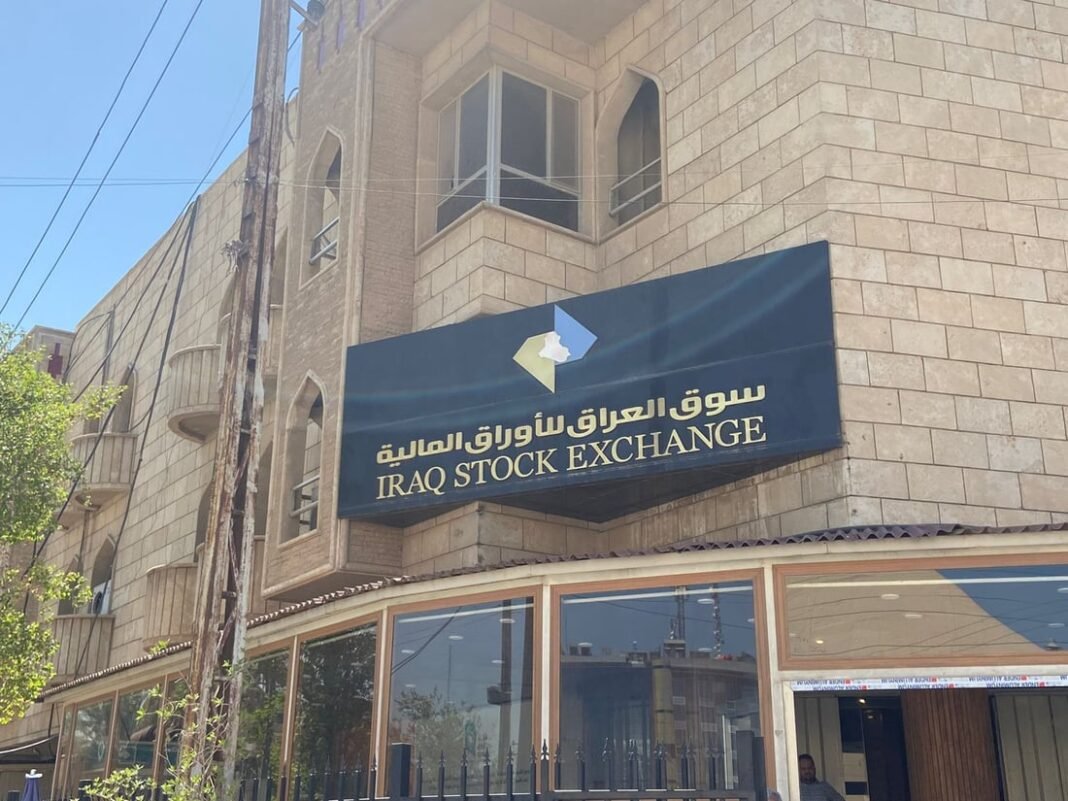
The Iraq Stock Exchange recorded $2.3 million in weekly transactions during its latest trading cycle. The market also logged 3.11 billion Iraqi dinars in total value. Moreover, trading activity declined compared to the previous week.
The Iraq Stock Exchange records $2.3 million in weekly transactions despite slower momentum. Traders executed 4,124 transactions across the market. However, total value dropped by 34 percent from the previous week. Investors responded cautiously to market signals.
Shares of 68 listed companies changed hands during the week. Meanwhile, 26 companies saw no trading activity. Mismatched buy and sell orders prevented deals in those firms. In addition, 10 of the 104 listed companies remained suspended. Regulators halted those stocks due to missing mandatory disclosures.
The Iraq Stock Exchange records $2.3 million in weekly transactions as the ISX60 index slipped. The index closed at 952.44 points. That figure reflects a 0.26 percent decline from the previous session. Consequently, the market showed limited downward movement.
The exchange operates five sessions per week from Sunday to Thursday. It lists 104 companies across multiple sectors. These sectors include banking, telecommunications, industry, agriculture, insurance, financial investment, tourism, hotels, and services. Therefore, the exchange represents a broad segment of Iraq’s economy.
Foreign investors participated actively during the week. They purchased 22 million shares worth 58 million Iraqi dinars. That amount equals about $44,291. At the same time, they sold 50 million shares valued at 130 million Iraqi dinars. That total equals around $99,274. As a result, foreign investors recorded a net outflow.
Market analysts say the 34 percent weekly decline signals cautious investor sentiment. Some traders prefer to monitor oil price trends and fiscal developments. Iraq relies heavily on oil revenues to support public spending. Therefore, stock performance often links closely to energy market movements.
The Iraq Stock Exchange records $2.3 million in weekly transactions while maintaining stable operations. Regulators continue to push companies to meet disclosure requirements. Transparency plays a key role in building investor confidence. Strong compliance can attract more regional and international capital.
Although trading volumes declined, the exchange remains active. Financial experts expect gradual improvement if macroeconomic conditions stabilize. Additionally, reforms in banking and investment laws could boost participation.
Overall, the weekly performance reflects moderate activity with limited volatility. Investors continue to evaluate risk while seeking selective opportunities. The exchange now aims to strengthen liquidity and expand investor engagement.