

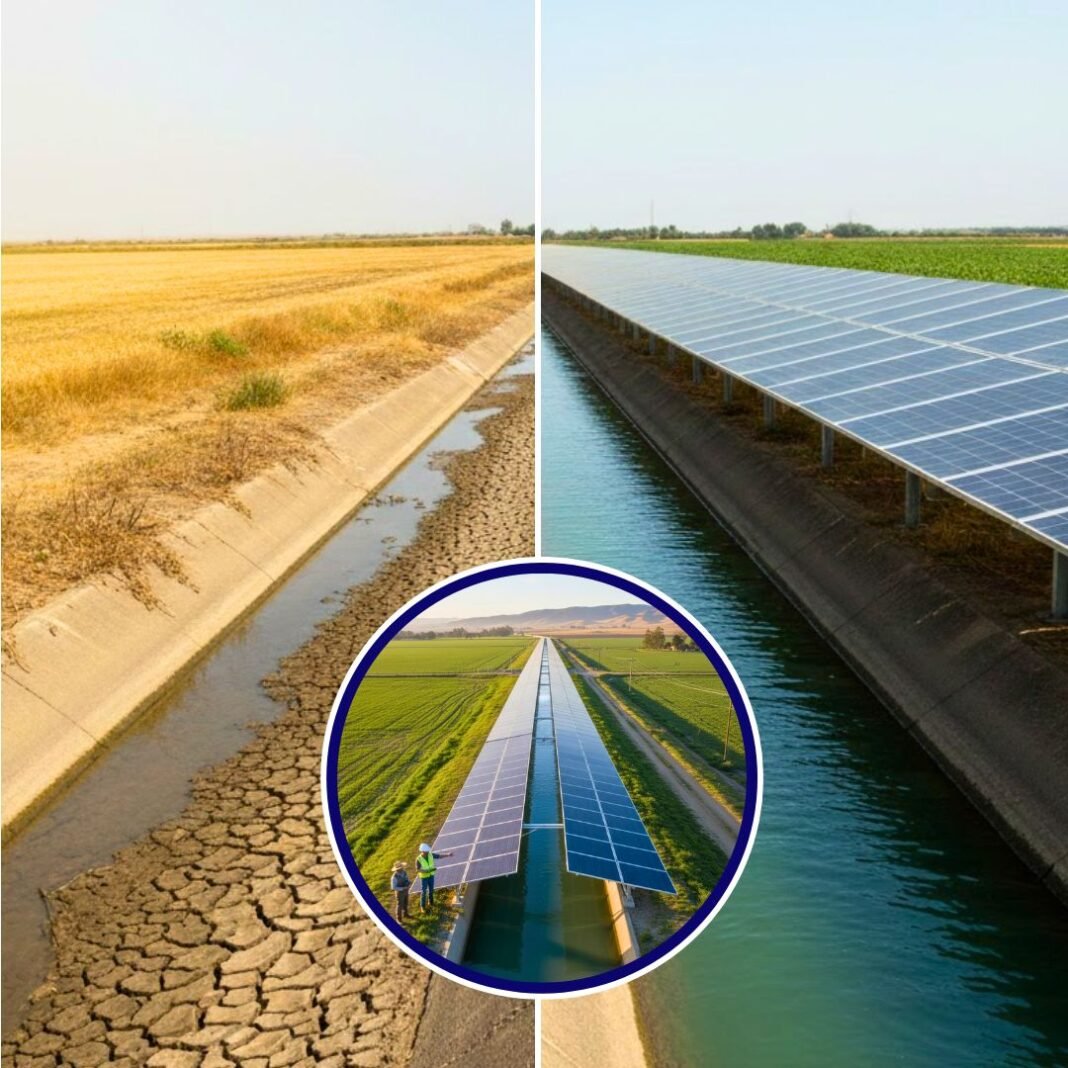
Iraq solar-covered canals represent a new response to severe water shortages. Moreover, authorities seek smarter solutions as evaporation drains valuable water supplies. Therefore, innovation now shapes national water management strategy.
Water loss affects farms, cities, and ecosystems across Iraq. Additionally, open canals allow heat and seepage to waste large volumes. As a result, officials pursue a closed irrigation approach. This system limits exposure and improves long-term efficiency.
At the center of this effort stands a renewable energy concept. Engineers place solar panels directly above irrigation canals. Consequently, panels block sunlight and slow evaporation. Furthermore, covered canals reduce seepage and contamination risks.
Iraq solar-covered canals combine water protection with energy generation. Instead of metal sheets or plastic covers, solar panels serve two purposes. Therefore, the same infrastructure saves water and produces electricity. This approach lowers costs and increases sustainability.
The project operates under a national climate resilience program. International partners support planning and implementation. Moreover, funding reaches tens of millions of dollars. This financial backing ensures stable execution and technical quality.
The first phase targets provinces with dense irrigation networks. These regions rely heavily on agriculture for income. Consequently, improved water efficiency supports food security. Farmers gain stronger protection against drought conditions.
Solar panels installed above canals generate clean electricity. The pilot system aims to produce 1 megawatt of power. As a result, local grids receive additional support. Farming equipment can also use this energy directly.
Meanwhile, authorities focus on human impact. Officials expect the project to affect nearly 1.9 million people. Almost 1 million people will benefit directly. Therefore, the initiative reaches beyond infrastructure into daily life.
Training programs support farmers throughout the transition. Specialists teach modern irrigation and land management. Moreover, technical tools help farmers adapt to dry conditions. This knowledge strengthens long-term agricultural resilience.
Climate pressures continue to intensify across the region. Rising temperatures increase evaporation rates every year. At the same time, river levels continue to decline. Therefore, integrated solutions grow more urgent.
Iraq solar-covered canals address both challenges together. Water protection and renewable energy work side by side. Consequently, the project tackles climate threats efficiently. This dual solution strengthens national adaptation capacity.
Officials emphasize strategic planning and scalability. They aim to expand the system after pilot success. Furthermore, lessons learned will guide future projects. This careful approach ensures lasting results.
Experts highlight environmental benefits beyond water savings. Reduced evaporation improves soil moisture nearby. Additionally, cleaner energy reduces emissions. Therefore, the initiative supports broader environmental goals.
Public institutions continue coordination across sectors. Ministries align water, energy, and agriculture policies. As a result, implementation remains consistent and focused. Strong governance supports project success.
Overall, Iraq advances toward sustainable resource management. Innovation replaces outdated infrastructure. Consequently, smarter systems protect water for future generations.