

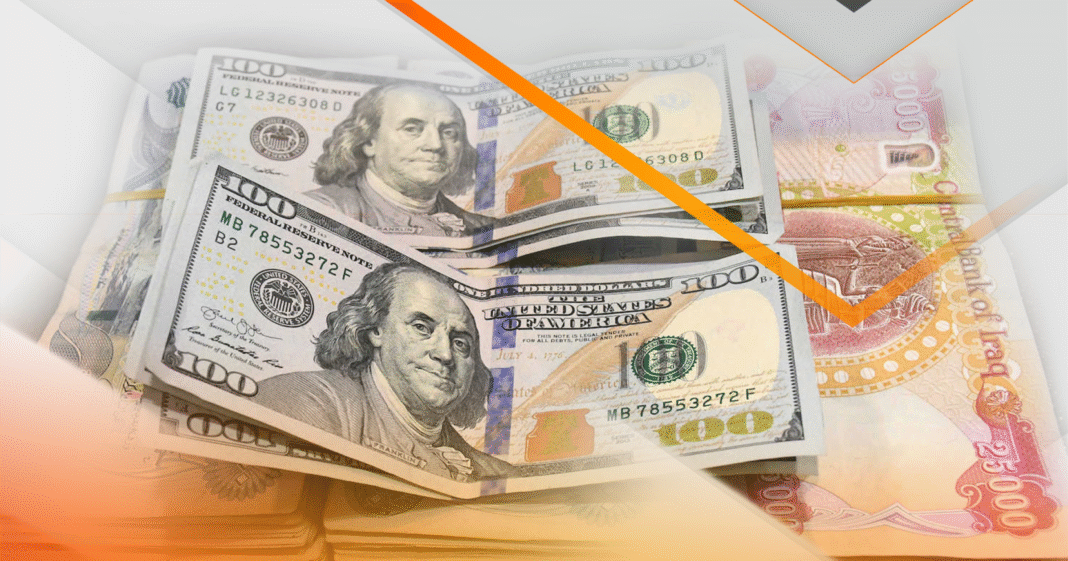
The exchange rate of the US dollar rose slightly in Iraq’s major cities. Markets in Baghdad and Erbil recorded higher dollar values compared to the previous day. This dollar prices increase in Baghdad and Erbil signaled growing pressure on the local currency.
In Baghdad, the central stock exchanges of Al-Kifah and Al-Harithiya opened with noticeable changes. The exchange rate reached 141,500 dinars for every 100 dollars. This marked a small increase from the previous day, when it stood at 141,350 dinars.
Street-level exchange stores in Baghdad followed the same trend. Sellers offered 100 dollars for 142,500 dinars. Meanwhile, buyers could exchange 100 dollars for 140,500 dinars. These rates suggest an active market with narrow trading margins.
In the Kurdistan Region, Erbil’s exchange market also reflected higher prices. The selling rate reached 141,400 dinars for every 100 dollars. The buying rate stood slightly lower at 141,300 dinars. These figures highlight the close alignment of rates between Baghdad and Erbil.
This increase signals currency fluctuations that affect both traders and consumers. Dollar prices increase in Baghdad and Erbil now captures daily financial conversations in both cities. Many residents watch the exchange rate carefully. It influences prices for imported goods and daily essentials.
Several factors may explain the latest shift. Seasonal demand, cash transfers, and global dollar movements all play roles. Businesses dealing in imports face challenges when exchange rates shift. Small changes can impact profit margins and consumer prices.
Traders often expect the dollar rate to rise before holidays or peak shopping periods. Others blame reduced dollar flow from central sources. Either way, dollar prices increase in Baghdad and Erbil has become more common in Iraq’s current economy.
Both governments monitor exchange markets closely. The Central Bank of Iraq continues to manage supply through currency auctions. However, these auctions cannot fully control market activity. Street prices often shift based on supply and demand.
As the week continues, traders remain alert. Any changes in dollar availability or local demand could drive further movement. For now, Iraqis will keep a close eye on every update from exchange centers.