

Iraq faces mounting financial pressure as border disruptions slow trade activity nationwide. The Iraq border crisis now threatens public sector salaries and monthly cash flow. Economists warn that salary payments could face delays of up to 20 days if trade disruption continues without reform.
An Iraqi economist warned that customs bottlenecks directly affect government payroll funding. He explained that weak infrastructure prevents smooth cargo movement. As a result, revenue flow slows sharply. Therefore, salary payments face increasing risk across public institutions.
Iraq’s ports receive around 2,000 shipping containers every day, which creates heavy operational pressure. However, customs rules require item-by-item inspections for all containers. This process overwhelms existing facilities. Consequently, clearance times grow longer and trade efficiency declines.
Iraq lacks enough warehouses, docks, and trained customs staff to manage daily volume. Moreover, inspection capacity cannot match shipment demand. Because of this gap, goods remain stuck at ports for extended periods. As a result, trade activity drops and market supply weakens.
At the same time, select traders operate under special exemptions tied to political influence. These traders avoid customs duties, taxes, and lengthy procedures. Therefore, they dominate import activity. Meanwhile, smaller traders struggle to compete and often exit the market.
This imbalance damages fair competition and disrupts pricing stability. As supply chains weaken, prices rise across key goods. Consumers then face higher costs and reduced purchasing power. Thus, inequality within trade systems deepens economic stress.
The economist explained the financial mechanism behind salary payments in Iraq. First, Iraq sells oil on global markets. Then, oil revenue enters international financial accounts. After that, funds move to the Central Bank through regulated channels.
Next, traders request dollars to cover import costs. They exchange Iraqi dinars through approved banking systems. Those dinars flow directly into the Finance Ministry. The ministry then uses this liquidity to fund public salaries.
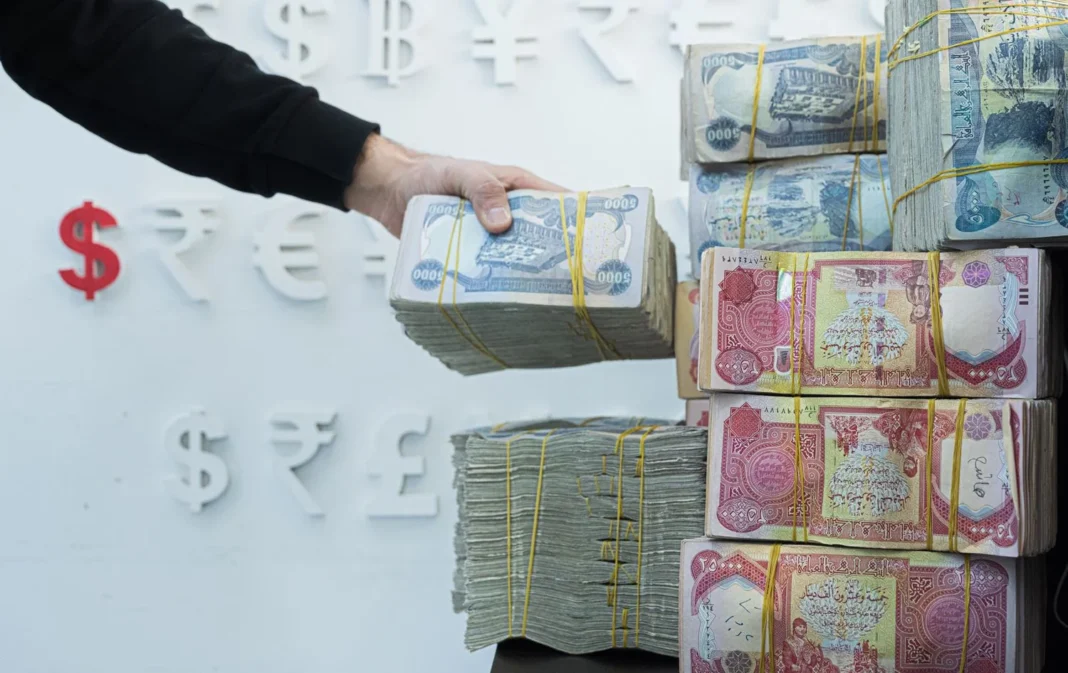
Iraq requires nearly 8 trillion Iraqi dinars every month to cover public wages. This structure depends entirely on active trade and currency exchange. Therefore, any slowdown reduces dinar inflows immediately. The Iraq border crisis directly interrupts this financial cycle.
Border congestion now limits trader access to dollars. As a result, dinar availability declines across state accounts. This decline increases the likelihood of wage delays. Consequently, confidence in payment schedules weakens.
The economist also expressed concern over recent salary distributions. He reported incomplete payments for one payroll cycle. This issue raises serious doubts about upcoming salary timelines. Public concern continues to grow as uncertainty spreads.
Authorities now face urgent pressure to act. They need to simplify customs procedures quickly. They must also expand port infrastructure and staffing. Equal trade conditions would protect small traders and stabilize markets.
The Iraq border crisis demands immediate reform. Smooth trade flow supports salaries and economic balance. Without action, delays could intensify social and financial strain.