

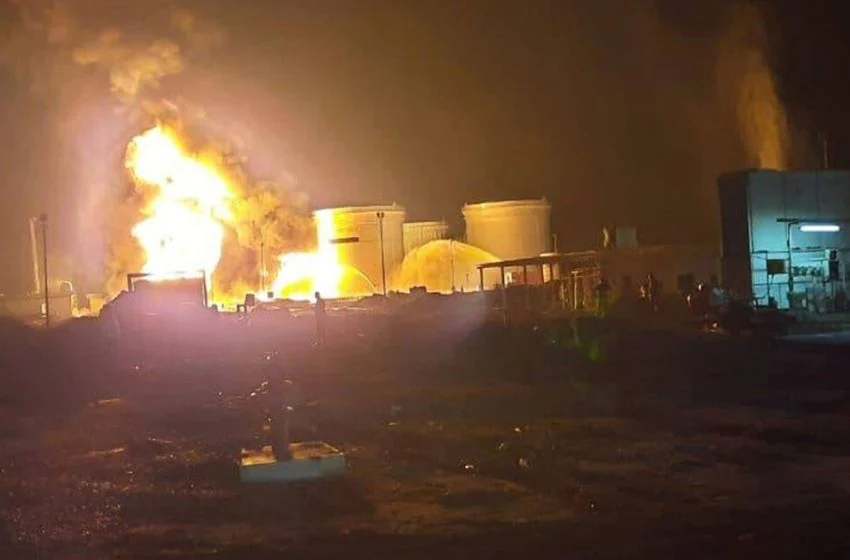
Iraq refinery fire toll shows the human cost of industrial accidents in the energy sector. A serious fire erupted inside a gasoline production unit at a major refinery in northern Iraq. As a result, one worker lost his life and eight others suffered injuries. The incident shocked workers and raised immediate safety concerns.
Emergency response teams rushed to the refinery within minutes. Firefighters focused on containing flames inside the fuel processing area. Meanwhile, medical teams treated injured workers on site. Soon after, ambulances transferred the injured workers to a nearby general hospital. Authorities moved the deceased worker to forensic officials for legal procedures.
Following the incident, refinery managers acted quickly to limit damage. Therefore, they stopped operations at the affected production unit. At the same time, safety teams secured surrounding areas. This decision aimed to protect workers and prevent further incidents. Officials stressed that caution remained the top priority.
Soon afterward, technical experts entered the site for inspection. They examined equipment, pipelines, and control systems. In addition, they reviewed operational processes inside the unit. Their goal focused on identifying the cause of the fire. Investigators also aimed to prevent similar accidents in the future.
The Iraq refinery fire toll highlighted the refinery’s national importance. The facility remains the largest oil refinery in the country. It processes nearly 33 percent of Iraq’s total refining capacity. Because of this role, any disruption affects fuel supply and market stability.
Beyond fuel processing, the refinery supports multiple industries. It produces engine oils, turbine oils, and heavy oils for domestic use. Moreover, it supplies 600,000 tons of multi-grade asphalt every year. This production supports infrastructure projects and road construction across Iraq.
As a result, the refinery helps reduce fuel and material imports. Consequently, it saves foreign currency and strengthens economic stability. However, the Iraq refinery fire toll exposed infrastructure and safety challenges. Energy experts now call for modernization and stronger safety systems.
Local communities reacted with concern and caution. Residents worried about health and environmental risks. Meanwhile, officials promised transparency during the investigation. Authorities also pledged stronger safety enforcement across energy facilities.
Ultimately, the Iraq refinery fire toll serves as a warning. Industrial growth must include worker protection. Strong safety systems remain essential for Iraq’s energy future.