

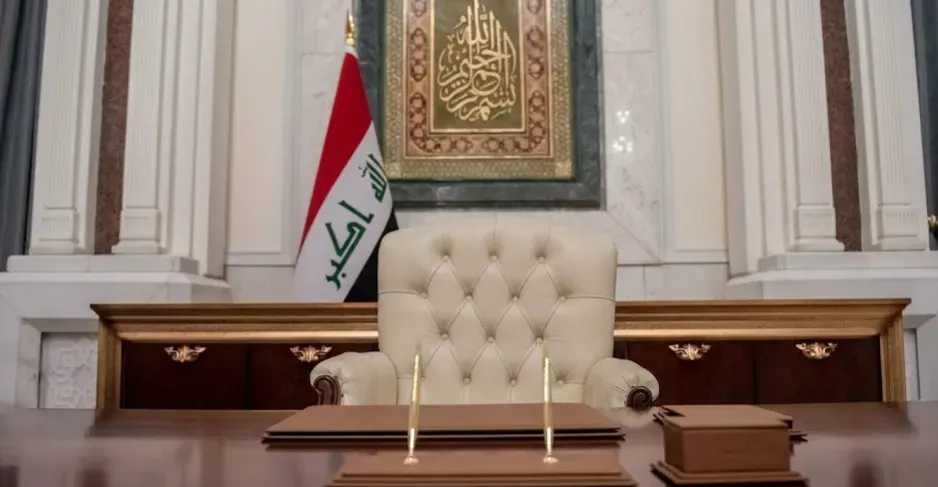
Iraq moves forward with a Presidential Election Push as parliament sets April 11 for voting. This Presidential Election Push aims to end a prolonged political deadlock. As a result, leaders now face pressure to reach an agreement quickly.
First, the Iraqi Parliament confirmed the session date. Lawmakers will meet to elect the country’s next president. This step marks a key moment in Iraq’s political process. Therefore, attention now shifts to party negotiations.
Moreover, Mohammed al-Halbousi held talks with major political blocs. He urged leaders to finalize decisions before the session. These discussions focused on ending the ongoing stalemate. Consequently, parties must act quickly to secure a consensus.
In addition, Iraq’s constitution sets clear rules for the election. Parliament must choose a president within 30 days of its new term. However, delays have extended this timeline. As a result, political tensions have increased among rival groups.
Furthermore, the election process requires strong parliamentary support. A candidate must secure a two-thirds majority in the first round. This means at least 220 out of 329 members must vote in favor. If no one reaches that level, a second round follows.
In the second round, the top two candidates compete directly. The winner then needs only a simple majority. This system ensures that parliament ultimately selects a president. However, it also highlights the need for alliances.
At the same time, the Presidency remains a key position in Iraq’s political balance. Traditionally, Kurdish parties hold this role. However, divisions between major Kurdish groups now complicate the process.
The Kurdistan Democratic Party and the Patriotic Union of Kurdistan continue to disagree on a single candidate. This dispute has delayed progress for months. Therefore, negotiations remain critical before the vote.
Meanwhile, the PUK supports Nizar Amedi as its candidate. In contrast, the KDP backs Fuad Hussein. Both figures hold strong political influence. Consequently, competition between them shapes the current landscape.
In addition, the Presidential Election Push affects government formation. After the election, the president must nominate a prime minister within 15 days. This step will move Iraq closer to forming a full government. Therefore, the upcoming vote carries major importance.
Overall, the Presidential Election Push reflects Iraq’s effort to resolve political divisions. It also highlights the role of compromise in governance. As the deadline approaches, the Presidential Election Push will determine the country’s next leadership direction.