

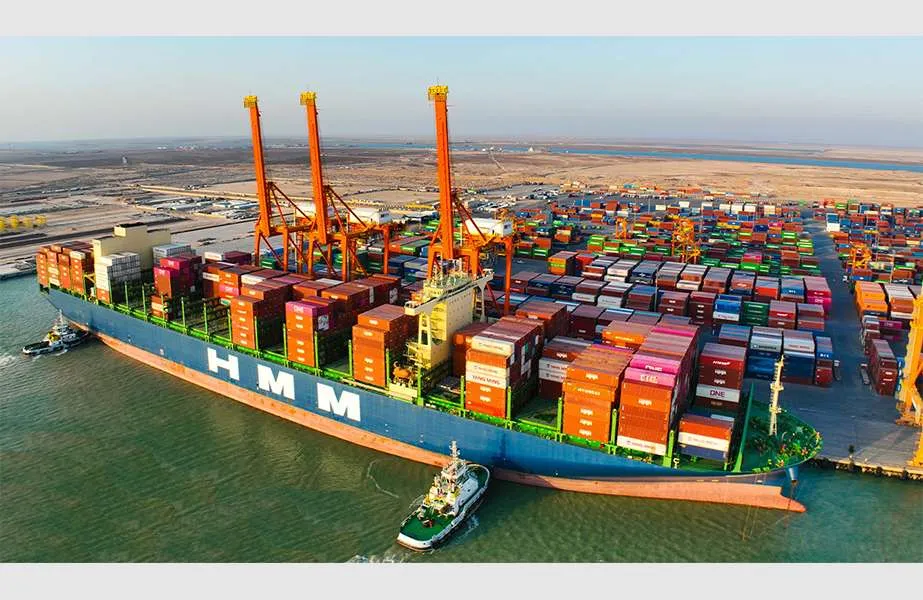
Maritime activity continues across Iraqi ports despite regional tensions. The maritime trade flow to Iraq remains steady as cargo vessels arrive regularly. Authorities highlight ongoing operations and stable logistics performance.
First, the Iraqi Ministry of Transport confirmed continued vessel arrivals during the month. This activity reflects resilience in trade operations. Despite challenges, ports maintain efficiency and coordination.
Moreover, specialized agencies support maritime operations. The State Company for Maritime Transport provides services to incoming ships. At the same time, the General Company for Ports of Iraq manages cargo handling. These entities follow international operational standards.
Several vessels recently arrived at Iraqi ports. The ship “SJ BOSS” delivered 50 containers of bagged goods from the United Arab Emirates. In addition, the vessel “SSF VALENCE” docked at quay 27. It carried 957 containers from the same country. This shipment marked one of the largest recent deliveries.
Furthermore, multiple vessels contributed to overall activity. These include SEA PEARL, OCEAN PEARL, QUEEN BAY, OBE HEART, and G FORCE. Another ship, Shahryar, arrived at Abu Flous Port. These arrivals demonstrate consistent maritime movement.
At Umm Qasr Port, cargo distribution continued across several quays. Each berth handled specific shipments efficiently. This structured approach supports smooth unloading operations.
For example, quay 1 received OCEAN PEARL loaded with wheat. Quay 2 handled QUEEN BAY carrying sugar and wheat. Meanwhile, quay 4 processed G FORCE with maize cargo. In addition, quay 7 received OBE HEART carrying wheat.
These operations show strong coordination within port facilities. Workers manage cargo flows with precision and speed. Therefore, the maritime trade flow to Iraq remains uninterrupted.
In addition, port authorities ensure compliance with global standards. They apply modern logistics systems and safety protocols. This approach strengthens confidence among international partners.
Despite regional instability, Iraq continues to support maritime trade. Shipping routes remain active and functional. Consequently, imports and exports proceed without major disruption.
Moreover, steady vessel arrivals support domestic supply chains. Essential goods such as wheat, sugar, and maize reach local markets. This supply stability helps maintain economic balance.
At the same time, continued operations reflect strategic resilience. Iraq adapts to external pressures through efficient port management. Authorities prioritize continuity in trade flows.
Experts also note the importance of maritime infrastructure. Ports like Umm Qasr serve as key economic gateways. Their performance directly affects national trade capacity.
In conclusion, maritime trade flow to Iraq continues to demonstrate stability and efficiency. Regular vessel arrivals and organized cargo handling sustain economic activity. Despite regional challenges, Iraq maintains strong port operations.