

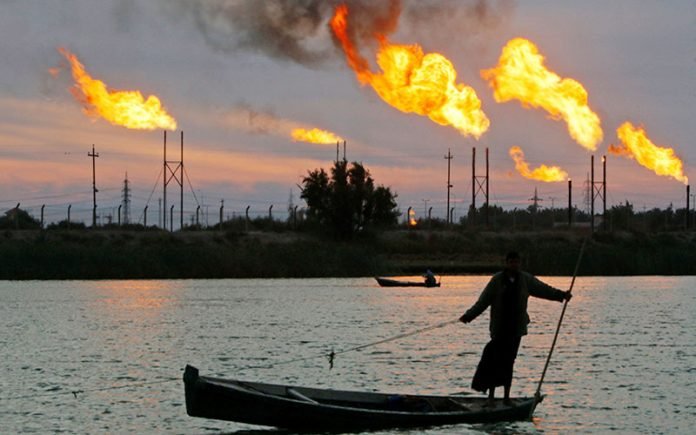
Iraq’s oil surge drives prices sharply higher as tensions disrupt global supply. The Iraq oil surge pushes Basra crude above key levels. The Iraq oil surge reflects growing fears across energy markets.
Basra records a dramatic rise in crude prices across major export grades. The oil price reached $123.11 after a $14.96 increase. Basra Medium climbs to $125.21 with the same price jump. Both grades gain more than 13 percent in a single move.
This surge marks the highest level since the global energy shock in 2022. Traders react quickly to rising geopolitical risks in the region. As a result, markets price in a possible long-term disruption.
The rally follows strong statements from Donald Trump regarding Iran. He warns of severe military action if shipping routes remain closed. Consequently, investors expect further instability in oil supply.
At the same time, the Strait of Hormuz remains partially blocked. This route handles about 20 percent of the global oil trade. Therefore, any disruption creates immediate pressure on global prices.
Although Iran allows Iraqi oil tankers to pass, uncertainty still dominates the market. Traders fear that the situation could worsen quickly. Because of this, prices include a strong risk premium.
Moreover, global benchmarks rise alongside Iraqi crude. Brent crude approaches the $126 level as supply fears grow. This increase pulls Iraqi grades higher in parallel.
In addition, the ongoing conflict in the Gulf region continues to disrupt operations. Energy infrastructure faces pressure, and shipping delays increase. These factors further tighten the available supply.
Despite higher prices, Iraq faces a complex situation. The country benefits from increased revenue in the short term. However, instability threatens long-term export reliability.
Furthermore, energy analysts stress the importance of stable trade routes. They argue that prolonged disruption could reshape global oil flows. As a result, major economies closely monitor developments in the Gulf.
The Iraq oil surge highlights how geopolitical tensions impact energy markets instantly. It also shows the vulnerability of key supply routes. Therefore, any escalation could push prices even higher.
In conclusion, Basra crude now reflects both supply fears and political risk. Markets will likely remain volatile as tensions continue. Iraq stands at the center of this evolving energy crisis.