

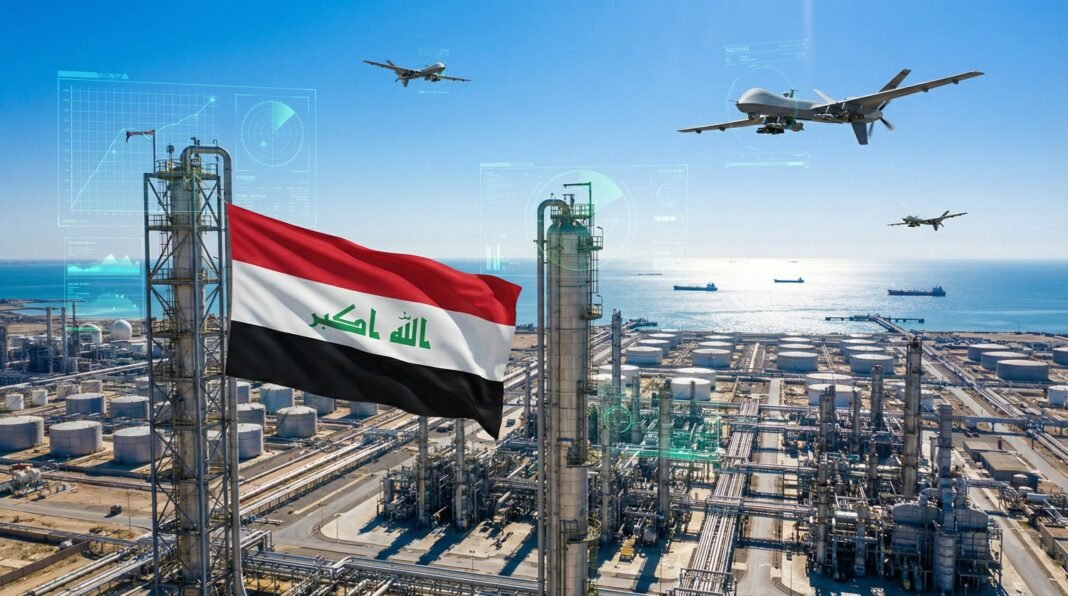
The Iraq oil security crisis measures expanded after authorities created a new protection cell in Basra. Officials took the step after attacks targeted oil facilities and foreign energy companies. The decision aims to protect vital infrastructure in the country’s main oil province.
Basra Governor Asaad Al-Eidani announced the new security structure after an emergency meeting. Senior security commanders joined representatives from oil companies and members of the provincial council. Together, they discussed rising threats around key energy facilities.
During the meeting, leaders reviewed recent drone incidents near operational areas. These incidents increased concern among foreign companies working in southern Iraq. Therefore, authorities launched the Iraq oil security crisis plan to strengthen protection.
Governor Al-Eidani confirmed that several foreign employees temporarily left Iraq. Workers from companies involved in oil licensing projects decided to depart as a precaution. However, local energy companies confirmed operations would continue.
Basra Oil Company and the South Refineries Company reassured officials about production stability. Managers stated that Iraqi technical teams can continue operating fields and facilities. Therefore, energy output will not stop even if foreign specialists reduce their presence.
The Iraq oil security crisis response also includes strong coordination with the federal government. Governor Al-Eidani prepared a security plan in cooperation with Mohammed Shia al-Sudani. The prime minister oversees the implementation of the plan directly.
Security forces have already started deploying additional protection units around energy infrastructure. These units guard oil fields, refineries, and storage facilities across Basra province. Officials want to ensure uninterrupted operations.
Authorities also confirmed stable fuel and gas reserves. Supplies include cooking gas and fuel used for electricity generation plants. Consequently, officials believe the current reserves can meet domestic demand.
Recent drone incidents triggered urgent action. One attack targeted a residential complex that houses employees from foreign oil companies. Fortunately, no casualties occurred during the incident.
Security teams also intercepted drones aimed at facilities belonging to Halliburton in the Burgessia area. Defense units shot down the drones before they reached the site. This successful interception prevented potential damage.
Meanwhile, international energy companies have taken precautionary measures. TotalEnergies evacuated foreign staff from its Basra projects temporarily. The company decided to reduce risk during the unstable security situation.
The British energy company BP also experienced workforce changes. Around 151 employees left Basra in recent days because of security concerns. However, approximately 650 workers still operate in the province.
Despite these developments, Iraqi authorities insist that production continues normally. Local staff and engineers maintain daily operations across fields and refineries. The Iraq oil security crisis response focuses on stability and protection.
Basra remains the center of Iraq’s oil industry. The province hosts the majority of the country’s production capacity and export infrastructure. Therefore, any security threat draws immediate national attention.
Officials believe the new crisis cell will improve coordination between security forces and energy companies. They also expect stronger monitoring of drone threats and suspicious activity near facilities.
For now, Iraq’s oil security crisis measures aim to reassure investors and workers. Authorities want to protect energy infrastructure and maintain production levels. Meanwhile, security forces continue monitoring the situation across Basra.